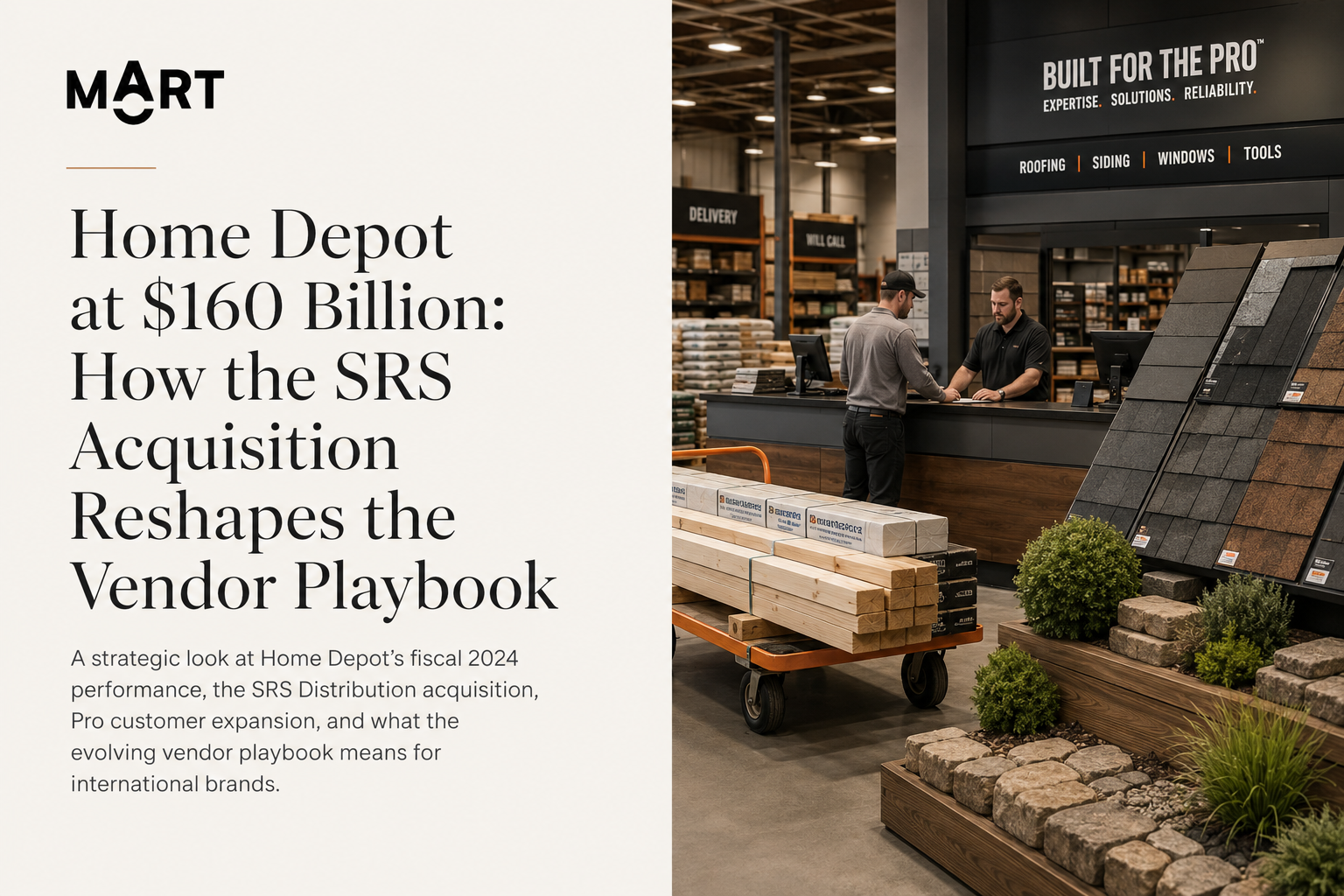
Home Depot closed fiscal year 2024 with total revenue of $159.5 billion, up 4.5 percent year over year, and comparable sales declining 1.8 percent. The growth in total revenue reflects the partial year contribution of the company's largest acquisition in history, the $18.25 billion purchase of SRS Distribution, which closed in June 2024. The acquisition meaningfully reshapes what Home Depot is as a business and what it means to be a vendor partner.
The SRS Distribution thesis. SRS is a specialty trade distributor serving roofing, landscaping, and pool professionals, with more than 760 branches across the United States at acquisition. The strategic rationale is to give Home Depot a credible footprint in the complex Pro market that has historically gone to specialty distributors and trade channels. For brands selling to contractors, project managers, and trade professionals, the Home Depot relationship now extends meaningfully beyond the orange box stores.
The Pro customer push. Home Depot's Pro business has been a strategic priority for several years, and the SRS acquisition accelerates the playbook by an estimated three to five years. The retailer's Pro customer is approximately three times the basket size of the DIY customer and generates approximately ten times the annual spend. Pro customer growth meaningfully outpaced DIY growth in fiscal 2024, and the trend is expected to continue.
The comp sales context. The 1.8 percent comparable sales decline reflects the broader housing market environment. Existing home sales remained at multi decade lows, mortgage rates stayed elevated through most of the year, and consumers deferred discretionary home improvement projects. The big ticket DIY categories, defined as projects above $1,000, declined more sharply than the smaller basket transactions. The categories that performed strongest were maintenance, repair, and Pro driven categories that respond to housing turnover but also to seasonal and operational demand.
What vendors should be planning. Three priorities define the Home Depot vendor playbook for the next eighteen months. First, the Pro customer is increasingly the strategic priority, which favors brands with commercial grade product specifications, dependable lead times, and project based selling support. Brands designed primarily for DIY may find the bar rising as the Pro mix grows. Second, in stock and on shelf availability is a top operational metric at Home Depot, and the retailer is investing in supply chain modernization to enforce it. Vendors with weak fill rates or inconsistent delivery windows are increasingly at risk. Third, the interconnected retail strategy, which blends in store, mobile app, dot com, and Pro Xtra loyalty, requires vendors to align trade investment across all four channels rather than treating them separately.
Forward outlook. Home Depot's guidance anticipates a return to positive comparable sales as the housing market normalizes and interest rate pressures ease. For international brands evaluating Home Depot as a channel for hardware, tools, building products, outdoor living, or home improvement categories, the strategic opportunity remains substantial. The Pro market expansion through SRS opens additional channels for brands with commercial relevance, and the retailer's scale and category leadership keep it one of the most strategic placements in the home improvement vertical.