Kroger closed fiscal year 2024 with total revenue of $147.1 billion and identical store sales growth of 1.5 percent excluding fuel. The headline numbers reflect a year of intense industry competition and continued investment in the strategic priorities that position Kroger to lead the conventional grocery channel for the next decade. For consumer packaged goods brands evaluating the largest pure play grocer in the United States, the strategic context matters more than the headline comparable.
The Albertsons merger context. Fiscal 2024 was the year in which the proposed $24.6 billion Kroger Albertsons merger was blocked, leaving Kroger to execute its growth strategy as a standalone company. The strategic implications are meaningful. Kroger committed to $1 billion in incremental price investments to deliver value to customers, accelerated digital and alternative profit stream development, and continued the gradual divestiture of non core assets to fund the price investment.
Digital growth as the strategic foundation. Kroger's digital business grew 11 percent in fiscal 2024 and now represents a meaningful share of total revenue. Pickup and delivery growth was driven by the Kroger Boost membership program, which provides free delivery on qualifying orders, and by continued investment in the digital coupon ecosystem that drives basket attachment. For brands selling through Kroger, digital placement is increasingly the channel where new customer acquisition happens.
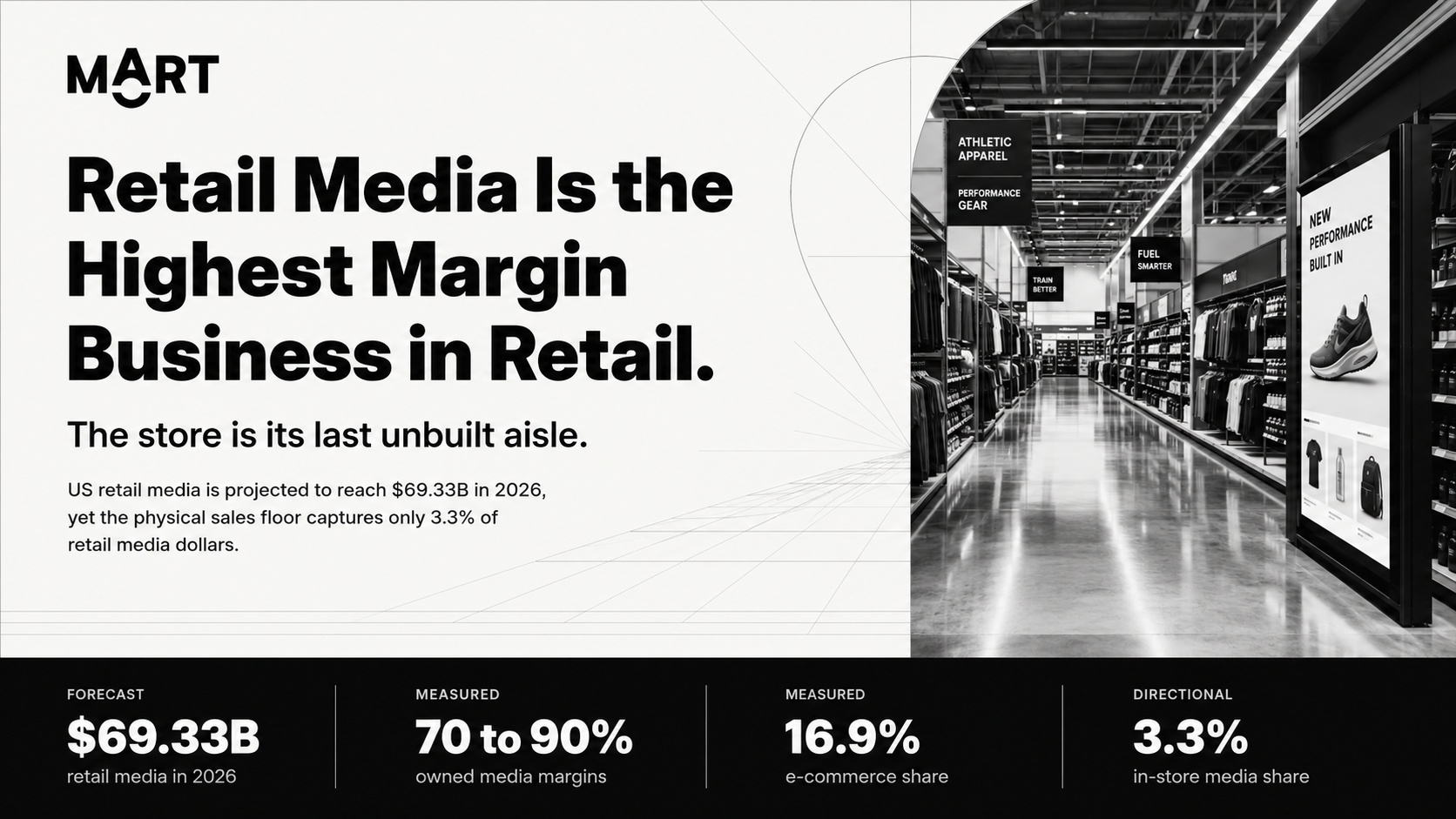
Alternative profit streams. Kroger Precision Marketing, the retailer's media business, continued to scale and now generates more than $1.3 billion in annual revenue with operating margins materially higher than the core retail business. The retailer's data assets, with first party transaction visibility on roughly 60 million households, are increasingly the most strategic part of the broader vendor relationship. Brands that participate in Kroger Precision Marketing can target Kroger shoppers on and off platform, with measurable lift back to in store sales.
Fresh categories as the differentiation. Kroger's fresh categories, including produce, meat, seafood, deli, and bakery, continued to grow as a share of mix. The retailer's investment in private label fresh, including Murray's Cheese, Boar's Head partnerships, and the Simple Truth premium organic line, raises the bar for branded fresh suppliers. To compete in fresh at Kroger, brands need a differentiated product story, transparent sourcing, and the operational capability to support a fresh supply chain.
What this means for international brands. Kroger remains one of the highest leverage placements available to consumer brands entering the United States with food, beverage, and household categories. The retailer's regional banner structure, including Fred Meyer, Ralphs, King Soopers, Smith's, Harris Teeter, and others, requires vendors to navigate regional buyer relationships in addition to corporate procurement. Brands that invest in Kroger Precision Marketing, optimize for digital basket attachment, and engineer for the everyday low price discipline of the conventional grocery channel are the brands that capture sustained shelf presence at one of the most strategic accounts in the channel.