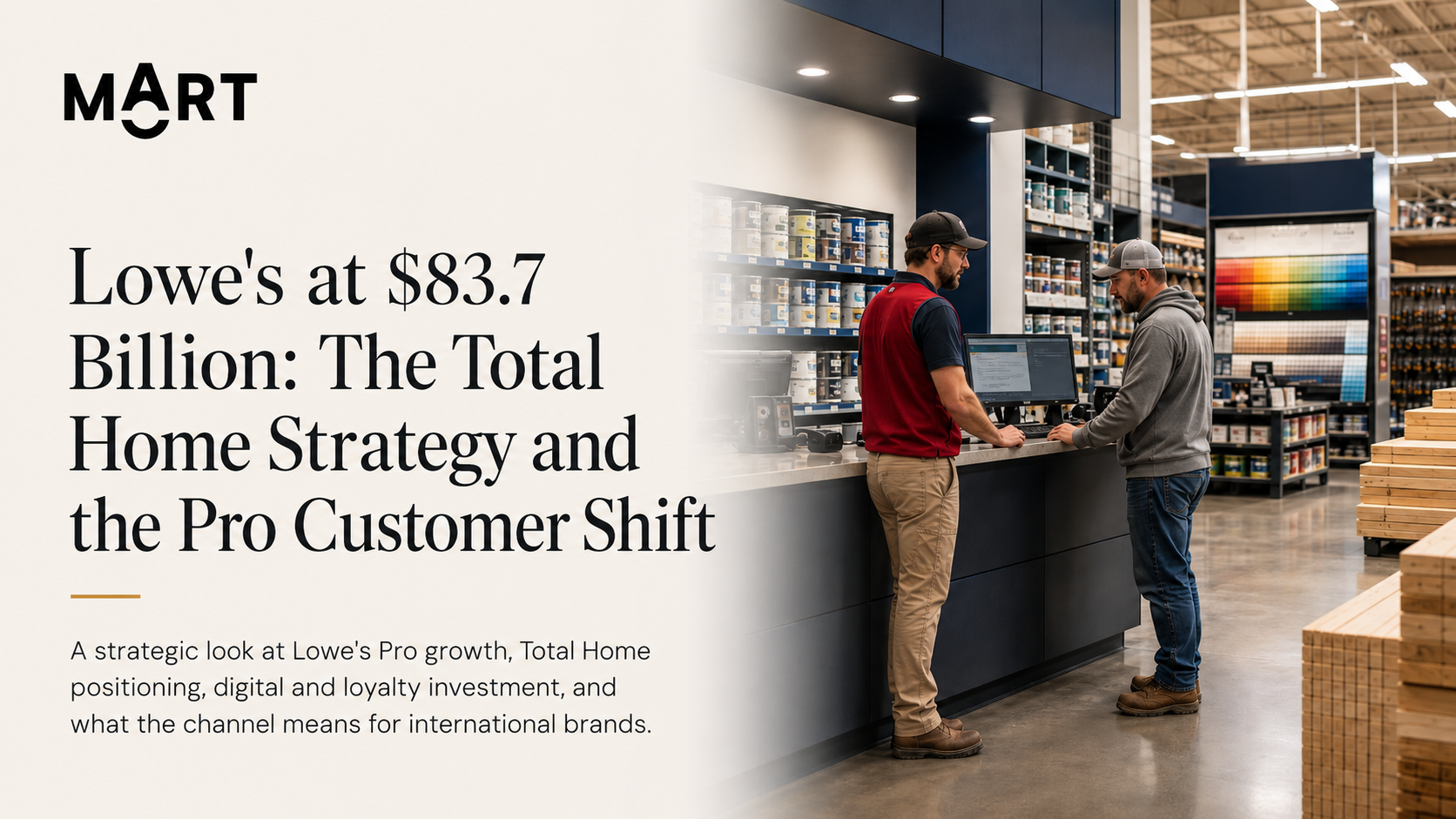
Lowe's Companies closed fiscal year 2024 with total revenue of $83.7 billion, down approximately 3.1 percent year over year, and comparable sales declining 3.1 percent. The decline reflects the same housing market environment that pressured Home Depot, including elevated mortgage rates, multi decade low existing home sales, and consumer deferral of discretionary home improvement projects. The strategic response Lowe's has deployed, however, is meaningfully reshaping the company's competitive position relative to Home Depot.
The Total Home strategy. Lowe's Total Home strategy, anchored by the Pro customer investment, accelerated meaningfully in fiscal 2024. Pro customer comparable sales outperformed DIY comparable sales for the year, with Pro growth meaningfully positive against a negative DIY comparable. The Pro customer at Lowe's now represents approximately one quarter of total revenue, up from roughly 20 percent three years ago. The strategic gap to Home Depot in the Pro segment has narrowed but remains the company's largest opportunity for incremental share capture.
Digital and the MyLowe's Rewards program. Lowe's continued to invest in digital experience and loyalty program development. MyLowe's Rewards launched in 2024 and provides a structured loyalty ecosystem comparable to Home Depot Pro Xtra, removing one of the historical disadvantages Lowe's faced with the Pro customer. The early read on member engagement has been strong, with member shoppers visiting more frequently and basket size meaningfully above non members.
Category performance. The categories that performed strongest in fiscal 2024 at Lowe's were the same categories that performed strongest across the home improvement channel, including paint, hardware, building materials, and Pro driven categories that respond to maintenance and operational demand. The categories that declined most sharply were discretionary DIY projects above $1,000, including kitchen remodels, flooring projects, and outdoor living investments that consumers deferred during the housing slowdown.
The Marvin Ellison playbook. Lowe's leadership has been disciplined about the operational fundamentals through the cyclical pressure period. Inventory health, in stock metrics, supply chain efficiency, and operating margin discipline all improved meaningfully during fiscal 2024 despite the comparable sales decline. The strategic positioning ahead of the housing cycle recovery has been deliberate, and the operational foundation is meaningfully stronger than at the start of the prior cycle.
What vendors should understand. Lowe's increasing Pro investment is creating new opportunities for brands with commercial grade product specifications, dependable lead times, and project based selling support. The Total Home strategy extends beyond hardware into services, installation, and project management, which favors brands that participate in the broader project ecosystem rather than competing solely on shelf placement. The retailer's investment in digital and loyalty also creates new advertising and trade marketing opportunities through the One Lowe's media platform.
Forward outlook. Lowe's guidance for the year ahead anticipates a gradual return to positive comparable sales as housing market conditions normalize. For international brands evaluating the home improvement channel, the competitive dynamic between Lowe's and Home Depot increasingly favors vendors who can serve both retailers with the operational excellence each demands. Lowe's continued Pro investment makes the second largest US home improvement retailer increasingly relevant for brands that have historically focused on Home Depot.