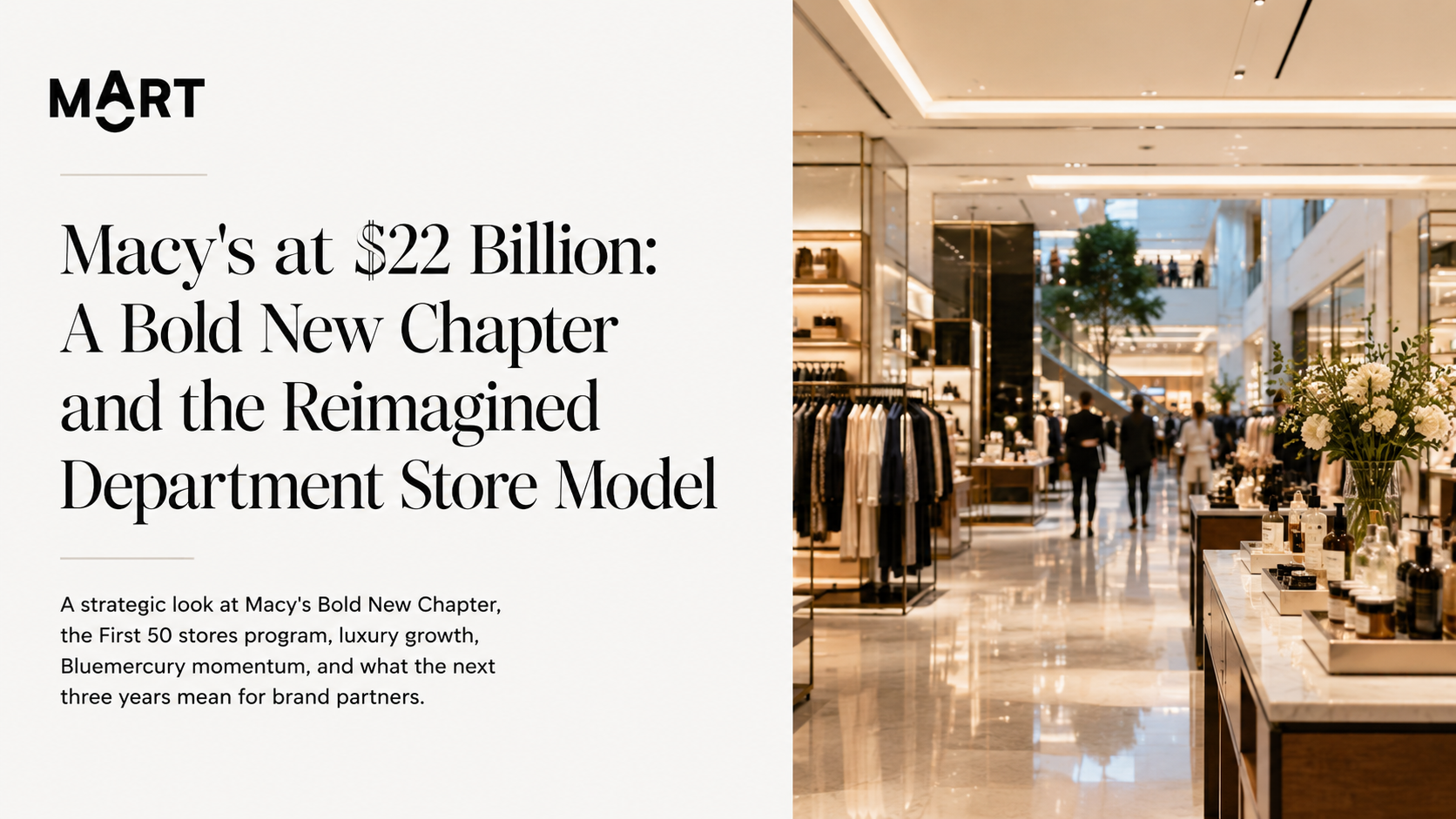
Macy's Inc. closed fiscal year 2024 with total revenue of $22.3 billion, down approximately 2.7 percent year over year, and comparable sales declining 2.4 percent on an owned and licensed basis. The headline numbers reflect the continued structural challenges facing the department store channel, but the strategic response Macy's has deployed, including the Bold New Chapter strategy and the First 50 stores investment program, points to a meaningfully different operating model emerging over the next three years.
The Bold New Chapter strategy. The strategy announced in February 2024 anchors around three priorities. Strengthen the Macy's namesake brand by investing in the highest performing stores and exiting underperforming locations. Accelerate the luxury portfolio through Bloomingdale's and Bluemercury, which have consistently delivered better comparable performance than the namesake brand. And reimagine the omnichannel experience to compete more effectively with Amazon, Nordstrom, and the broader specialty retail landscape.
The First 50 stores program. Macy's identified 50 namesake brand stores that received concentrated investment in fiscal 2024, including elevated staffing, refreshed merchandise mix, and accelerated store improvements. The First 50 stores delivered meaningfully better comparable performance than the broader namesake portfolio, validating the strategic premise that concentrated investment in the highest potential stores produces returns. The program is being expanded to additional stores in fiscal 2025 and beyond.
Store closure acceleration. Macy's announced the closure of approximately 150 namesake brand stores over a three year period, representing the most aggressive footprint reduction in the company's history. The strategic logic is to concentrate resources on the stores that can generate sustained returns and to exit the underperforming locations that have weighed on operating margin for years.
Bloomingdale's and the luxury portfolio. Bloomingdale's delivered comparable sales growth that meaningfully outperformed the namesake brand, validating the strategic emphasis on the luxury segment. The Bloomingdale's customer skews higher income, is more digitally engaged, and demonstrates higher loyalty program participation than the namesake customer. For brand partners in luxury and aspirational categories, Bloomingdale's represents one of the most strategic department store placements in the United States.
Bluemercury and the prestige beauty growth. Bluemercury, the prestige beauty specialty banner, continued to grow and provides Macy's with a meaningful foothold in prestige beauty alongside the broader Macy's beauty business. The format is highly differentiated and competes directly with Sephora and Ulta for the prestige beauty shopper.
What this means for international brands. Macy's department store channel remains strategically relevant for brands in apparel, footwear, beauty, fragrance, jewelry, and home categories. The bar for entry has risen as the company has refined the portfolio of brands it wants to feature in the First 50 stores and the broader strategic priorities. Brands that have invested in the relationship, including in store experience, digital integration, and the broader Macy's media network, are seeing the strategic payback. The next three years will define which brands emerge as the strategic partners in the reimagined Macy's model.