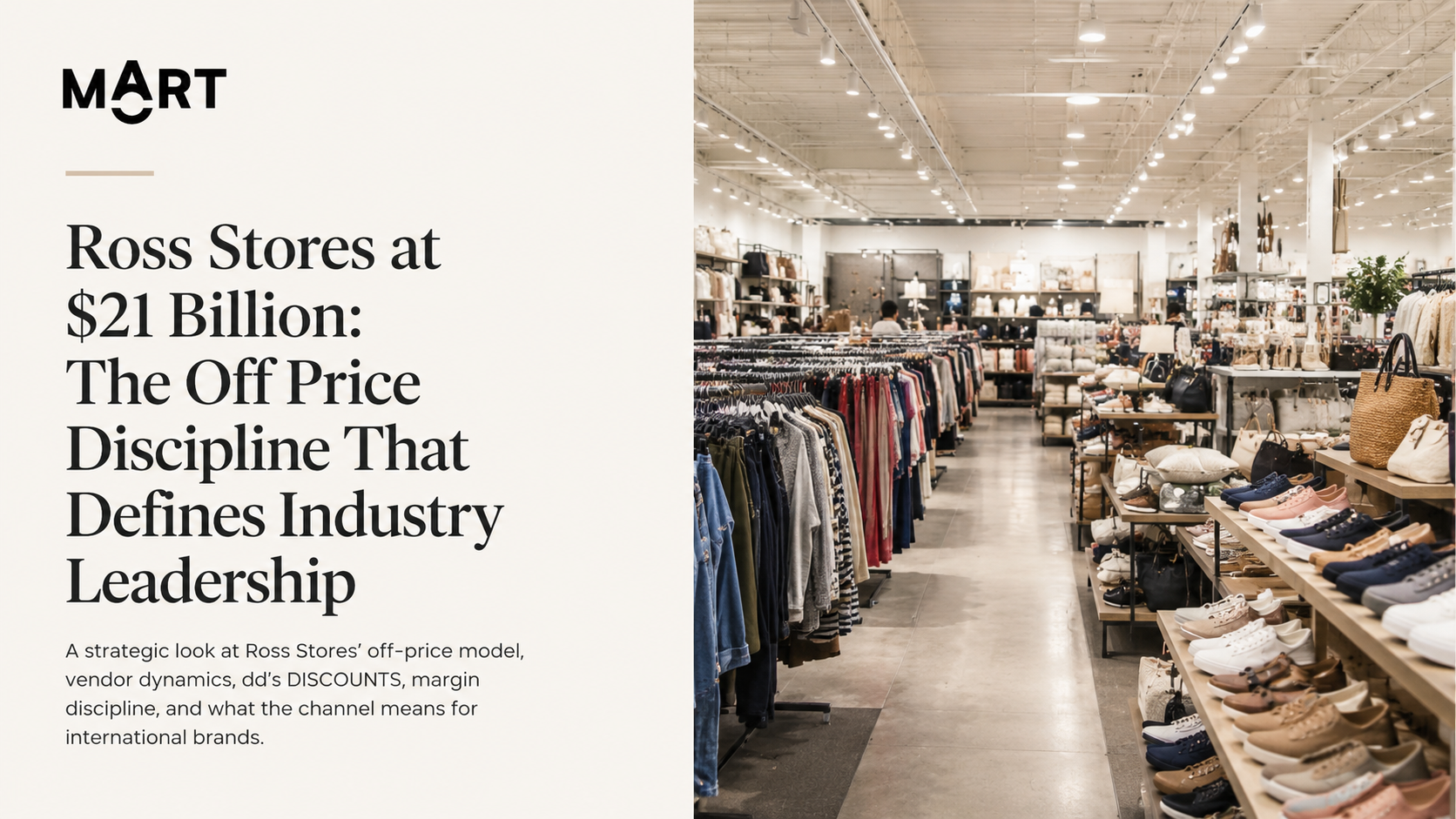
Ross Stores closed fiscal year 2024 with total revenue of $21.1 billion, up approximately 4 percent year over year, and comparable sales growth of 3 percent. The headline numbers describe an off price retailer continuing to compound operational advantage in the channel that has structurally outperformed conventional retail through multiple economic cycles. For consumer brands evaluating Ross as part of an off price strategy, the disciplined model is worth understanding in detail.
The Ross model in practice. Ross Dress for Less, the larger banner, and dd's DISCOUNTS, the deeper value banner, collectively operate more than 2,200 stores across 41 states. The model purchases excess and closeout inventory from brands at meaningfully below wholesale, marks it up modestly, and presents it in a fast moving treasure hunt format that drives high frequency visits. The operational discipline that defines Ross is the willingness to leave categories empty rather than buy at terms that compromise the value proposition to the shopper.
The competitive dynamic with TJX. Ross and TJX operate the two largest off price portfolios in the United States and compete for the same brand inventory and the same shopper visits. The strategic positioning is similar but the execution is distinct, with Ross emphasizing a tighter geographic concentration in the western United States and a deeper value price point, and TJX emphasizing broader geographic reach and a more contemporary brand portfolio. For brand partners, the optimal strategy is typically to work with both retailers across different SKU sets and inventory cycles.
The operating margin discipline. Ross continued to deliver operating margins meaningfully above industry averages, reflecting both the structural advantages of the off price model and the operational discipline of the management team. Inventory turn, gross margin, and operating expense management all remained among the best in the broader retail industry. The financial model produces substantial free cash flow that supports dividend growth and share repurchases.
The dd's DISCOUNTS banner. The dd's DISCOUNTS banner targets a meaningfully different customer demographic than the Ross Dress for Less banner, with lower household income skew and emphasis on entry price points. The banner has grown steadily and now operates approximately 350 stores. For brands with closeout inventory at the deeper value price points, the dd's banner provides an incremental channel that complements the broader Ross relationship.
What vendors should understand. The Ross relationship is transactional by design. Brands sell inventory at off price terms, Ross takes the goods at agreed pricing, and the merchandise reaches the floor within a tight operational window. The relationship is best understood as inventory placement and supplemental revenue rather than primary distribution. Brands that engineer dedicated capsule SKUs for the off price channel often outperform brands that rely solely on excess inventory placement.
What this means for international brands. For consumer brands managing inventory across multiple channels, Ross represents one of the most strategic placements in the off price channel alongside TJX. The relationship is operationally demanding but well documented, and the strategic value extends beyond the comparable revenue contribution. Brands that build Ross into a multi channel strategy can capture incremental revenue while maintaining premium positioning at primary retail.