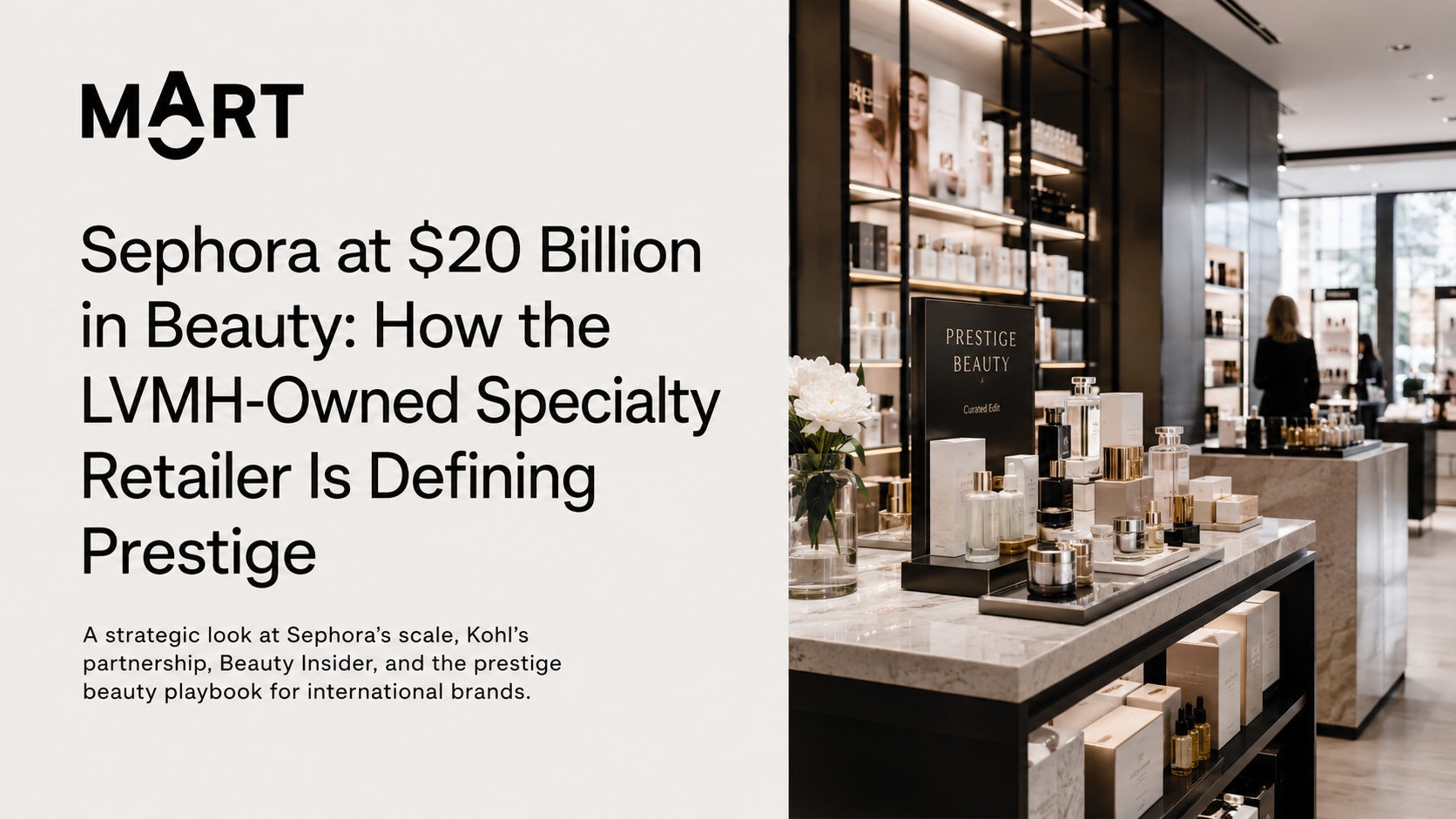
Sephora, the beauty specialty retailer owned by LVMH, generated more than $20 billion in global beauty revenue in 2024 according to the parent company disclosures. The headline reflects the scale of the global beauty specialty channel that has been built over more than two decades, but the strategic dynamics in the United States specifically warrant detailed examination. For brands evaluating Sephora as a US prestige beauty channel, the strategic context shapes the playbook for the next two years.
The Kohls partnership. Sephora at Kohls now operates in more than 1,000 Kohls locations, representing the largest expansion of Sephora US presence in the retailer's history. The partnership provides Sephora with geographic reach into markets where the standalone Sephora store presence is limited and provides Kohls with a beauty offering that competes credibly with Ulta and the broader prestige beauty channel. For brand partners, the Sephora at Kohls expansion creates new placement opportunities in geographies that were previously underserved by prestige beauty retail.
The Beauty Insider loyalty program. Beauty Insider, the Sephora loyalty program, includes more than 25 million active members in the United States alone and continues to be one of the most engaged beauty loyalty programs in retail. Members account for the majority of Sephora sales and demonstrate higher purchase frequency, higher basket size, and higher brand discovery rates than non members. For brand partners participating in the loyalty data ecosystem, the Beauty Insider data provides one of the most sophisticated prestige beauty audiences in the United States.
The brand portfolio strategy. Sephora's brand portfolio strategy emphasizes prestige beauty differentiation, with the brand mix anchored by indie brand discovery, established prestige labels, and exclusive collaborations. The Sephora Accelerate program, which supports founder led prestige beauty brands, continues to be a source of brand portfolio renewal and provides a structured pathway for emerging brands to scale within the Sephora ecosystem. For international brands with founder led positioning, the Accelerate program is one of the most strategic entry points to US prestige beauty.
The competitive context with Ulta. Sephora and Ulta compete for the same brand portfolio investments, the same shopper visits, and the same trade marketing budgets. The strategic positioning is distinct, with Sephora emphasizing prestige and indie brand discovery and Ulta emphasizing the broader mix of prestige, mass, and salon services. The brands that participate in both retailers with distinct positioning and trade marketing investments tend to outperform brands that approach the two retailers interchangeably.
Digital and the omnichannel beauty experience. Sephora continued to operate one of the most sophisticated beauty digital platforms globally, with the mobile app providing personalized product recommendations, virtual try on capabilities, and integrated loyalty experience. The buy online pickup in store and ship from store services drive meaningful basket attachment and provide a level of integrated experience that few competing beauty retailers can match.
What this means for international brands. Sephora is one of the most strategically valuable US placements for brands in prestige beauty, indie beauty, fragrance, and adjacent categories. The bar for entry favors brands with founder led positioning, differentiated product propositions, and the willingness to invest in the broader Sephora ecosystem including loyalty data, advertising, and exclusive collaborations. For international brands considering Sephora as part of a US prestige beauty strategy, the channel continues to be one of the most strategic placements available alongside Ulta and the broader prestige beauty channel.