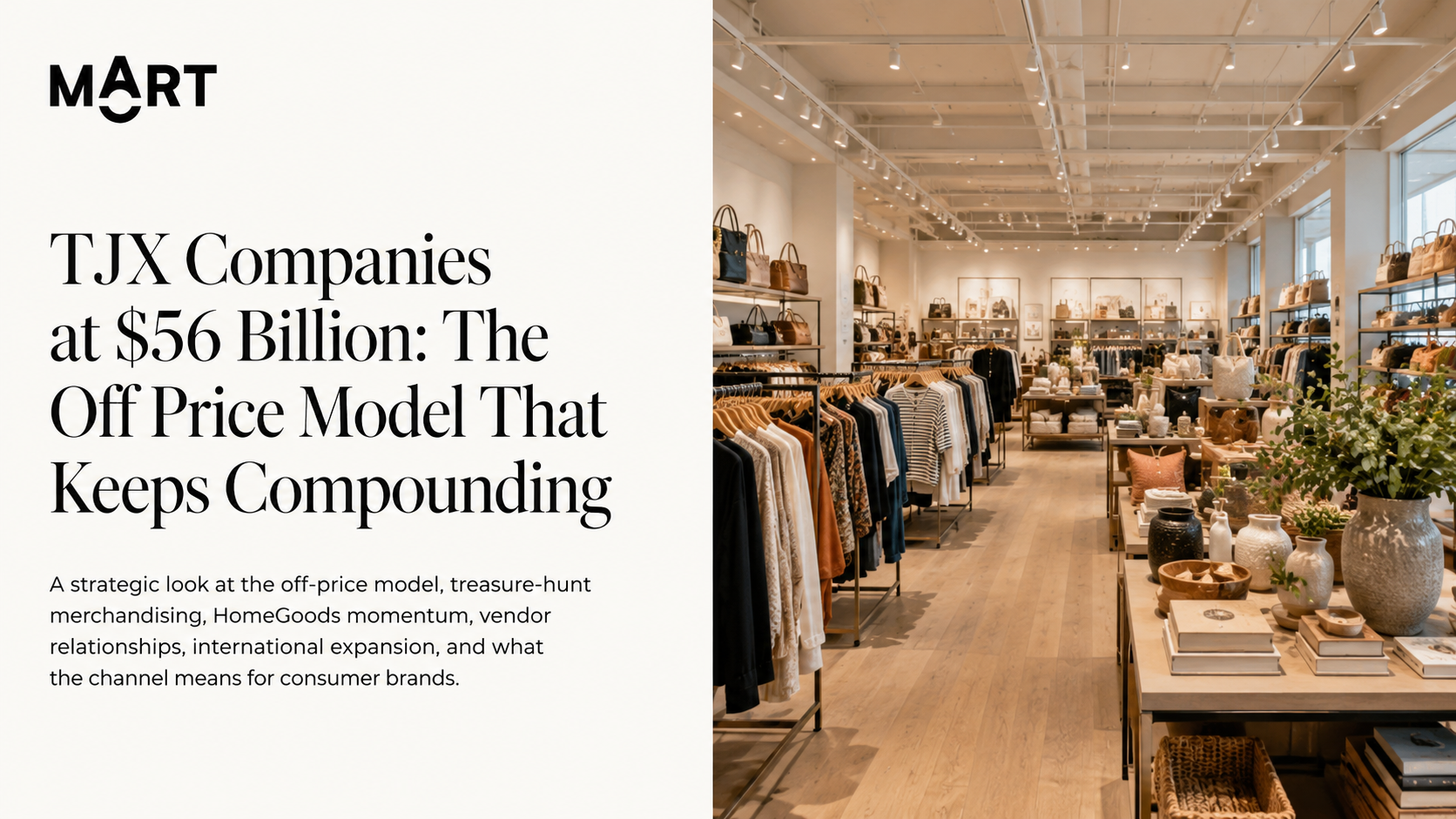
The TJX Companies closed fiscal year 2025 with total revenue of $56.4 billion, up 6 percent year over year, and comparable sales growth of 3 percent. For the off price channel, this is the consistency that has defined the model for two decades, and the strategic differentiation between TJX and conventional retailers has rarely been clearer than in the current cycle.
The off price thesis in practice. TJX operates Marmaxx, the largest US division comprising T.J. Maxx and Marshalls, HomeGoods, HomeSense, Sierra, and the international Winners, HomeSense Canada, T.K. Maxx UK, and other banners. The unified model purchases excess and closeout inventory from brands at meaningfully below wholesale, marks it up modestly, and presents it as a treasure hunt experience that drives high frequency visits. In a year of softness in conventional discretionary retail, the TJX model delivered both comparable sales growth and operating margin expansion.
The HomeGoods comparable as the bright spot. HomeGoods, the off price home category division, delivered the strongest comparable sales performance among the divisions, indicating that the home category is responding particularly well to the off price value proposition. For home brands managing inventory exposure from a soft DTC or department store cycle, HomeGoods has become one of the most strategic relief valves available.
Buying organization and the vendor relationship. The TJX buying organization is one of the most sophisticated in retail, with approximately 1,300 buyers worldwide and relationships with more than 21,000 vendors. The relationship is transactional by design. Brands sell available inventory at off price terms, TJX takes the goods at agreed pricing, and the product reaches the floor within a tight operational window. Brands that approach TJX as an inventory partner rather than a brand building partner tend to extract the most value from the relationship.
The international expansion. TJX continued international expansion in fiscal 2025, with new store openings in Europe, Canada, and Australia. The international banners now collectively contribute meaningfully to total revenue and provide vendors with an additional channel for inventory placement beyond the US market. For international brands considering off price as part of a multi channel strategy, the TJX international footprint extends the strategic value of the relationship.
Operating margin and the financial model. TJX's operating margin expanded approximately 50 basis points in fiscal 2025, reflecting both gross margin discipline and operating expense leverage. The financial model has remained resilient through cycles that pressured other retailers, and the company continues to generate substantial free cash flow that supports dividend growth and share repurchases.
What this means for brands. For consumer brands managing inventory across multiple channels, TJX represents one of the highest leverage placements available. The relationship is best understood as inventory placement and brand exposure rather than primary distribution. Brands that build TJX into their channel strategy alongside primary retail and direct to consumer can capture incremental revenue on excess inventory while maintaining premium positioning at primary retailers. The operational discipline required to work with TJX, including ticketing, packaging, and delivery requirements, is meaningful but well documented.