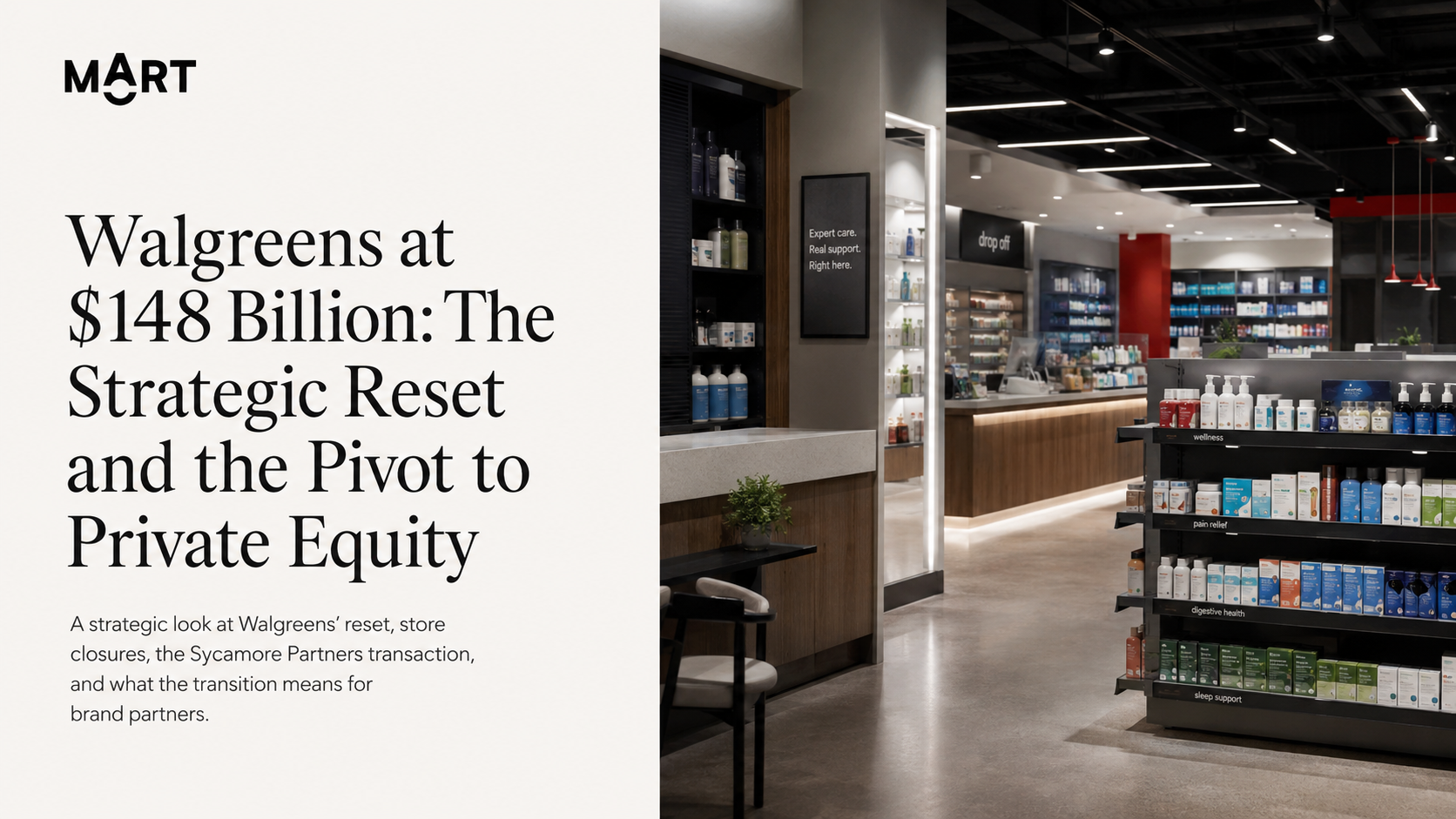
Walgreens Boots Alliance closed fiscal year 2024 with total revenue of $147.6 billion, up 6 percent year over year, but the headline number was overshadowed by the strategic transactions that reshaped the company. In March 2025, Walgreens announced an agreed take private transaction with Sycamore Partners valued at approximately $10 billion. The strategic context, the operational pressures that led to the transaction, and the implications for the vendor community matter substantially more than the comparable sales math.
The strategic context. Walgreens entered fiscal 2024 with multiple operational pressures, including elevated front store theft and shrink, store labor challenges, declining pharmacy reimbursement rates, and the consequences of the broader strategic shift toward integrated healthcare services that did not deliver the anticipated returns. Leadership transitioned multiple times during the year, with Tim Wentworth taking the chief executive role in late 2023 and steering the company through the reset.
The store footprint optimization. Walgreens announced approximately 1,200 store closures during fiscal 2024, representing roughly 14 percent of the US footprint. The closures targeted underperforming locations in urban markets disproportionately affected by shrink and traffic decline. The remaining store base is being repositioned with a stronger emphasis on the pharmacy, with the front store assortment narrowed to focus on the categories where Walgreens can defensibly compete against mass retail and online channels.
The Sycamore Partners transaction. The agreed take private transaction creates the largest retail leveraged buyout in recent history. Sycamore Partners has a track record of operating retail platforms through strategic resets and is expected to focus on operational efficiency, store optimization, and potentially the separation of the US retail business from the UK Boots business. For consumer brands, the transition to private ownership creates near term operational uncertainty but potentially clearer strategic priorities once the new ownership structure stabilizes.
The VillageMD divestiture. Walgreens recorded a substantial impairment on VillageMD during fiscal 2024 and announced plans to exit the primary care platform. The strategic pivot away from integrated healthcare delivery refocuses Walgreens on the core pharmacy and front store retail model, which is the model that has historically generated the most consistent returns.
Vendor implications. The transition period creates both risk and opportunity for the vendor community. Risk in the form of vendor agreement renegotiations, payment term extensions, and inventory commitment uncertainty. Opportunity in the form of category resets, planogram refreshes, and the potential for brands to capture share in a more disciplined buying environment. The brands that maintain operational excellence and trade investment commitments through the transition tend to emerge with stronger relationships on the other side of the reset.
What this means for international brands. Walgreens remains a strategic channel for brands in pharmacy, beauty, personal care, OTC wellness, and adjacent categories. The store footprint, while reduced, still provides geographic reach that few other channels can match. The next twelve to eighteen months will be defined by operational reset under the new ownership structure, and the brands that approach the relationship with patience and strategic partnership orientation will be best positioned for the eventual rebound.