
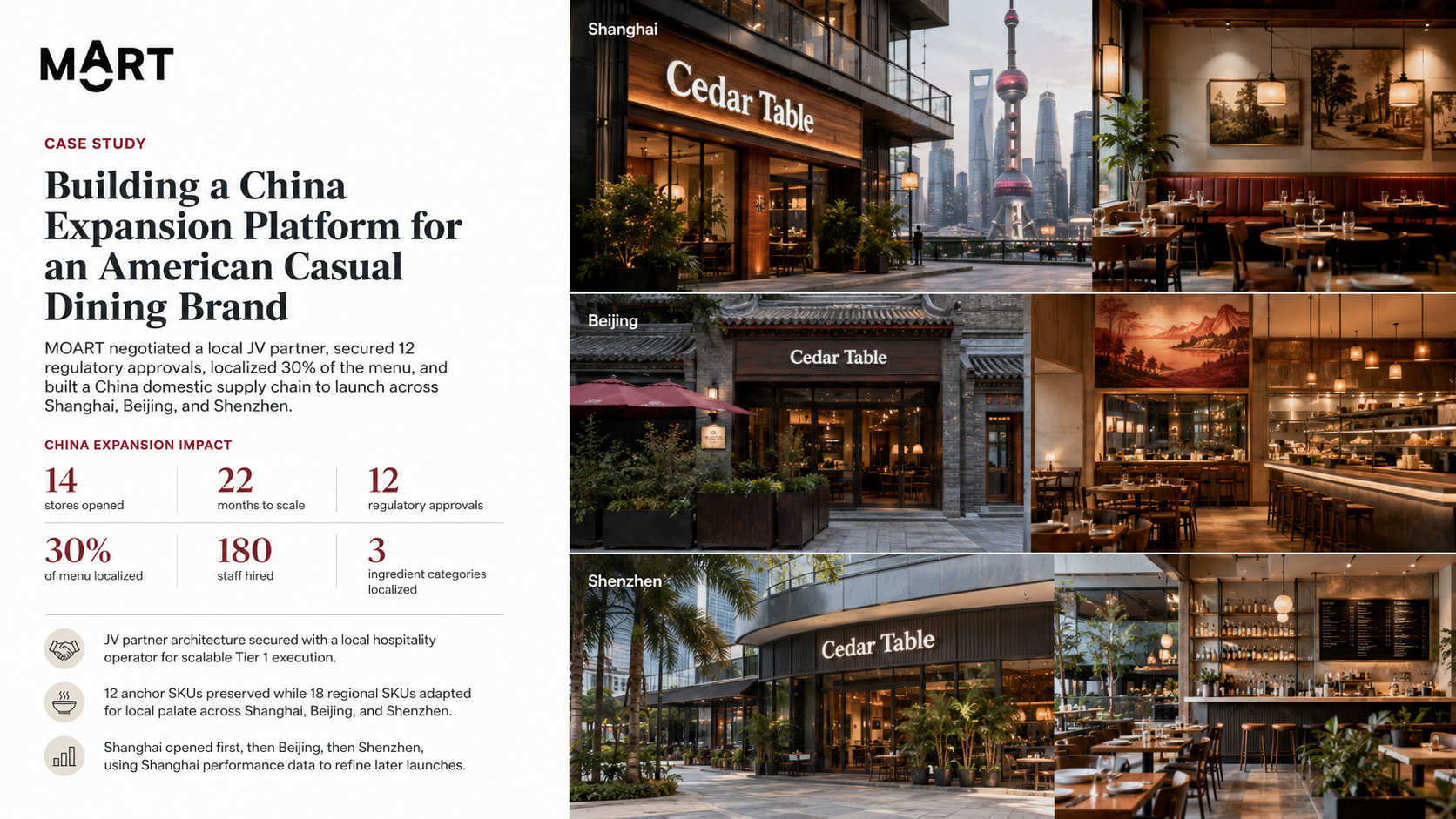
American Casual Dining Brand: China Expansion Across Shanghai, Beijing, Shenzhen With JV-Partner Architecture
China expansion for an American casual dining brand across Shanghai, Beijing, and Shenzhen. Structured around a mandatory JV-partner relationship, menu localization that preserved brand identity while honoring regional palate, and a supply chain that could not import US ingredients freely.
Growth in Conversions
American casual dining brand entering China needed Tier-1 city flagship presence with local JV partner, full food-service regulatory licensing, menu localization for Chinese palate, and operations team hiring.
Content Optimization
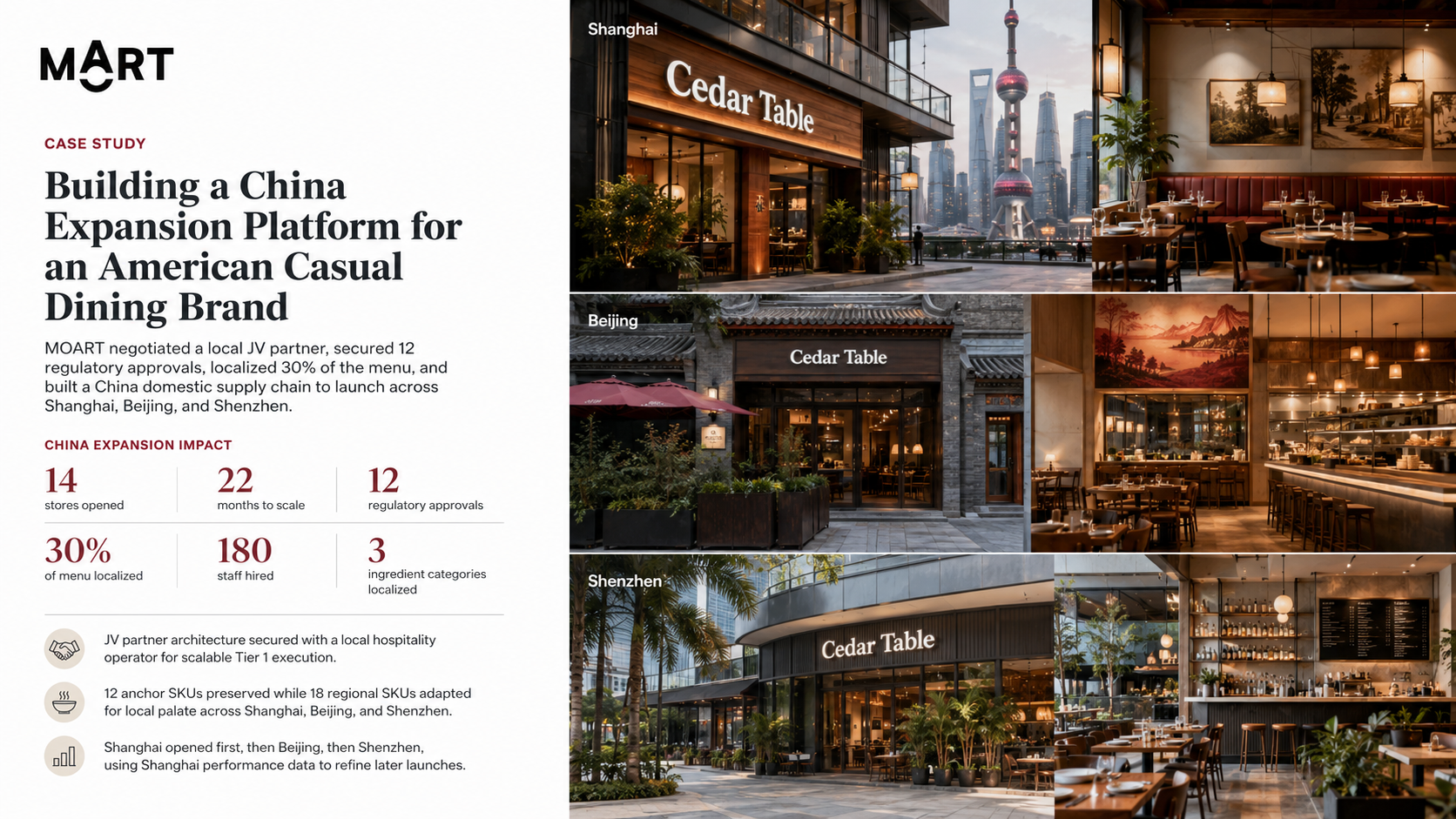
MOART negotiated JV terms with a local hospitality partner, secured 12 regulatory approvals across Shanghai, Beijing, and Shenzhen, adapted 30% of menu for local taste preferences, and hired 180 staff across three flagships including bilingual management.
Organic Traffic
1682%
Dramatic Increase
Project Overview
American casual-dining expansion into China runs into three structural constraints that defeat most entrants: F&B foreign-direct-investment regulations make a Chinese JV partner effectively mandatory for chain scale, US ingredient import is heavily regulated, and menu localization across Shanghai, Beijing, and Shenzhen requires three regional palate-adaptations rather than one national one. The strategic problem was structuring a JV with a Chinese F&B operator strong enough to handle local execution while negotiating menu-control terms that protected the brand identity that justified the China entry.

Execution
MOART structured the JV partnership with a Chinese F&B operator with existing first-tier-city operations, negotiated menu-control clauses that preserved 12 anchor SKUs while flexing 18 regional SKUs to local palate, built the China-domestic supply chain across protein, dairy, and produce categories to bypass US-import bottlenecks, and sequenced openings Shanghai-first, Beijing-second, Shenzhen-third to use Shanghai performance data to refine the Beijing and Shenzhen builds.
Project Results
14 stores opened across Shanghai, Beijing, and Shenzhen within 22 months, JV partner operating local execution while brand-identity controls held, China-domestic supply chain built across 3 ingredient categories, and the brand's regional menu adaptations performing on first-cycle launch metrics rather than requiring post-launch re-engineering.
Conclusion
Let’s get in touch
Ready to start working
together with us?
Marketing, creative, and product knowledge functions continue to be of primary importance to our organization as we strive to meet the increasing demands and challenges of the Industry.
