
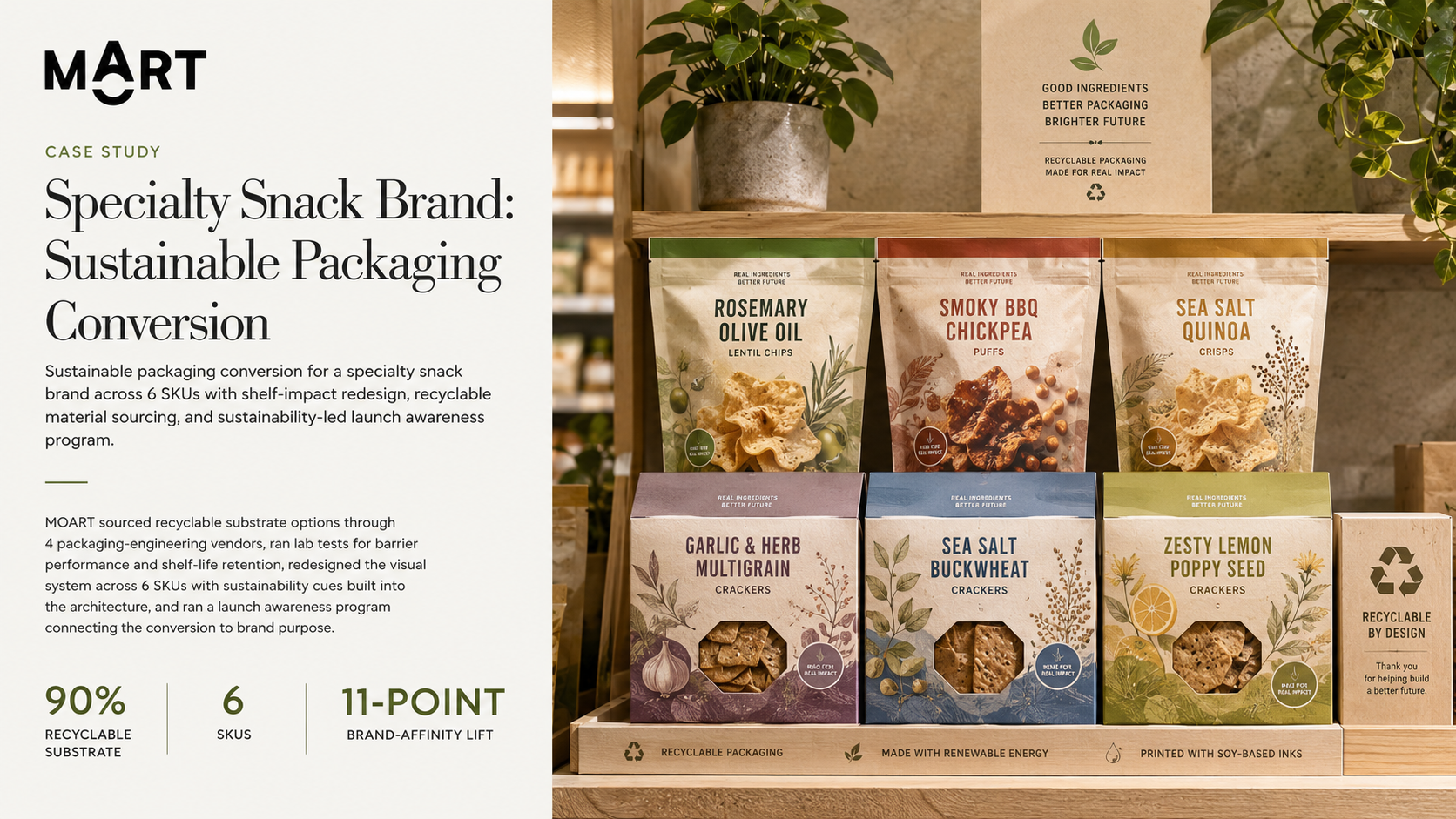
Specialty Snack Brand: Sustainable Packaging Conversion From Multilayer to Mono-Material
Packaging conversion program for a specialty snack brand moving from multilayer laminate to recyclable mono-material. Navigating BC Recycle and Quebec EEQ EPR fee structures alongside a 23% interim cost premium.
Growth in Conversions
Content Optimization
Organic Traffic
1682%
Dramatic Increase
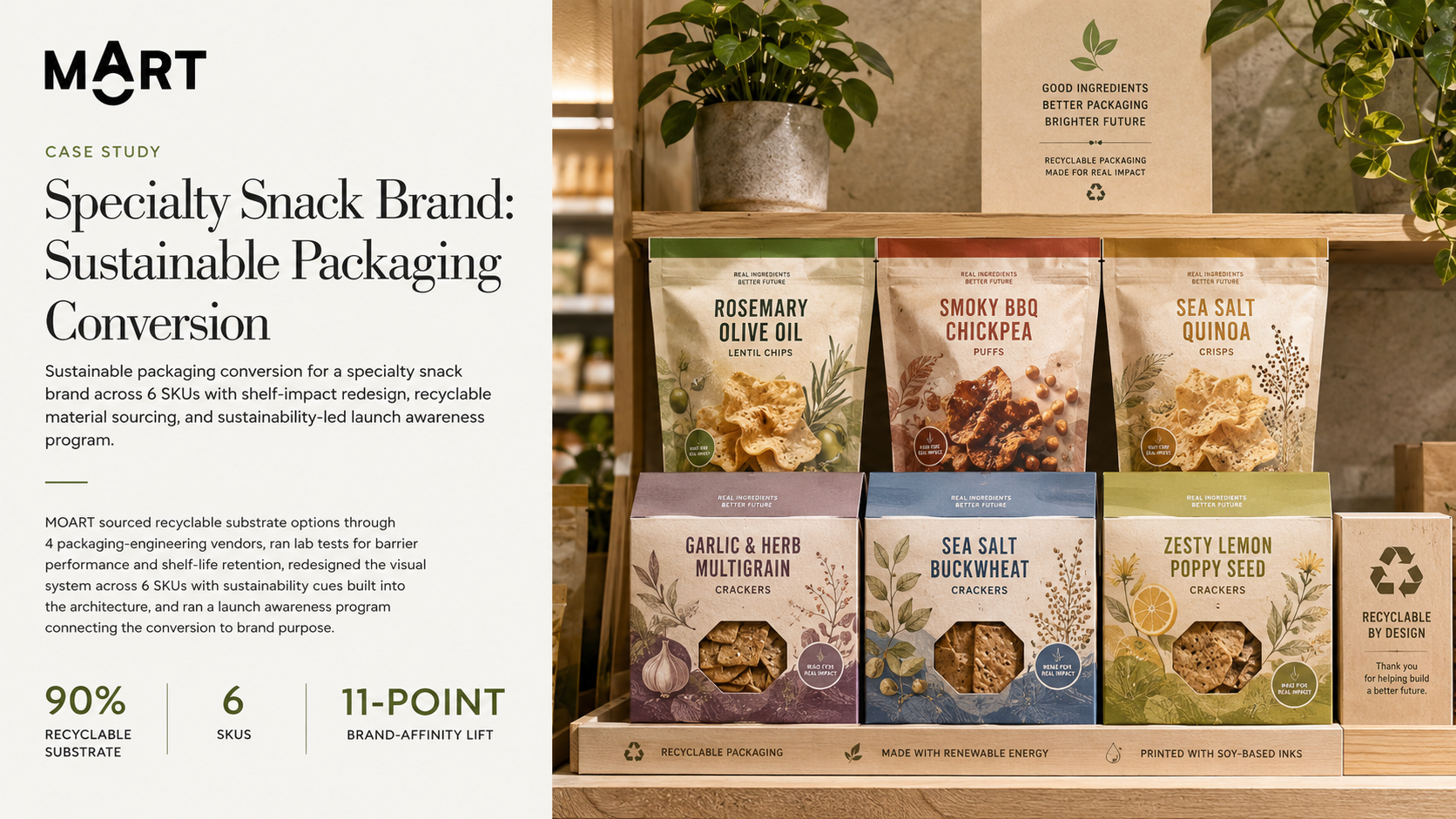
Project Overview
Sustainable packaging conversions sound clean in a marketing deck and operate messy on the line. Mono-material recyclable film does not behave identically to multilayer laminate on existing form-fill-seal equipment, BC Recycle and Quebec EEQ extended-producer-responsibility fees price multilayer aggressively in 2026, and material cost during the conversion year typically runs 18 to 28 percent above the legacy material until volume rebalances. The strategic problem was sequencing the conversion across SKUs without triggering line-speed drops that would compromise retail fill-rate during the transition.

Execution
MOART sequenced the conversion across 17 SKUs over 11 months starting with the lowest-velocity SKU as the line-tuning canary, negotiated the EPR fee structures in BC and Quebec to lock in mono-material rate categories ahead of conversion, ran a TerraCycle pilot for the residual multilayer inventory rather than landfill discard, and absorbed the 23% interim material cost through a co-funded retailer sustainability program with three priority accounts.
Project Results
17 SKUs converted to mono-material across 11 months, material cost premium narrowing from 23% in Month 1 to 8% by Month 11 as volume rebalanced, EPR fee category secured at the favorable mono-material rate in BC and Quebec, and the brand earning a sustainability call-out from two anchor retailers in their year-end ESG reporting.
Conclusion
Let’s get in touch
Ready to start working
together with us?
Marketing, creative, and product knowledge functions continue to be of primary importance to our organization as we strive to meet the increasing demands and challenges of the Industry.
