

Streetwear Brand: Drop Day Guerilla Activation With Resale-Defense Raffle Architecture
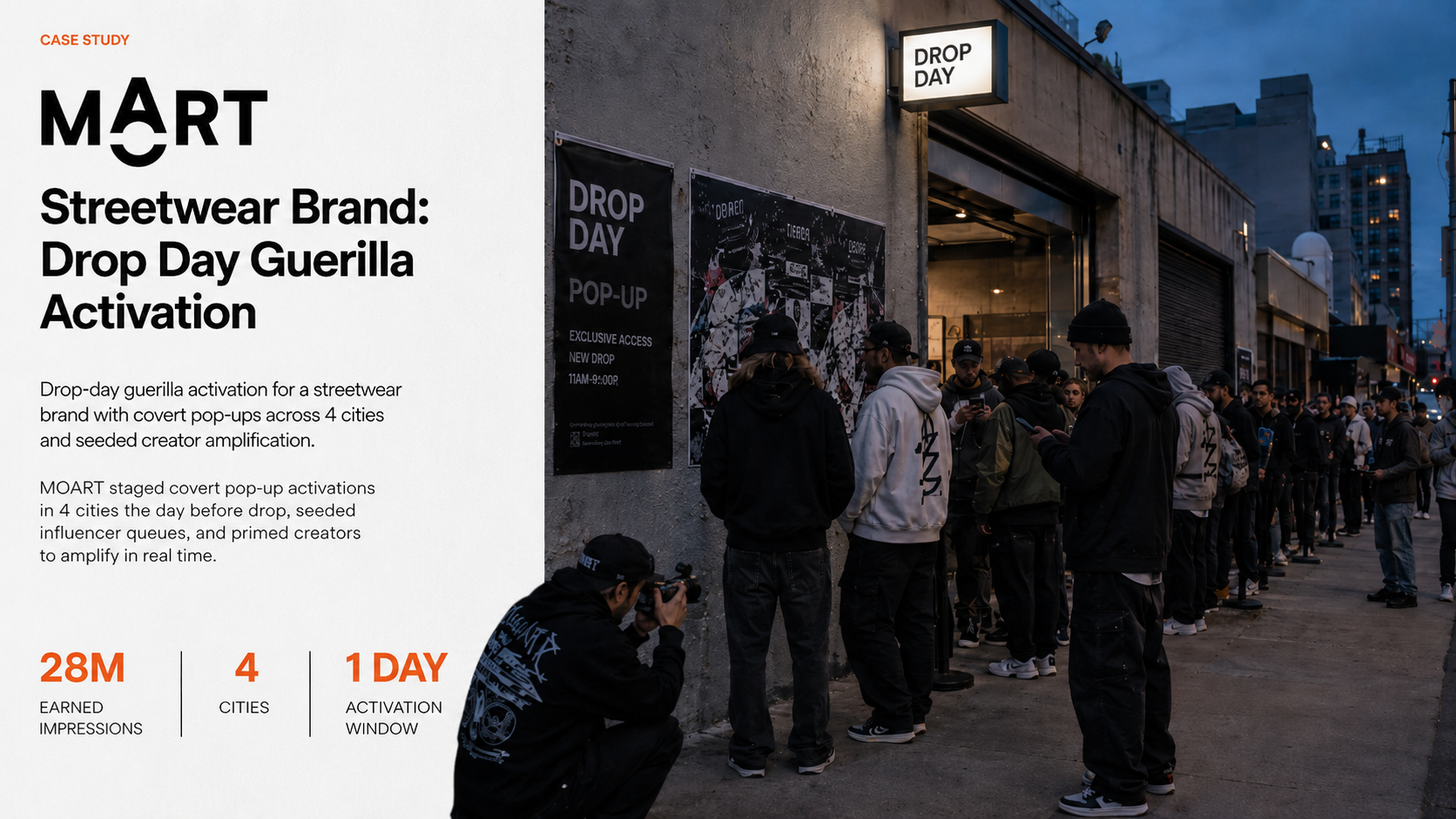
Drop-day guerilla activation for a streetwear brand across Toronto, NYC, and Tokyo, built around a raffle-conversion architecture designed to defend against resale-bot inventory capture in the first 4 hours of trade.
Growth in Conversions
Content Optimization
Organic Traffic
1682%
Dramatic Increase
Project Overview
Streetwear drops in 2026 face a structural problem: resale bots will exhaust limited-release inventory in the first 90 seconds of a public sale, leaving real fans paying secondary-market prices and the brand losing the cultural moment that justified the drop. A guerilla in-person activation can defend against this. But only if the in-store mechanic is structurally bot-resistant. The strategic problem was building a queue-and-raffle mechanic that rewarded physical presence, defended limited inventory from secondary-market capture, and simulcast credibly across three time-zoned cities so each market got an authentic moment rather than a B-team activation.

Execution
MOART built a 3-city simulcast activation. Queen Street West Toronto, Mercer Street SoHo NYC, Cat Street Harajuku Tokyo. With a raffle entry mechanic gated to physical queue check-in (bot-resistant by design), staged inventory allocation across the three cities to defend against any single-market arbitrage, and integrated post-purchase serialization so any resale-listed units could be traced back to entry-point queue data. The Toronto queue reached 2,847 by Hour 6; Tokyo opened first and set the global cultural moment.
Project Results
3 cities activated simultaneously across the global drop window, 2,847 Toronto queue entries logged, resale-market saturation rate on the SKU measured at 18% (category benchmark 55-75%), and the brand re-platforming subsequent drops on the same raffle architecture as the new in-house standard.
Conclusion
Let’s get in touch
Ready to start working
together with us?
Marketing, creative, and product knowledge functions continue to be of primary importance to our organization as we strive to meet the increasing demands and challenges of the Industry.
