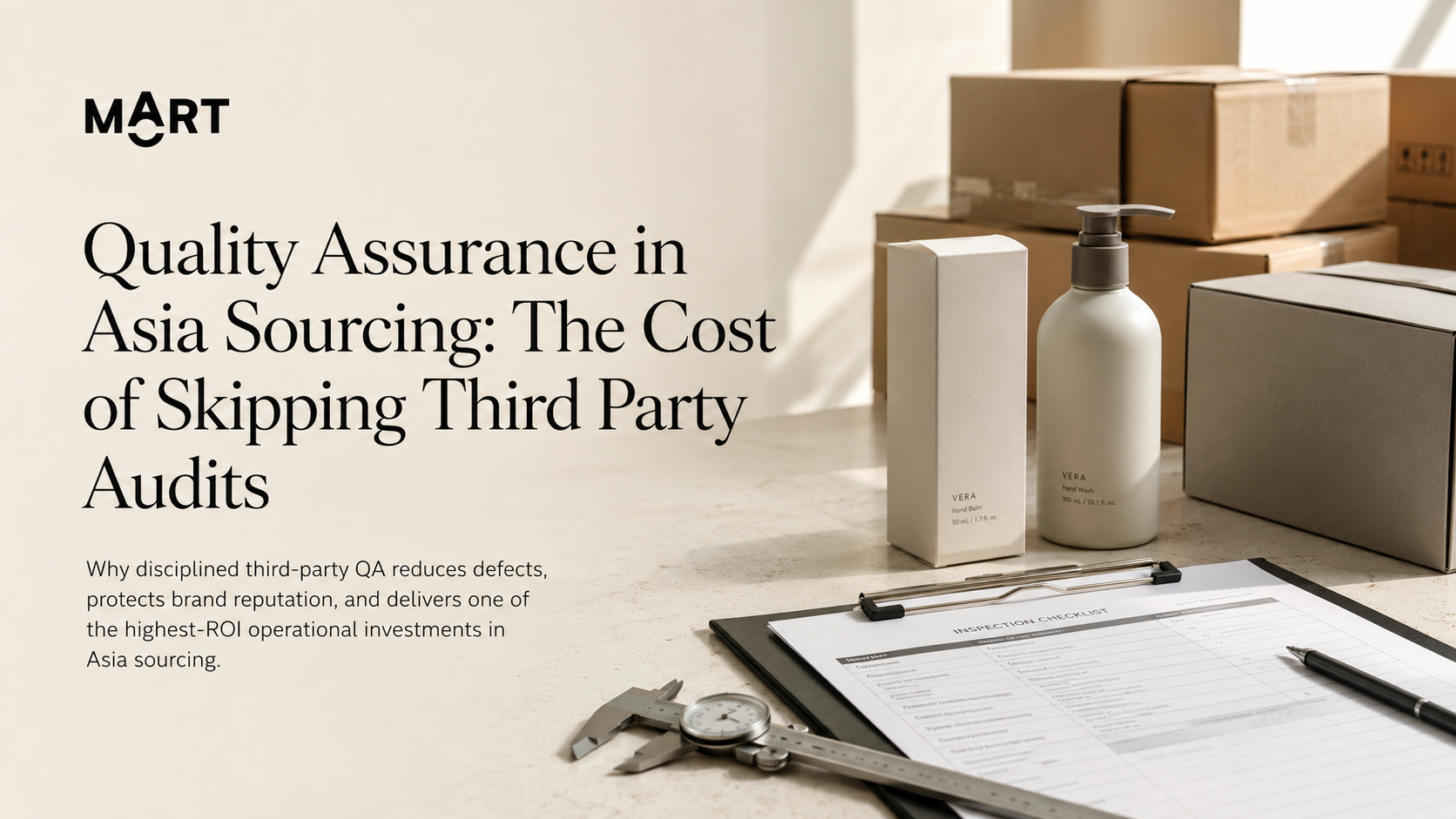
Third party quality assurance audits in Asia sourcing are one of the most consistently underinvested operational disciplines for growing consumer brands. The audits cost meaningful money in absolute terms but typically provide measurable returns through defect reduction, recall avoidance, and brand reputation protection. The brands that skip third party QA audits in favor of cost savings typically discover the actual cost when defects, recalls, or brand reputation issues emerge later.
The QA audit landscape. Third party QA in Asia sourcing typically combines several audit types. Pre production inspections that verify the manufacturer's readiness before production begins. During production inspections that verify quality at agreed checkpoints during the production run. Final random inspections that verify quality before the goods ship from the manufacturer. Container loading inspections that verify the goods loaded match the contracted specifications. Each audit type has different costs and serves different quality protection functions.
Pre production inspection cost$300 to $800 per auditDuring production inspection cost$300 to $800 per auditFinal random inspection cost$300 to $1,000 per auditContainer loading inspection cost$300 to $800 per auditComprehensive social audit (Sedex, BSCI)$2,000 to $10,000 per auditTypical defect rate without third party QA3 to 10 percent in some categoriesTypical defect rate with disciplined third party QAunder 1 percent in most categories
The cost of defects without QA. Defects without third party QA show up in several costs. Recall costs if the defects reach the consumer market, including the actual recall operations, the inventory write off, and the regulatory implications. Retailer chargebacks for defective merchandise, which can scale meaningfully if the retailer rejects entire shipments. Customer returns and the associated logistics and refund costs. Brand reputation damage through negative reviews, social media complaints, and the long term shopper preference impact. The combined cost of defects typically dwarfs the third party QA investment by multiple orders of magnitude.
The return on QA investment. A disciplined third party QA program for a consumer brand sourcing in Asia typically costs $20,000 to $100,000 annually depending on production volume and audit frequency. The defect reduction this investment supports typically prevents defects costing $200,000 to $2 million annually in the avoidable cost categories noted above. The ROI calculation is consistently positive, with the brands that skip the investment often discovering the actual cost through painful experience.
The third party QA provider selection. Brands selecting third party QA providers should evaluate several dimensions. Provider scale and geographic coverage, with major providers (SGS, BV, Intertek, TUV) offering broad coverage and boutique providers offering specialized capability in specific categories or geographies. Provider category expertise, with some providers having particular strength in apparel, others in electronics, others in food. Provider reporting infrastructure, with the quality and timeliness of inspection reports affecting the brand's ability to act on the findings. Provider cost structure and the willingness to scale with the brand's production volume.
The audit cadence design. The right audit cadence for a brand depends on production volume, manufacturer reliability, and the category's specific quality risk profile. New manufacturer relationships typically warrant audits at every production run for the first several runs. Established manufacturer relationships with consistent quality performance can move to less frequent audits, often quarterly or per category cycle. The cadence should adjust based on findings, with manufacturer quality issues triggering more frequent audits and consistent quality supporting reduced cadence.
The integration with manufacturer relationships. Third party QA should be integrated with the manufacturer relationship rather than treated as an adversarial inspection. The most effective programs include the manufacturer in the audit findings discussions, build corrective action plans collaboratively, and use the audit data to support continuous improvement. Manufacturers that engage constructively with QA programs typically deliver better quality outcomes than manufacturers that treat audits as a threat.
The compliance dimension. Beyond product quality, third party audits also support compliance verification (social audits, chemical compliance, environmental compliance). The compliance audits serve different functions than quality audits and typically have different cost structures. Brands should plan both types of audits as part of the broader Asia sourcing operating program.
MOART perspective. Third party QA audits in Asia sourcing are one of the highest ROI operational investments a growing brand can make. For brands operating Asia sourcing programs in 2026, the right approach is to formalize the QA program with appropriate cadence, qualified third party providers, and integration with the broader sourcing operations. The brands that operate this discipline typically maintain quality reliability that compounds into brand trust over time; the brands that under invest in QA typically discover the avoidable cost through painful and reputation damaging experience.