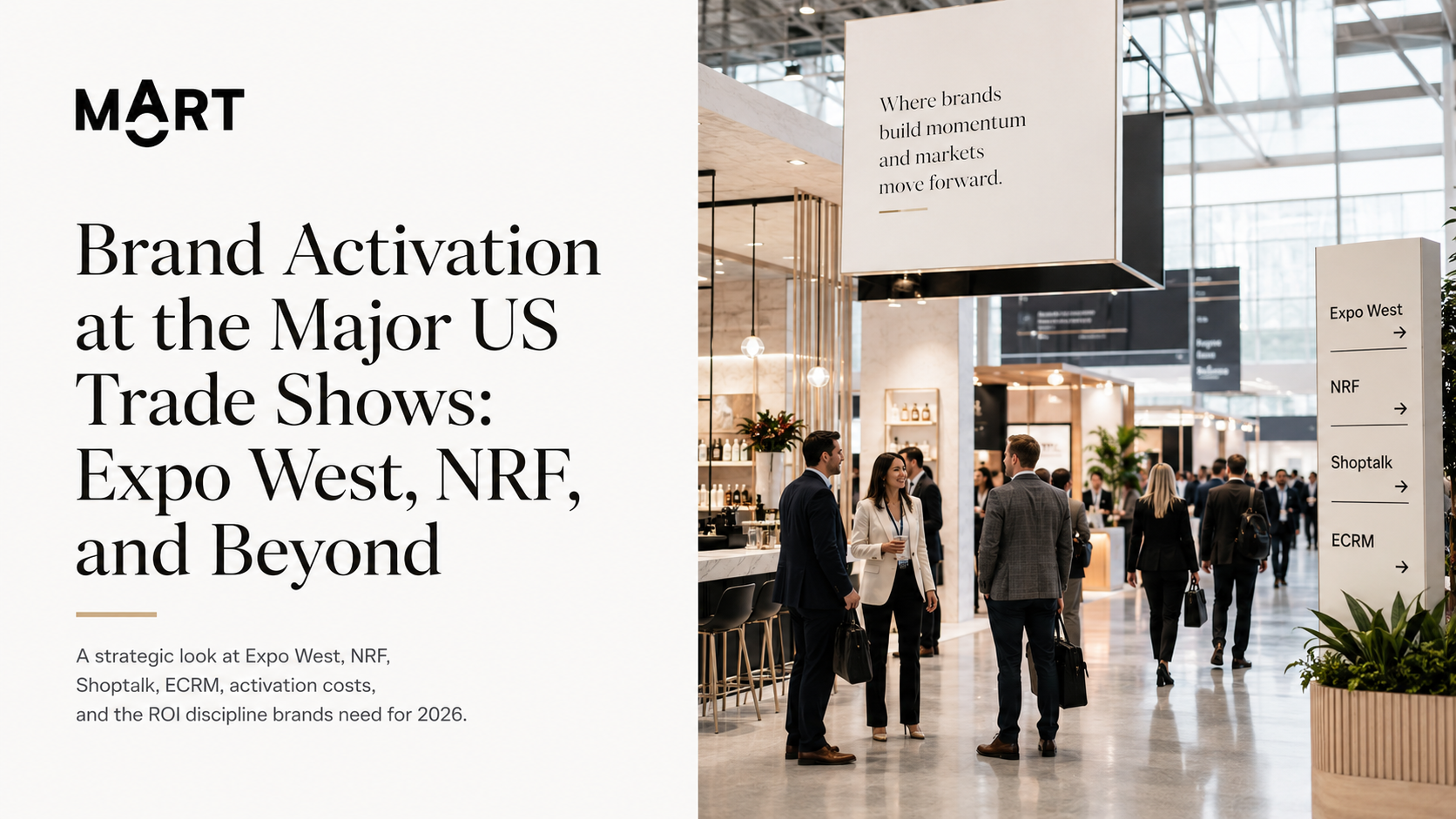
The major US trade shows continue to be important business development venues for consumer brands, with Expo West (natural products), NRF (retail technology and operations), Shoptalk (retail and ecommerce), ECRM (category specific buyer meetings), and several specialty shows providing concentrated access to retailers, distributors, and category influencers. The 2026 trade show calendar presents both opportunities and risks for brands, with the cost of meaningful activation rising and the bar for converting presence into business outcomes remaining high.
The trade show landscape in 2026. Expo West in Anaheim continues to be the most important natural products industry show in the US, with comprehensive buyer attendance and category leadership conversations. NRF in New York focuses on retail technology, operations, and broader industry trends. Shoptalk in Las Vegas concentrates on retail and ecommerce strategy. ECRM operates as a series of category specific buyer meetings throughout the year. Specialty shows for specific categories (Outdoor Retailer, Cosmoprof, Toy Fair, Coffee Fest, others) serve niche but concentrated buyer audiences.
Expo West (natural products)Anaheim, MarchNRF Big ShowNew York, JanuaryShoptalkLas Vegas, MarchECRM (category specific)Various locations, throughout yearTypical Expo West booth cost (basic)$10,000 to $50,000+Typical Expo West booth cost (premium with island)$50,000 to $200,000+Typical brand team trade show travel cost$5,000 to $20,000 per person
The Expo West playbook. Expo West remains the single most consequential trade show for emerging natural and premium consumer brands. The show provides concentrated access to natural channel buyers (Whole Foods, Sprouts, regional natural retailers, distributors), category influencers, and broader food industry decision makers. Brands that succeed at Expo West typically prepare for months, with pre show buyer meeting scheduling, post show follow up disciplines, and the on the ground execution that converts booth conversations into post show momentum.
The NRF and Shoptalk roles. NRF and Shoptalk serve different purposes than the category specific shows. NRF is generally most valuable for retailer executive relationship building and for staying current on industry technology and operations trends. Shoptalk is most valuable for ecommerce and digital channel strategy conversations. Brands considering NRF or Shoptalk should plan for the specific strategic value they expect to capture rather than treating them as buyer meeting venues comparable to Expo West.
The ECRM meeting model. ECRM operates a different model from traditional trade shows, with brand and buyer meetings concentrated in dedicated sessions over a few days. The model can be highly efficient for brands seeking buyer meetings with retailers they have not been able to access through traditional channels. The investment is meaningful (registration fees, travel, time commitment), and the brands that succeed at ECRM typically prepare for the meetings with the same discipline they would apply to retailer headquarter pitches.
The attribution framework. Brand teams should plan trade show attribution explicitly. The metrics that matter include qualified buyer meetings scheduled during the show, post show meeting requests, retailer category review invitations resulting from show conversations, and ultimately the placement and revenue outcomes attributable to the trade show engagement. Brands that operate this attribution discipline can evaluate trade show ROI rigorously; brands that treat trade shows as awareness building activities often over invest without measuring outcomes.
The smaller and specialty shows. Beyond the major shows, several category specific events provide concentrated access to relevant buyer audiences. Outdoor Retailer for outdoor and athletic brands. Cosmoprof for beauty. Toy Fair for toys and children's products. Coffee Fest for coffee. Brands in these specific categories should evaluate the relevant specialty shows alongside the major shows, often finding that the specialty shows produce better category specific outcomes per dollar of investment.
MOART perspective. Trade show investment in 2026 requires explicit planning, attribution discipline, and category specific selection. For brands evaluating their trade show calendar, the right approach combines Expo West (for natural products brands) or the relevant specialty show with selective participation in NRF, Shoptalk, or ECRM based on specific strategic needs. The brands that approach trade shows as concentrated business development venues with measurable outcomes typically deliver better ROI than the brands that treat trade shows as awareness building investments.