The dominant trade narrative of the past several years has emphasized diversification away from mainland China sourcing, and substantial brand capital has indeed moved to Vietnam, India, Bangladesh, Mexico, and other alternative destinations. Less visible in the trade press is the parallel story: some brands are doubling down on China for the categories where China remains structurally superior. The doubling down brands are typically not the brands making press headlines, but their decisions reflect a category specific analysis that deserves attention.
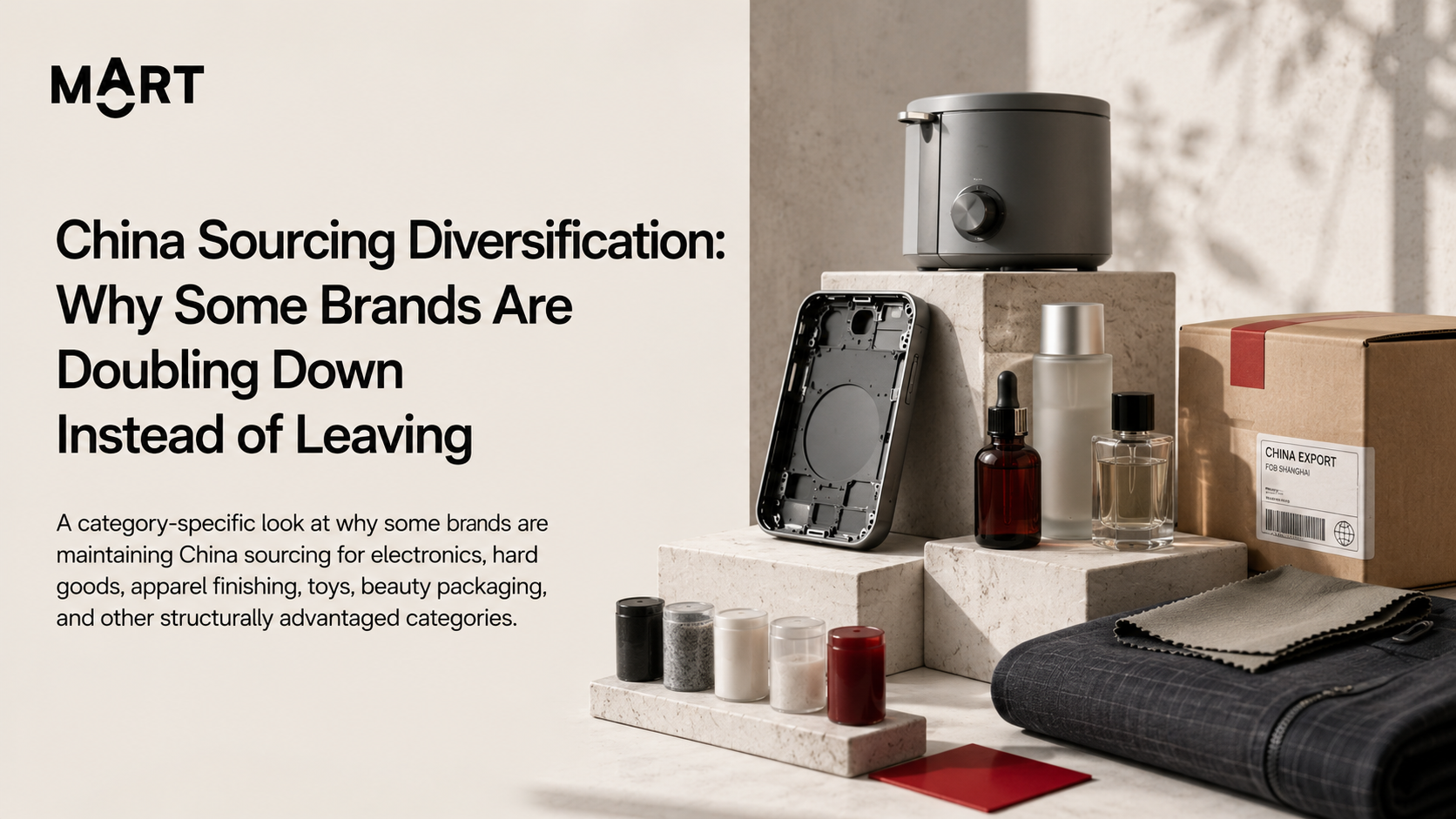
The categories where China remains structurally superior. Several categories continue to favor China as the primary sourcing destination because of integrated supply chains, scale, and capability depth that no alternative country can match. Consumer electronics manufacturing and assembly remains deeply integrated in the Pearl River Delta and Yangtze River Delta clusters, with component ecosystems and design for manufacturing capability that other destinations have not yet replicated. Complex hard goods including small kitchen appliances, certain home goods, and specialized industrial products continue to find China the most reliable source. Apparel categories requiring sophisticated finishing, embellishment, or technical construction often remain China dependent. Toys and seasonal goods, including holiday categories, rely heavily on Chinese capacity for cost and lead time reasons.
Consumer electronicsChina dominant, particularly Shenzhen and Suzhou clustersSmall kitchen appliancesChina leading, hard to replicate at qualityToys and seasonal goodsChina dominant, capacity advantageSophisticated apparel finishingChina strong, particularly Pearl River DeltaIndustrial and specialty productsChina leading in many sub categoriesBeauty packaging primary containersChina leading in glass and specialty bottles
The structural advantages China retains. Five things remain difficult to replicate. The integrated component supply chain that allows finished goods manufacturers to source materials, sub assemblies, and tooling within a small geographic radius. The scale of skilled labor available for complex manufacturing, particularly in the established clusters. The infrastructure for export, including ports, customs, and freight forwarding, which operates at a level that newer manufacturing destinations have not yet matched. The design for manufacturing capability, with engineers who can collaborate on product engineering and tooling in a way that few competing destinations offer. The pricing competitive position, which has compressed but remains attractive for many categories when total landed cost is calculated.
The compliance and tariff context for China sourcing in 2025. Brands doubling down on China are operating in a more complex compliance and tariff environment than five years ago. The Section 301 tariffs on Chinese imports continue to apply at varying rates across HS classifications. Forced labor compliance under the Uyghur Forced Labor Prevention Act adds documentation and supply chain verification requirements. The de minimis reform discussed in a prior MOART briefing further complicates the cross border direct fulfillment models. Brands doubling down need stronger compliance capability than the historical China sourcing posture required.
The cost analysis discipline. The brands successfully doubling down on China typically run total landed cost analyses that include all tariffs, compliance costs, working capital implications, lead time costs, and quality cost differentials. The honest analysis often shows that China remains more economic than the alternative for the specific category, even after tariffs. The brands that have moved away from China without doing this analysis sometimes discover the cost penalty exceeds expectations once the alternative is operational.
The hedging strategy. Most brands doubling down on China are not putting all eggs in the China basket. The right operating posture often involves China for the core categories where China is structurally superior, combined with secondary sourcing in Vietnam, India, or Mexico for categories where the alternative is competitive, plus the working capital and supply chain agility to shift category mixes if the trade environment changes materially.
MOART perspective. The China sourcing question in 2025 is more nuanced than the broad diversification narrative suggests. For categories where China remains structurally superior, doubling down with appropriate compliance and tariff management is often the right answer. For categories where alternatives are competitive, diversification is appropriate. The brands that succeed are the brands that run honest category specific analyses rather than applying a single narrative to all sourcing decisions.