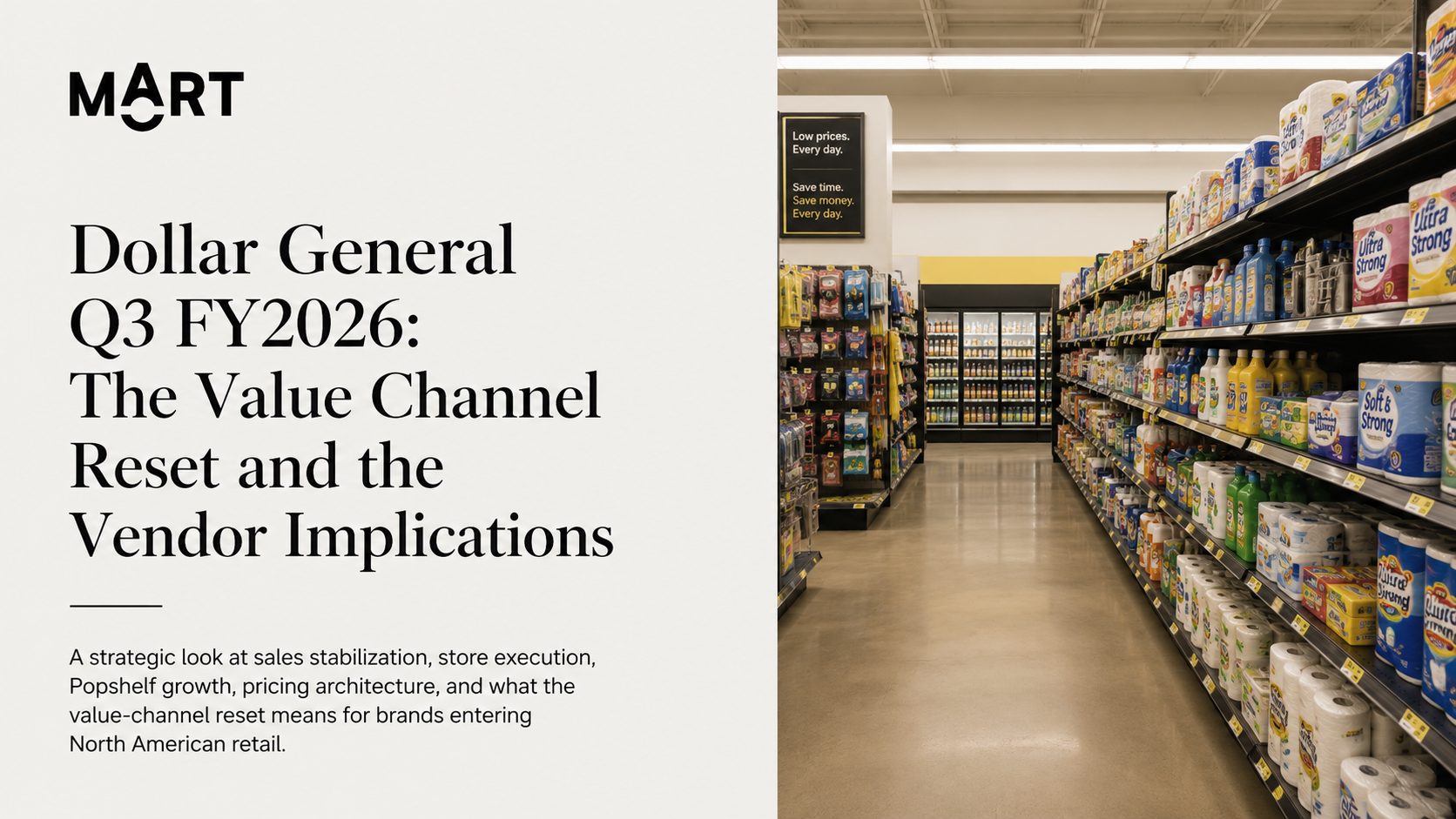
Dollar General reported Q3 FY2026 revenue of approximately $11 billion, with the company continuing to execute the operational reset that began after the prior period's soft results and inventory shrink challenges. The Q3 FY2026 results show the early signs of stabilization in comp sales, improved gross margin from the discipline around shrink and inventory management, and continued investment in the operational infrastructure that supports the over 20,000 store fleet.
The value channel context in 2025. The value channel in US retail (Dollar General, Dollar Tree, Family Dollar, and the broader small box value format) serves a shopper base that is particularly sensitive to inflation, employment stability, and discretionary spending capacity. The macroeconomic conditions of 2024 and 2025 have created uneven shopper behavior across this segment, with periods of trade down from mid tier retailers (positive for value channel) and periods of pull back on discretionary categories (negative for value channel). Dollar General's Q3 FY2026 results reflect the navigation of these dynamics.
Net sales~$11 billionSame store sales growthlow single digitsStore countover 20,000 storesGross margin rateapproximately 30 percentOperating marginmid single digitsPopshelf banner stores (small format urban suburban)growing footprintInventory shrink (year over year)improving from prior elevated levels
The operational reset progress. Three areas of the operational reset are showing measurable progress. Inventory shrink, which had elevated to problematic levels in prior periods, has begun to come down with the investment in store level controls, staffing, and process discipline. In stock performance has improved, supporting better shopper experience and comp performance in the store fleet. Store level execution metrics, including checkout speed and store appearance, have improved from the prior period baseline.
The Popshelf banner experiment. Popshelf, the small format urban and suburban banner aimed at higher income shopper segments, continues to grow footprint. The Popshelf concept tests whether the value retail model can extend to higher income shopper bases through a different assortment and store experience. The early data is encouraging, and the banner provides Dollar General with optionality beyond the core rural and small town footprint.
The vendor implications. Three things matter for brands selling at Dollar General. First, the assortment editing discipline at Dollar General continues to tighten, with the buyer office reducing the long tail of slow moving SKUs and concentrating on the brands and items that drive measurable shopper preference. Second, the operational requirements for Dollar General are demanding given the store count and the small store footprint per location, with pack out, delivery cadence, and case configuration mattering substantially. Third, the pricing architecture at Dollar General requires sharp price points, with brands needing to deliver value math that supports the channel's $1, $3, $5, and $10 price point architecture.
The Dollar Tree comparison. Dollar Tree and Dollar General are different operating models despite the similar value channel positioning. Dollar Tree's price point architecture is more concentrated at the very low price points, with limited tolerance for higher unit costs. Dollar General's price point architecture extends across a broader range and supports more diverse categories. Brands evaluating value channel entry should evaluate both retailers separately rather than treating them as a single segment.
The category opportunity map. Categories where Dollar General continues to invest include consumables (especially food, beverages, and household basics that support trip frequency), seasonal goods that drive trip motivation, and selected adjacent categories where the value pricing architecture supports incremental category growth. Categories where Dollar General is more selective include hardlines, apparel, and discretionary categories where the value shopper purchase frequency is lower.
MOART perspective. Dollar General Q3 FY2026 reflects the continued operational reset and the early signs of stabilization. For brands considering Dollar General as a North American retail entry in 2026, the channel offers meaningful volume opportunity in the right categories at the right price points, combined with operational requirements that fit certain brand operating models better than others. The brands that succeed at Dollar General typically have category fit, pricing discipline, and operational reliability across thousands of stores; the brands that struggle typically miss on one or more of these dimensions.