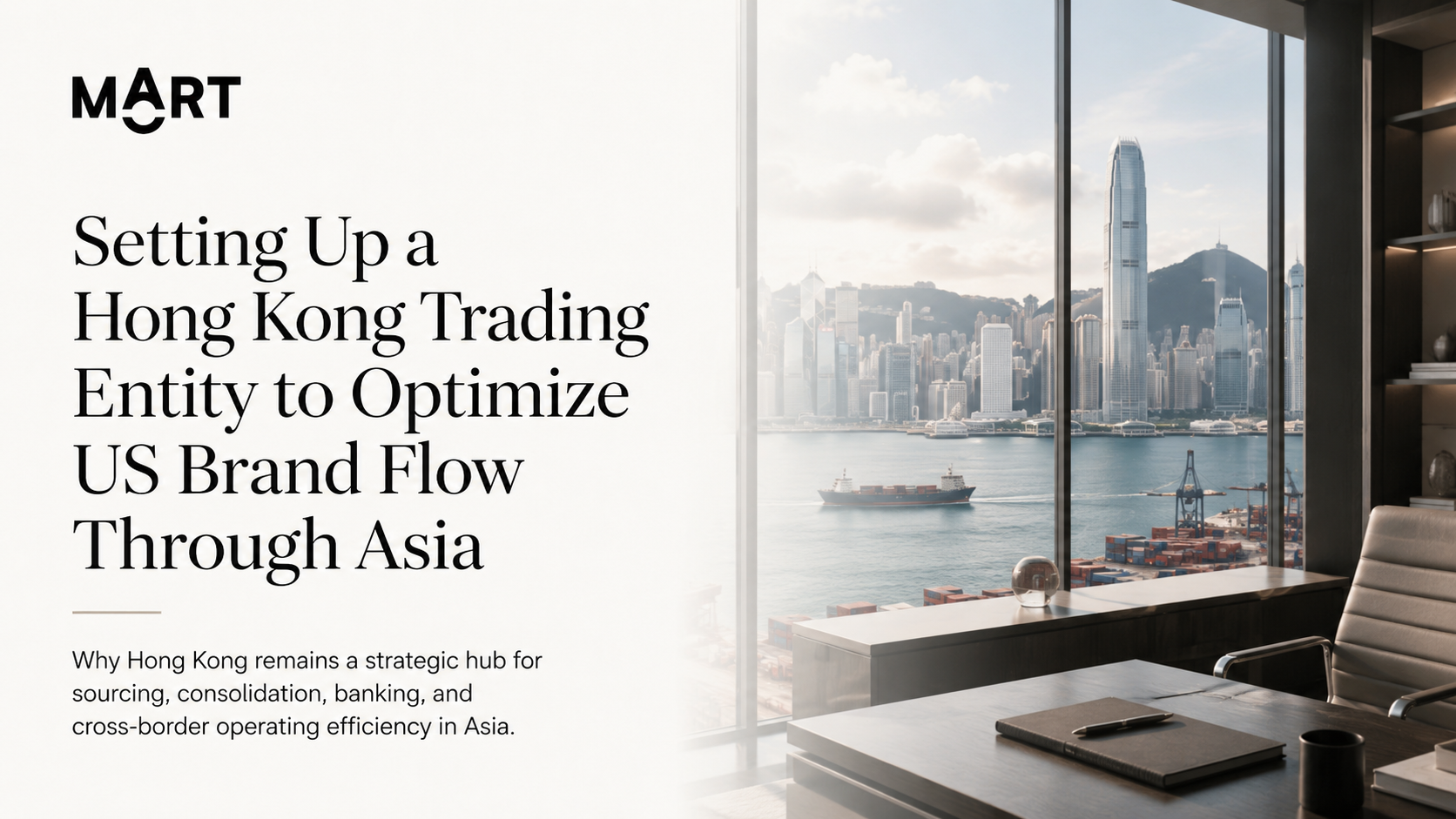
A Hong Kong trading entity remains one of the more useful structural tools for US brands managing complex Asian supply chains. The combination of Hong Kong's tax structure, banking infrastructure, free port status, and proximity to mainland China manufacturing makes the city an effective intermediary for brands that purchase from multiple Asian suppliers, consolidate inventory regionally, or manage Asia specific operational functions. The 2025 environment continues to support this structure, with refinements that brands should understand before establishing or restructuring a Hong Kong entity.
The structural value of a Hong Kong trading entity. A Hong Kong trading entity can serve several functions: purchasing from Asian suppliers in regional currencies and consolidating to US dollar billing, holding inventory in Hong Kong's free port environment before shipping to multiple destinations, managing quality control and supplier relationships from a regional base, and providing an operating presence for brand teams handling Asian supply chain functions. The combination of these functions in a single entity often simplifies the brand's Asia operations meaningfully.
Hong Kong corporate profits tax rate (standard)16.5 percent on assessable profitsHong Kong corporate profits tax rate (first $2 million HKD)8.25 percentHong Kong territorial tax basisTax on Hong Kong sourced income onlyTime to incorporate Hong Kong limited companytypically 1 to 2 weeksAnnual compliance burdenmoderate, with audit requirement for limited companies
The tax structure considerations. Hong Kong operates on a territorial tax basis, meaning the entity is taxed only on income sourced in Hong Kong, not on income earned offshore. For trading entities sourcing from mainland China and selling to US or other markets, the offshore claim is well established but requires proper substantiation. The brands that successfully maintain the offshore claim are the brands that ensure the trading entity has appropriate substance (staff, office, decision making) and proper documentation of the offshore sourced nature of the trading income.
The banking and payment infrastructure. Hong Kong's banking sector provides multi currency account capability, established correspondent relationships with mainland Chinese banks, and trade finance services that match the trading entity's operational needs. The account opening process for new entities has become more documentation intensive in recent years, but the infrastructure remains the most efficient in Asia for trading entity operations.
The mainland China integration. A Hong Kong entity provides a useful interface with mainland Chinese suppliers and operations. The free port status means that goods can move through Hong Kong without import duty, which supports a consolidation and trans shipment model. The mainland China rep office or WFOE structure that some brands operate alongside the Hong Kong entity adds operational substance on the ground in China, with the Hong Kong entity serving as the trading and financial hub.
The compliance and substance requirements. Hong Kong tax authorities have increased scrutiny of trading entities that lack genuine substance. Brands operating Hong Kong trading entities should ensure the entity has appropriate physical office presence, locally based staff with real decision making authority, and clear documentation of the trading activities and their offshore nature. Brands operating empty shell entities face increasing risk of having the offshore tax position challenged.
The alternatives to consider. For some brands, Singapore offers an alternative regional headquarters jurisdiction with similar tax characteristics and stronger ASEAN integration. For brands focused specifically on China sourcing without broader Asian operations, a mainland WFOE or Free Trade Zone entity may be a simpler alternative. The right answer depends on the brand's specific Asian operating footprint and the categories sourced.
MOART perspective. A Hong Kong trading entity remains a useful structure for US brands with meaningful Asian supply chain complexity. The structure should be established with proper tax counsel, with attention to substance and documentation requirements, and with realistic expectations about ongoing compliance burden. For brands sourcing from multiple Asian countries and shipping to multiple destinations globally, the Hong Kong entity often delivers the cleanest operating posture available in the region.