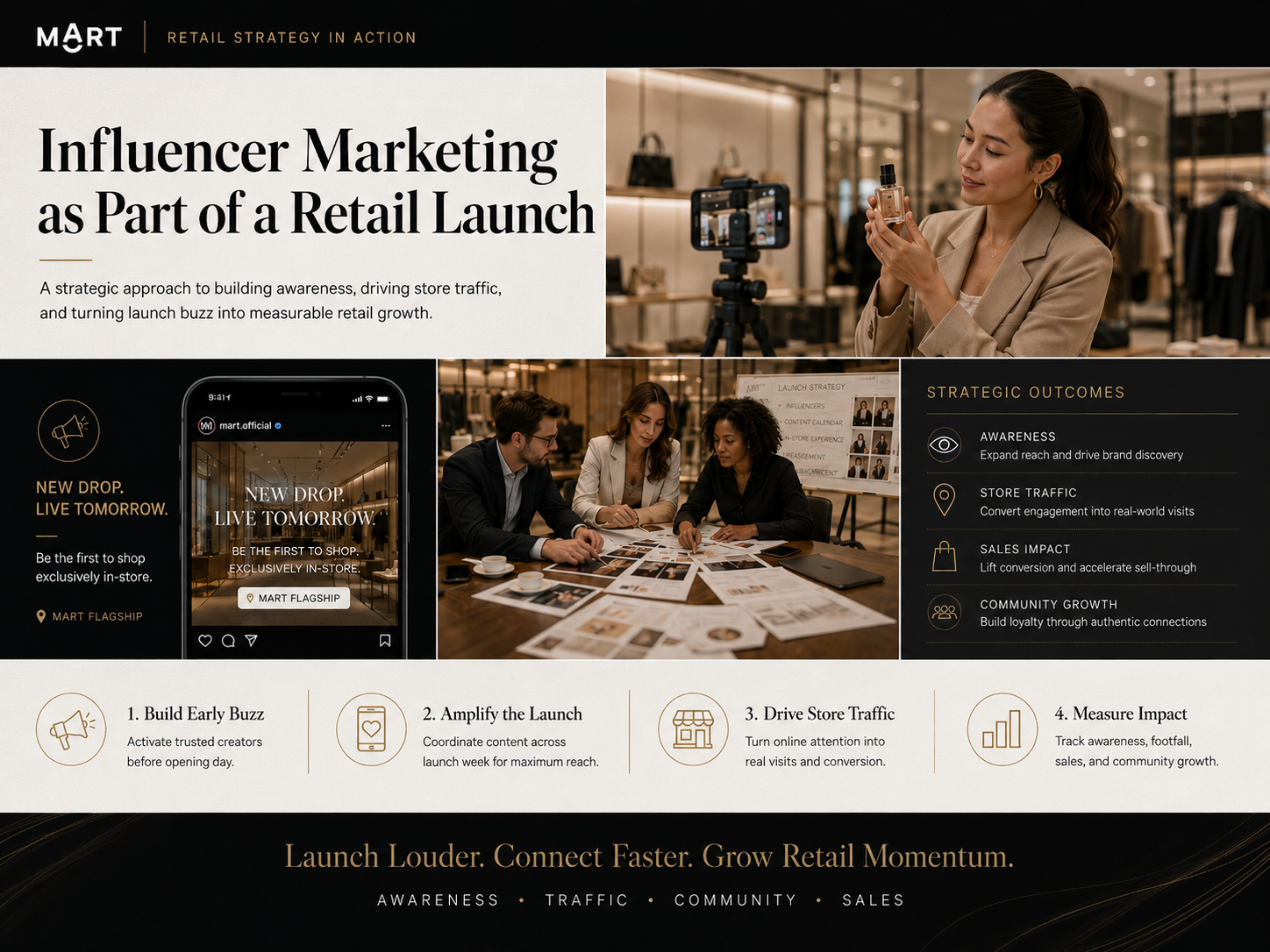
Influencer marketing has matured into one of the most reliable channels for direct to consumer brands, and the playbooks for DTC are well documented. The same playbook does not directly translate to a retail launch, where the goal is shelf velocity rather than direct sales. Brands that recycle their DTC influencer strategy for retail tend to spend the budget without seeing the shelf lift that justifies the investment. The brands that get retail influencer marketing right design the program around how retail purchases actually happen.
The first difference is the call to action. In DTC influencer content, the call to action is direct. Click the link, use the code, buy now. In retail influencer content, the call to action is harder to track. Look for this in your local Target. Try this when you next shop Costco. The shopper has to remember the recommendation, find the product on shelf, and make the purchase without a direct attribution link. The conversion path is real but invisible to standard influencer tracking.
The second difference is the measurement framework. DTC measures clicks, conversions, and revenue per influencer. Retail needs to measure shelf velocity lift in the markets where the influencer content reached the shopper, which requires retailer sell through data overlaid with influencer reach data. Brands that build this measurement infrastructure can identify which influencers actually moved the needle. Brands that measure only what is easy to measure tend to optimize for the wrong outcomes.
The third difference is the influencer selection. DTC works well with conversion focused influencers who specialize in the click to purchase journey. Retail works better with influencers whose audience overlaps with the retailer's shopper base in the specific markets where the product is distributed. A regional food influencer with a strong following in the southeast may be more valuable for a Publix launch than a national influencer with broader but less geographically concentrated reach.
The fourth difference is the content structure. DTC influencer content can be transactional and direct response oriented. Retail influencer content tends to work better when it is integrated into authentic context. A recipe video that uses the product. A routine video that includes the product. A trip to the store that features the product. The authenticity of the integration matters more in retail because the conversion path is longer and the shopper needs more reasons to remember the product when they next shop.
The fifth difference is the timing. DTC influencer campaigns can run continuously. Retail influencer campaigns produce more lift when timed around specific retail moments. The week before a major retailer's promotional event. The window in which a new product is hitting shelves. The seasonal peak for the category. Concentrated bursts of influencer activity tied to retail moments outperform continuous low intensity activity in most retail categories.