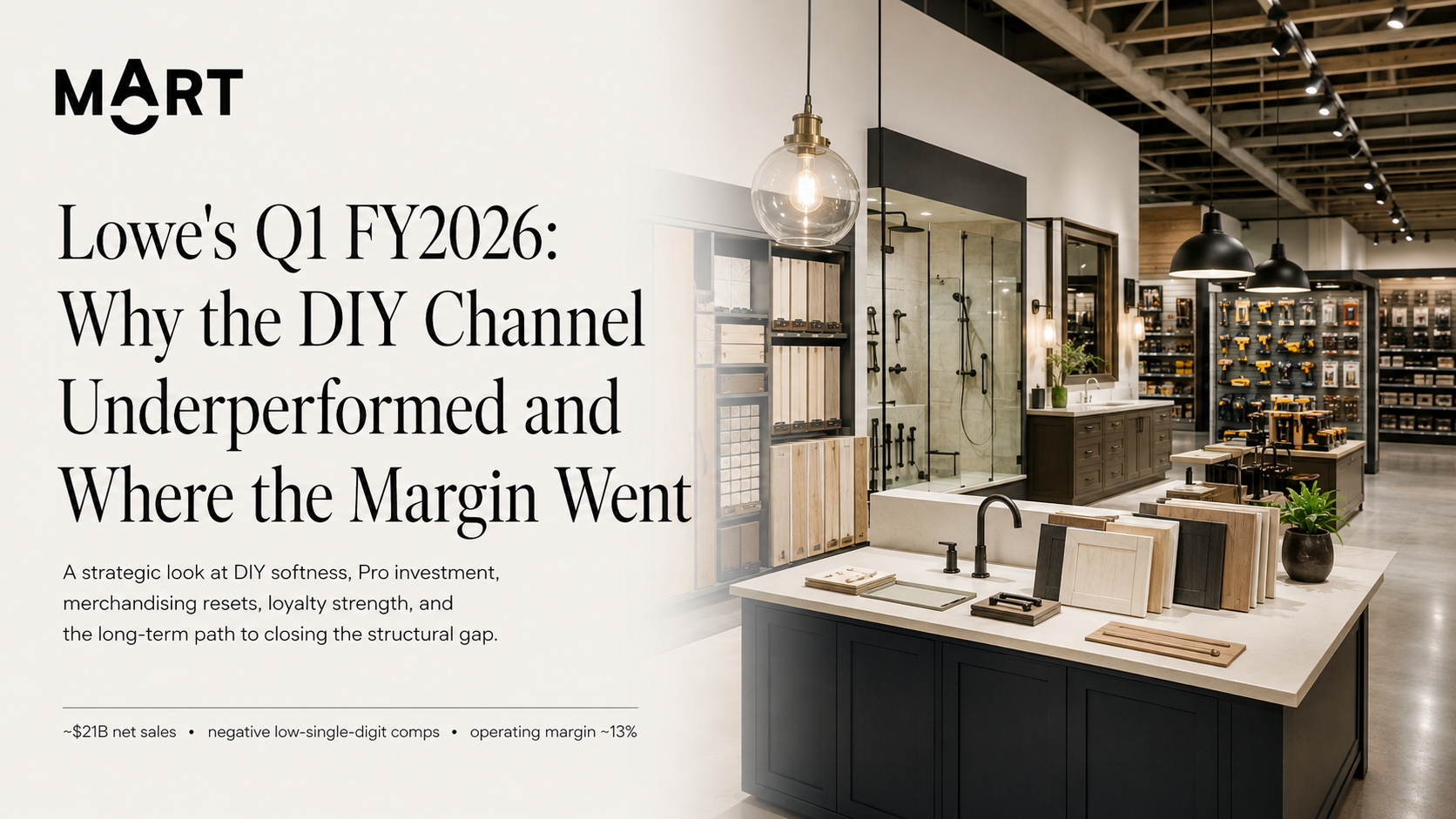
Lowe's reported Q1 FY2026 revenue of approximately $21 billion with comparable sales softer than Home Depot's by approximately two to three percentage points, reflecting the structural difference between Lowe's DIY weighted customer mix and Home Depot's Pro weighted mix. The quarter's most consequential disclosure was not the headline comp number, it was the continuing investment behind the Pro customer business as Lowe's tries to close the structural gap with the category leader.
The DIY versus Pro structural difference. Lowe's revenue mix remains skewed toward the DIY customer, who is more sensitive to housing turnover and consumer discretionary cycles. Home Depot's revenue mix is more weighted toward the Pro customer, whose spending is more durable across the housing cycle. In a softer housing turnover environment, this structural difference translates directly to comp sales performance. Lowe's strategic response has been to invest behind the Pro customer with dedicated programs, expanded credit offerings, and supply chain improvements that support Pro customer service levels.
Net sales~$21 billionComparable sales growth~negative low single digitsPro customer revenue share~25 to 30 percentDIY customer revenue share~70 to 75 percentOperating margin~13 percentOnline sales growthmid single digits
The vendor implications of the Pro investment. Lowe's is investing meaningfully in Pro customer service levels, which means vendors selling into Pro relevant categories should expect more attention from the merchant team on assortment depth, in stock performance, and delivery capability to job sites. Vendors who can demonstrate Pro customer relevance, often through case studies or program participation at Home Depot or other Pro channel buyers, have an opening at Lowe's that did not exist five years ago.
The merchandising reset. Lowe's continued to refresh categories in Q1 FY2026, with selective brand additions and deletions across appliances, kitchen and bath, and outdoor categories. The refresh is being driven by the company's data on Pro customer preferences and on shopper trip patterns, which increasingly favor a tighter, more curated assortment over a broader assortment with weaker velocity.
The MyLowes Rewards loyalty program. The MyLowes Rewards loyalty program continues to drive incremental shopper engagement, with member spend growing faster than non member spend. For vendors, the loyalty program data provides a more granular read on shopper preferences than the historical Lowe's category data, and the buyer increasingly uses this data to support assortment decisions. Brands that can articulate their value proposition in terms that fit the MyLowes member behavior often perform better in assortment reviews.
MOART perspective. Lowe's Q1 FY2026 is a transitional quarter in a multi year strategic positioning. The structural disadvantage relative to Home Depot in the current housing turnover environment is real, and the Pro investment strategy is the right long term response, but the payoff is measured in years rather than quarters. For brands considering Lowe's as a North American retail entry in the second half of FY2026, the opportunity is most attractive in categories where the Pro customer is growing and where the brand has a credible Pro customer relevance story.