Trade spend is the second-largest line item on most CPG P&Ls, behind cost of goods, and it is almost always the least examined. A brand that would never approve a marketing campaign without a measurement plan will run a promotional calendar year after year on the assumption that discounting drives growth, without ever testing whether each individual event earned its money back. That assumption is expensive, because a meaningful share of trade spend is not buying incremental volume at all.
The mechanism is straightforward. A promotion only creates value when the volume it sells would not otherwise have happened. Volume that the shopper would have bought at full price, or that simply pulls forward a purchase from next month, is volume the brand paid to discount for no incremental gain. When you measure promotions at the event level rather than in aggregate, the distribution is rarely flattering: a portion of events are strong, a large middle is roughly break-even, and a real tail is destroying margin every time it runs.
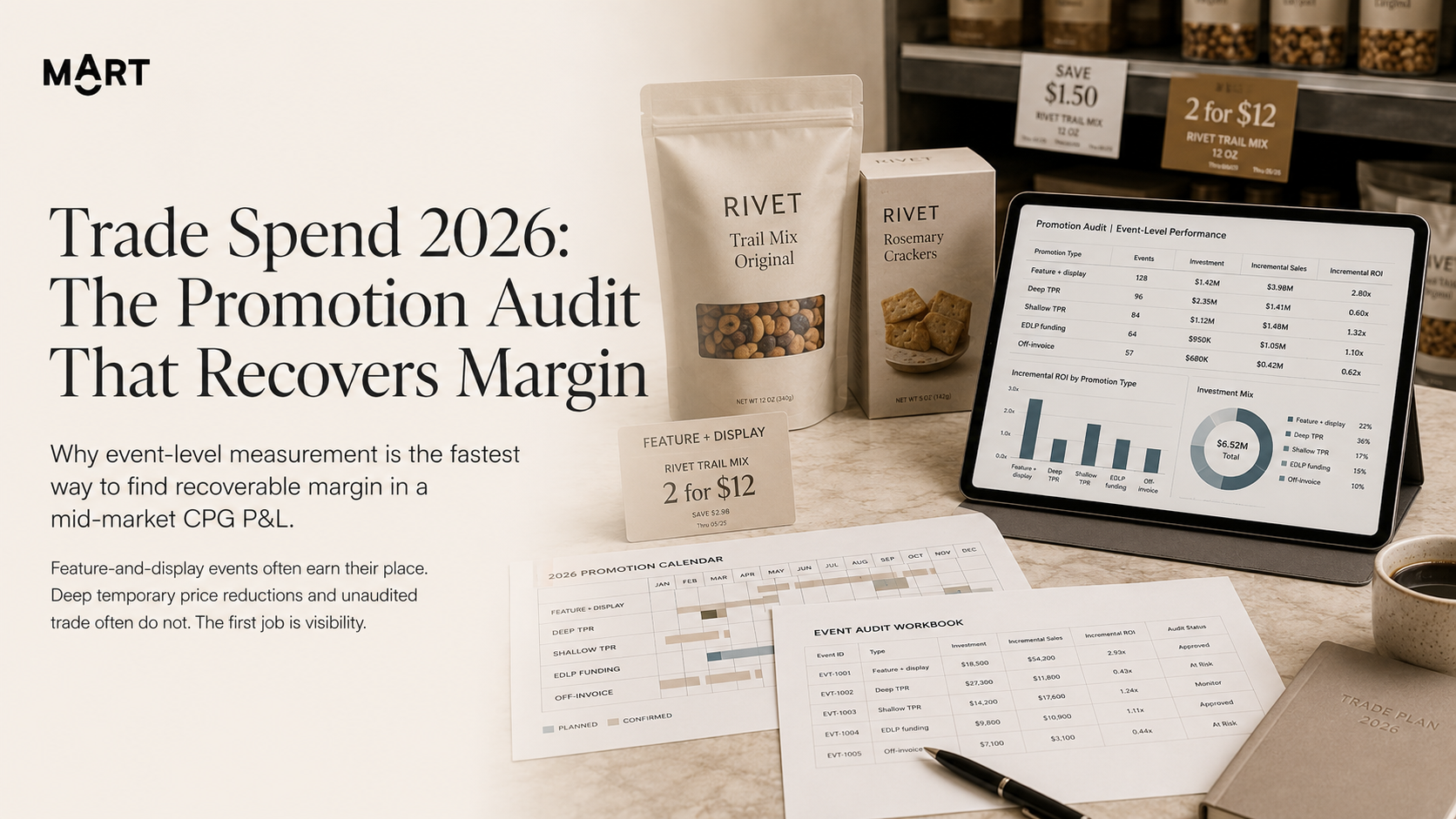
The table below shows a representative spread from a promotion audit. The numbers are illustrative of the pattern, not any single brand, but the shape recurs across categories with remarkable consistency.
Promotion typeShare of trade spendIncremental ROIVerdictFeature + display30%1.8xProtect and scaleTemporary price reduction, deep22%0.7xRestructureTemporary price reduction, shallow18%1.1xHold, monitorEveryday low price funding16%0.5xRenegotiateOff-invoice, untracked14%UnknownAudit immediately
Two rows in that table are where the money is. The deep temporary price reductions returning seventy cents on the dollar and the everyday low price funding at fifty cents are not marketing investments, they are margin transfers. Together they can represent a third or more of total trade spend. Redirecting even half of that into the feature-and-display events that return well above cost can lift trade-driven contribution by several points without spending an additional dollar.
The most dangerous row is the last one: off-invoice, untracked spend. If a brand cannot tie a dollar of trade to a specific event and a specific outcome, that dollar is unaudited by definition, and unaudited trade is where margin leaks fastest and quietest. The first job of a trade audit is not optimization, it is visibility. You cannot kill a negative-ROI promotion you cannot see, and you cannot defend a renewal you never measured.
The discipline that fixes this is unglamorous and durable. Measure every event against a clean baseline. Rank events by incremental ROI. Cut the persistent destroyers, restructure the break-even middle, and reinvest in the proven winners. Then hold the line in the next joint business plan, because the pressure to reinstate a deep discount a retailer has grown used to is relentless.
Unaudited trade is the single largest pool of recoverable margin hiding on a CPG P&L. The brands that find it are not running more sophisticated models, they are simply willing to measure each promotion honestly and stop running the ones that lose money. The first audit almost always pays for itself many times over, because the negative-ROI tail has usually been running unchallenged for years. The question is never whether the leak exists. It is whether anyone has looked.