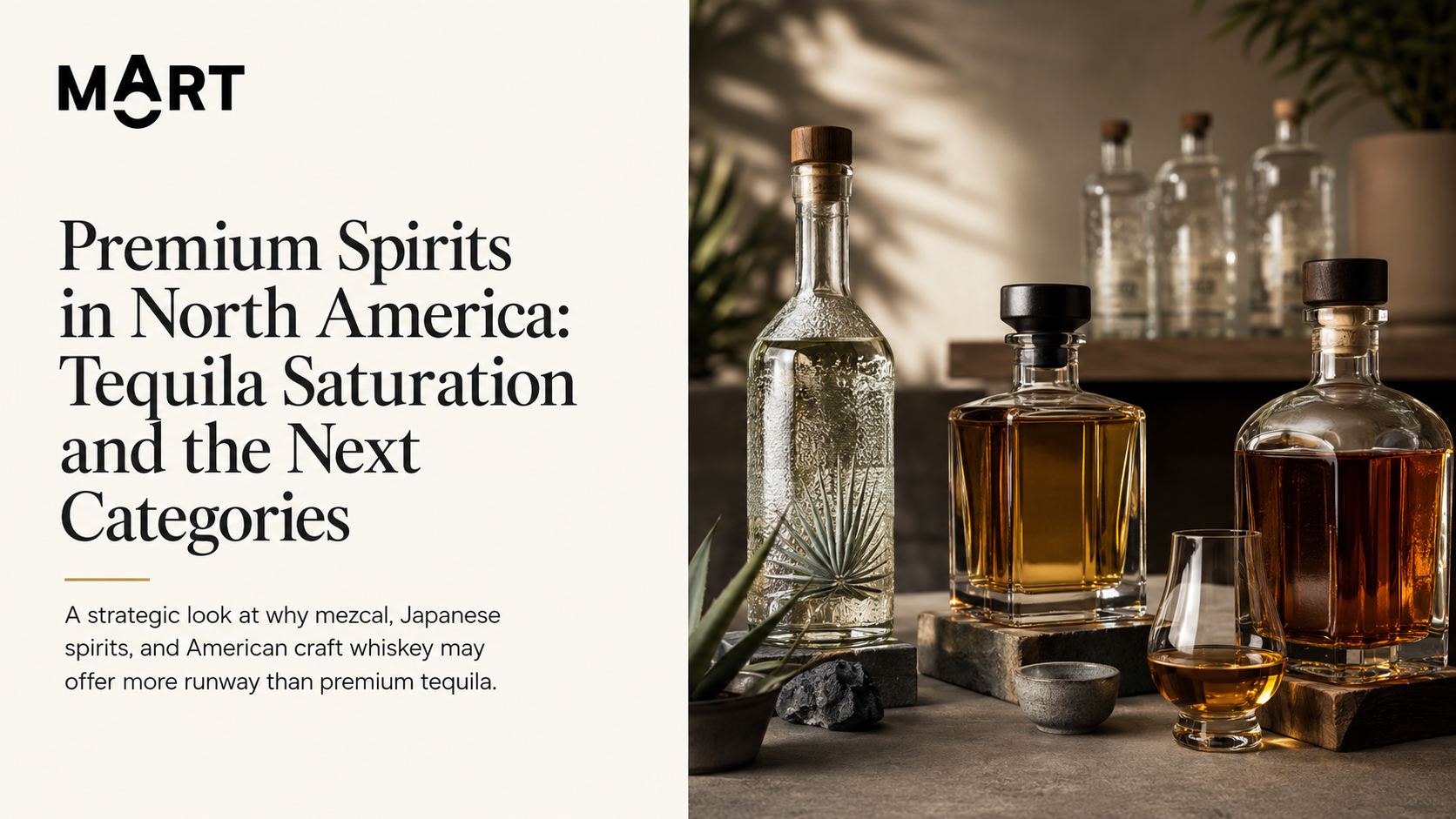
Premium tequila has reached category saturation in North American retail. After a decade of explosive growth driven by celebrity brand introductions, premiumization across the tier, and broader shopper acceptance of agave spirits, the category now faces the slowdown that follows saturation: shelf availability is tightening, brand differentiation is harder, and the structural growth rate is converging toward the broader spirits category growth rate. For brands and investors in premium spirits, the question is now whether tequila remains the right place to compete or whether the next premium spirits categories deserve disproportionate attention.
The tequila saturation context. The premium tequila category in North America grew at double digit rates for years, with retailers expanding shelf capacity meaningfully and shoppers trading up across the tier. The category in 2026 has reached the point where retailer shelf capacity is constrained, new brand entry is more competitive, and brand differentiation requires more sophisticated work than the historical celebrity brand or origin story playbook supported. The category continues to grow, but at rates more comparable to the broader spirits category than the historical premium tequila premium.
Premium tequila category growth (historical)double digits annually for multiple yearsPremium tequila category growth (2026)converging toward broader spirits growthNumber of premium tequila brands on US shelveshundreds, with continued additionsNumber of celebrity launched tequila brandsdozens, with mixed performancePremium tequila retail price range$30 to $200+ per 750ml
The next premium spirits categories worth watching. Three categories are showing the early indicators that suggested tequila's growth opportunity a decade ago. Premium mezcal, which extends the agave spirits family with distinctive production methods, regional sourcing stories, and a sophisticated shopper base that values the artisanal craft. Premium Japanese whisky and Japanese spirits, which continue to attract premium shopper attention with high quality production and limited supply. American craft whiskey, with continued specialty distillery growth and shopper interest in regional and craft whiskey traditions.
The mezcal opportunity. Mezcal continues to grow at strong rates relative to broader spirits, with premium mezcal in particular attracting shopper interest. The category benefits from the broader agave spirits trend established by tequila, with mezcal positioned as the more artisanal and craft alternative. For brands considering mezcal entry, the category dynamics resemble tequila five to seven years ago, with growing shelf availability, expanding shopper acceptance, and meaningful runway for brand differentiation.
The Japanese whisky and spirits opportunity. Japanese whisky continues to attract premium shopper interest, with the category supply often constrained relative to demand and pricing reflecting the scarcity dynamics. The broader Japanese spirits category, including Japanese gin, vodka, and other categories, benefits from the spillover interest from Japanese whisky and from the broader Japanese cultural moment in food and beverages.
The American craft whiskey expansion. American craft whiskey continues to expand, with new distilleries adding regional and category specific offerings that complement the established major whiskey brands. The shopper preference for craft and regional whiskey continues to grow, with retailers increasingly supporting the craft tier alongside the established mass brands. For brands considering craft whiskey entry or investment, the category continues to offer meaningful opportunity in the premium and ultra premium tiers.
The brand selection implications for retailers. Retailers operating premium spirits categories in 2026 face brand selection decisions that differ from the historical playbook. The tequila tier is saturated, which means new tequila additions need to clear a higher bar than three years ago. The mezcal tier is expanding, with growing shelf availability. The Japanese whisky tier is supply constrained, with the brand selection often driven by allocation rather than active brand pursuit. The American craft whiskey tier is growing, with the retailer increasingly able to support regional and specialty brands.
The investor implications. Premium spirits has attracted substantial capital investment over the past decade, with the tequila category receiving particular attention. The 2026 investment environment requires more discerning category selection, with capital more likely to find attractive returns in the mezcal, Japanese spirits, and American craft whiskey opportunities than in additional tequila brand creation. Investors evaluating premium spirits opportunities in 2026 should focus on the next wave categories rather than the established tequila category.
MOART perspective. Premium spirits remains an attractive category for the right brand with the right operating posture, but the category specific opportunity has shifted from tequila to the next wave categories. For brands and investors considering premium spirits entry or expansion in 2026, the strategic conversation should center on the categories with structural growth runway (mezcal, Japanese spirits, American craft whiskey) rather than on the saturated premium tequila category. The brands that recognize this shift early will capture more attractive opportunities than the brands that continue to invest behind the historical tequila narrative.