Programmatic out of home (OOH) advertising has matured into a credible component of the retail launch marketing mix, particularly for brands launching at specific retailer locations and wanting to build awareness in the immediate trade areas around those stores. The combination of digital OOH inventory, programmatic buying platforms, geofencing capability, and improved attribution measurement has shifted OOH from a brand awareness only investment to a measurable shopper acquisition channel.
The 2025 programmatic OOH landscape. Programmatic OOH inventory now spans digital billboards, transit screens, retail and lifestyle adjacent screens, gas station screens, and an expanding set of screen types in office buildings, residential buildings, and entertainment venues. The buying platforms have matured to support real time programmatic bidding, audience targeting through location data, and creative optimization. The result is an OOH buying environment that looks more like programmatic display than the traditional OOH outdoor agency model.
Programmatic OOH share of total US OOH spend (2025)~25 to 30 percentDigital OOH share of total OOH inventory~50 percent and growingTypical retail launch geofence radius around target stores0.5 to 2 milesTypical campaign duration for launch support4 to 8 weeksTypical CPM for programmatic OOH (varies by market)$5 to $25
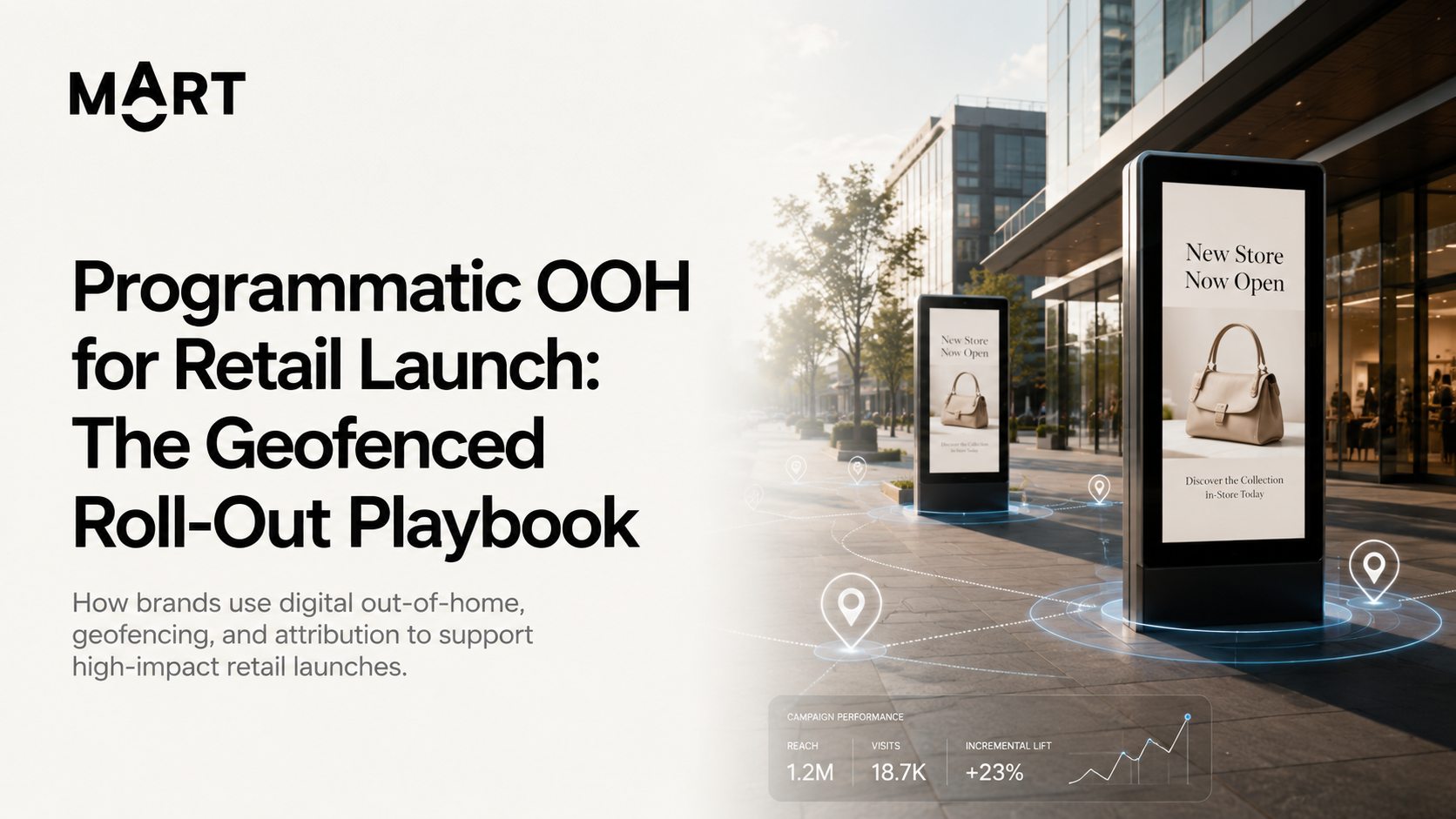
The geofenced retail launch use case. The most consistently valuable use case for programmatic OOH in retail launch is the geofenced campaign around specific target retailer locations. A brand launching at Target stores in a defined geography can run OOH inventory within a small radius of those stores, with creative that drives shopper awareness of the brand's presence at Target. The campaign coordinates with the launch window, the in store merchandising support, and the broader shopper marketing program.
The attribution measurement. Attribution for OOH has historically been weak, but the 2025 measurement infrastructure has improved meaningfully. The credible attribution methods include retailer point of sale lift measurement (comparing sales in exposed geographies to control geographies), mobile location data showing increased visits to target stores in exposed audiences, and survey based brand lift measurement. None of these methods are perfect, but the combination produces a credible read on campaign effectiveness that did not exist five years ago.
The creative requirements. Programmatic OOH creative differs from broadcast OOH creative in important ways. The viewer is typically in motion (driving, walking, commuting) with limited attention time. The creative must communicate the brand, the product, and the retailer presence in seconds. Effective creative typically combines bold visual identity, a single clear message, and a strong retailer call to action (in Target stores now, available at Walmart, etc.) that gives the shopper a clear next step.
The integration with shopper marketing. Programmatic OOH works best as part of an integrated shopper marketing program rather than as a standalone investment. Coordination with the retailer's in store merchandising window, the retail media spend, the social media activation, and the influencer program creates a compounding effect that any single channel alone cannot match. Brands that run OOH in isolation often see weaker measured outcomes than brands that integrate the OOH spend into the broader launch program.
The budget allocation framework. For a retail launch with a typical seven figure marketing budget, programmatic OOH typically takes 10 to 20 percent of the marketing allocation, depending on the geographic concentration of the launch and the importance of the in store experience to the brand. The brands that allocate more than 20 percent to OOH often underweight digital and retail media. The brands that allocate less than 10 percent often fail to build sufficient brand awareness in the trade area to drive trial.
MOART perspective. Programmatic OOH in 2025 deserves consideration in the retail launch marketing mix for any brand with meaningful physical retail presence in defined geographies. The measurement improvement, the targeting capability, and the creative flexibility have moved OOH from a brand only investment to a shopper acquisition channel. For brands planning retail launches in 2026, the OOH allocation should be evaluated against the specific launch context rather than defaulted to either zero or to the historical OOH benchmark.