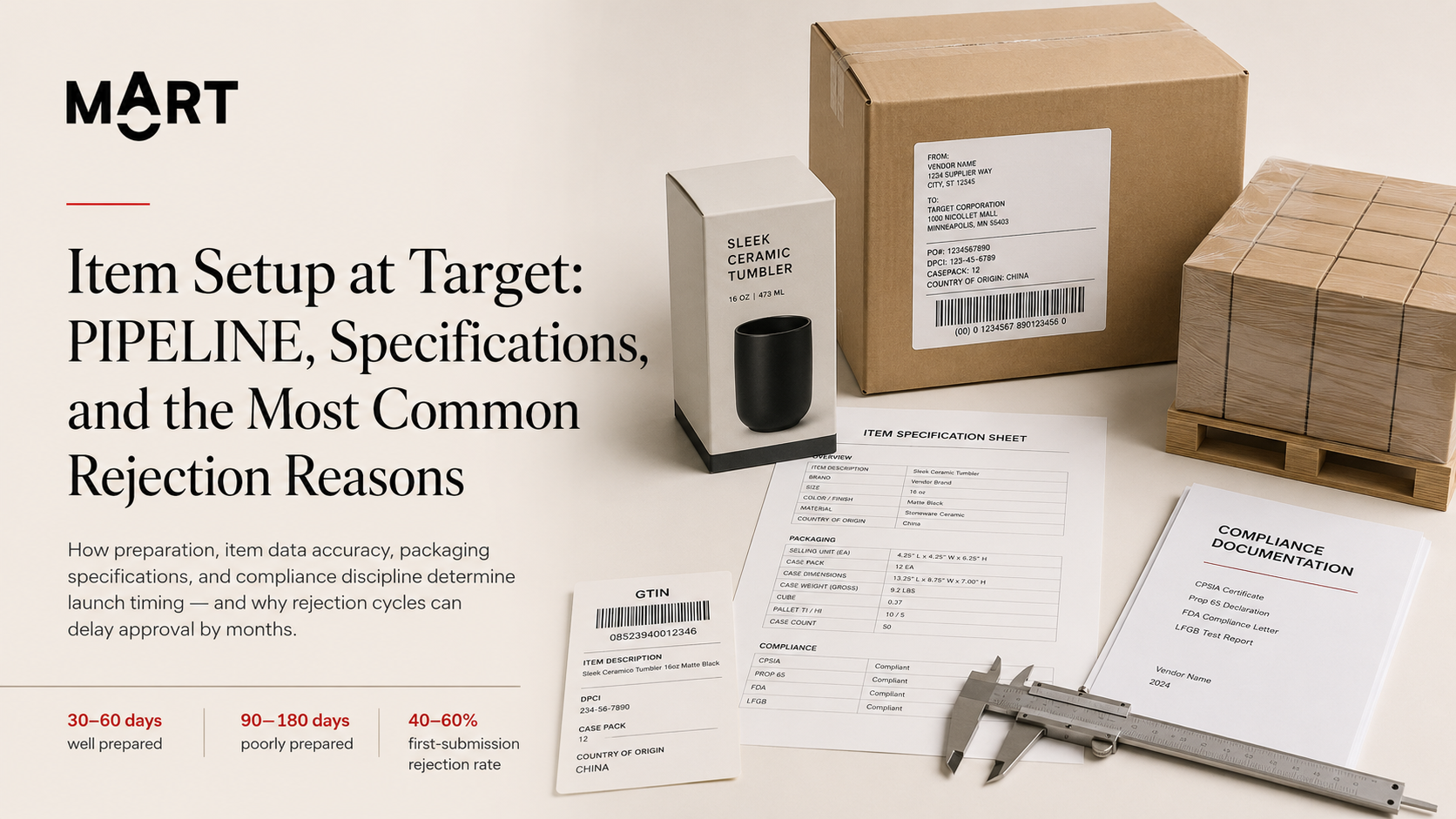
Item setup at Target through the PIPELINE system is one of the gating operational disciplines that determines whether a brand can sell into Target on the timeline the buyer agreed to. PIPELINE requires comprehensive item data, packaging specifications, regulatory documentation, and logistics information, with rejections returning the brand to the back of the queue for resubmission. Brands that prepare for PIPELINE properly typically complete item setup in 30 to 60 days. Brands that learn the requirements as they go often face 90 to 180 day setup cycles that delay launch.
The data scope. PIPELINE requires data across several dimensions for each SKU. Item attributes, including dimensions, weights, materials, and category specific attributes. Packaging specifications, including the case configuration, master pack quantities, palletization, and labeling. Regulatory documentation for relevant categories, including FDA registration for applicable products, prop 65 disclosures for California, and category specific compliance documentation. Logistics information, including the distribution centers the brand will serve and the lead times for replenishment. Image and content for digital channel use on target.com.
Typical PIPELINE submission cycle (well prepared brand)30 to 60 days from first submission to approvalTypical PIPELINE submission cycle (poorly prepared brand)90 to 180 days with multiple rejection cyclesCommon rejection rate (first submission)typically 40 to 60 percent for new vendorsNumber of data fields per itemvaries by category, often 100+ fieldsTime per rejection cycle to correct and resubmittypically 10 to 30 days
The most common rejection reasons. Five rejection reasons recur across brand submissions to Target PIPELINE. First, dimension and weight inconsistencies between the packaging artwork and the case configuration, which create logistics planning issues for Target operations. Second, regulatory documentation gaps, particularly missing or expired certifications for relevant categories. Third, image quality and content compliance issues, particularly product images that do not meet Target's resolution and styling standards or product descriptions that do not match category requirements. Fourth, GTIN and item identifier inconsistencies, where the GTIN registered with GS1 does not match the data submitted to PIPELINE. Fifth, packaging artwork that does not meet Target's barcode placement and labeling requirements.
The brand preparation that accelerates approval. Four disciplines applied before the first PIPELINE submission materially reduce rejection cycles. Pre validate all dimensions and weights with a physical sample measurement that documents the actual packaging dimensions. Refresh all regulatory documentation and confirm the certifications are current. Engage with the Target supplier support resources to walk through the requirements before submission. Use the most experienced internal or external resource familiar with Target's PIPELINE to prepare the submission rather than treating it as a first time operational task.
The image and content discipline. Target's image and content requirements have become more rigorous over time, with specific resolution, framing, and styling standards that the buyer's office uses to evaluate the brand's digital channel readiness. Brands that submit professional product photography prepared specifically to Target's standards typically pass image approval on the first submission. Brands that submit lifestyle imagery or images prepared for other retailers often face rejection cycles that delay the digital channel readiness.
The category specific considerations. Different categories have different PIPELINE requirements and rejection patterns. Food and beverage categories require additional ingredient and nutrition information. Beauty and personal care categories require additional regulatory documentation. Apparel categories require care label and content information. Hardlines categories require additional safety documentation. Brands should research the specific category requirements before the first submission.
The post approval ongoing maintenance. PIPELINE approval is the entry point, not the end of the operational work. Item data changes (packaging refreshes, dimension changes, regulatory updates) require ongoing PIPELINE maintenance. Brands that maintain their item data carefully throughout the relationship typically avoid the disruption of having stale item data block operational performance.
MOART perspective. Target's PIPELINE system rewards brand preparation and punishes brands that learn the system through trial and error. For brands entering Target for the first time in 2026, the right approach is to allocate sufficient resources and time to PIPELINE preparation before the first submission, and to engage with experienced internal or external operational support to walk through the requirements proactively. The brands that take this approach typically launch on the buyer's timeline; the brands that compress PIPELINE preparation typically miss the buyer's launch window and lose momentum with the relationship.