Target reported Q1 FY2026 revenue of approximately $26 billion with comparable sales returning to modest positive territory after a sequence of softer quarters. The result is the first quarter of clean year over year growth since the reinvention plan was outlined to investors, and the operating leverage is starting to show in the gross margin line rather than only in the cost line.
What changed in the quarter. Traffic was approximately flat and ticket grew in the low single digits, with discretionary categories returning closer to plan and the food and household essentials business growing in line with category. The owned brand portfolio continued to outperform national brand, but the gap narrowed compared to recent quarters as Target leaned into branded promotional activity to drive trip frequency.
Net sales~$26 billionComparable sales growth~1 percentDigital growth~6 percentSame day services growth~10 percentOwned brand penetration~30 percentGross margin rate~28 percentRoundel advertising revenue growth~25 percent year over year
The reinvention scoreboard. Target outlined the reinvention plan with five pillars: owned brand acceleration, store as fulfillment center, partnership strategy in beauty and apparel, services growth, and the Roundel advertising platform. Q1 FY2026 is the first quarter where all five pillars contributed positively in the same period. Roundel grew approximately twenty five percent in the quarter, the partnership strategy continued to draw foot traffic via Ulta Beauty at Target and Disney shops, and the services business, led by same day delivery via Shipt, grew in the low double digits.
Owned brand and the vendor coexistence question. Target's owned brand portfolio now generates roughly thirty percent of total revenue, a meaningfully higher share than the broader mass channel average. For national brands selling at Target, the practical reality is that the buyer's category plan starts from the owned brand baseline and asks the national brand to add incremental value. The brands winning at Target right now are the ones positioned as the premium tier above the owned brand, not the value tier alongside it. The brands losing are the mid tier brands at price parity with the owned brand offering, who increasingly cannot defend shelf when the buyer rebalances the planogram.
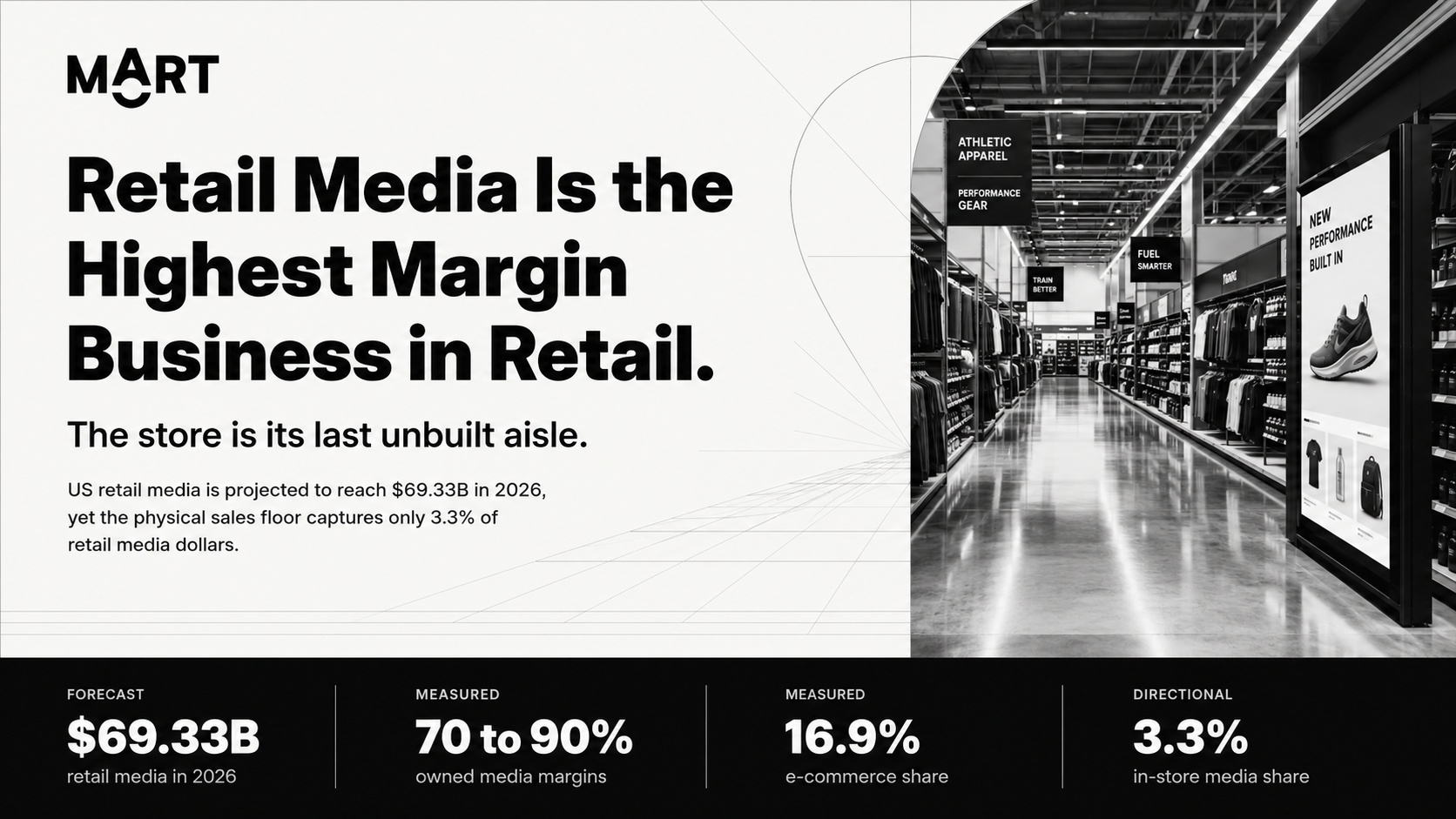
The Roundel implications. Roundel is now Target's fastest growing margin line, and the platform is increasingly integrated into the category review process. A buyer evaluating a new brand at Target now sees the brand's existing Roundel spend and projected media commitment as part of the vendor scorecard, not as a separate marketing conversation. For international brands entering Target, this means the media plan and the trade plan must be presented as a single integrated commitment, with measurable lift projections tied to media weight.
What brands should plan for the rest of FY2026. Three things. First, the partnership strategy is expanding to new categories and the assortment review windows for partnership brands are tighter and more competitive than the broader vendor base. Second, Target Plus, the third party marketplace, is growing and now supports adjacent assortment that the buyer cannot bring through 1P. Brands with marketplace ready operations should evaluate Target Plus as a parallel path. Third, the holiday quarter setup will look different this year than last year, with earlier promotional cadence and a shorter peak window.
MOART perspective. Target Q1 FY2026 is a foundation quarter, not a breakout quarter, but the foundation is real. The reinvention pillars are working in concert for the first time. For brands considering Target as a market entry partner over the next twelve months, the conversation should center on which reinvention pillar your brand reinforces, not on traditional category placement metrics alone.