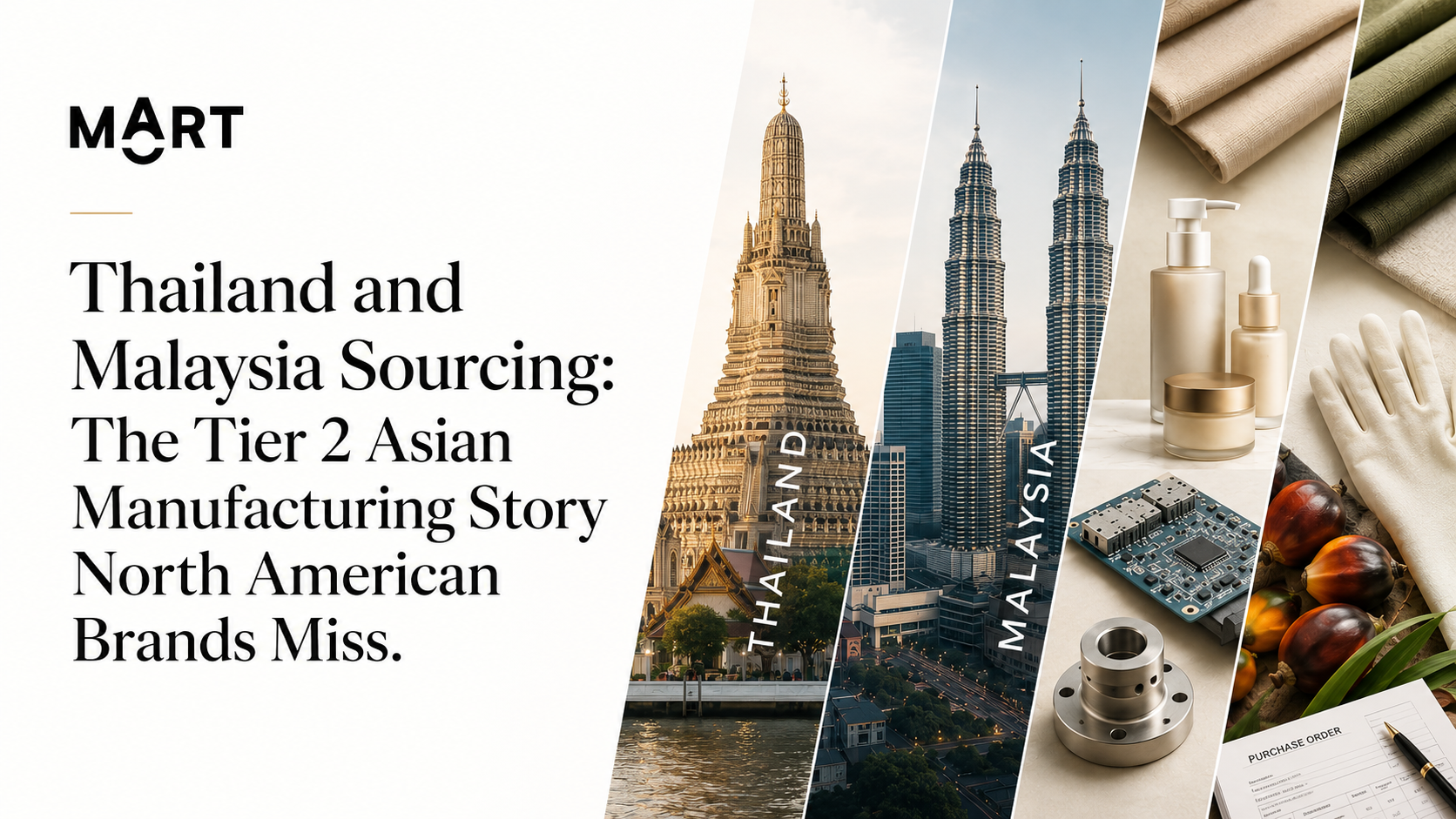
Thailand and Malaysia operate as tier two Asian sourcing destinations that North American brands often miss in favor of larger volume destinations like China, Vietnam, or India. The tier two label undersells the capability available in both countries, particularly in specific categories where the manufacturing depth is comparable to leading destinations and the strategic fit is sometimes better than the obvious alternatives. For brands building diversified Asian sourcing footprints in 2025, Thailand and Malaysia deserve a category specific evaluation.
Thailand's category strengths. Thailand has developed strong manufacturing capability in several categories particularly relevant to North American consumer brands. Apparel manufacturing, particularly woven apparel and embellished products, with established export infrastructure in Bangkok and surrounding industrial zones. Food and beverage manufacturing, including processed food, beverages, and specialty ingredients with strong export discipline. Personal care contract manufacturing, with growing capability in skincare, color cosmetics, and hair care. Hard goods including kitchenware, pet products, and home accessories.
Thailand apparel capabilityStrong, particularly woven and embellishedThailand food and beverageWorld class for processed and specialtyThailand personal care contract manufacturingGrowing, particularly for premium skincareMalaysia electronics manufacturingStrong, particularly in Penang and JohorMalaysia rubber and latex productsWorld leading capabilityMalaysia palm oil and downstreamGlobally dominantLead time from Thailand or Malaysia to US West Coast~16 to 22 days ocean transit
Malaysia's category strengths. Malaysia's manufacturing base spans electronics (particularly in Penang's semiconductor and component cluster), rubber and latex products (gloves, condoms, related), palm oil and downstream products (food ingredients, personal care ingredients), furniture (particularly wood and rattan), and a growing capability in medical devices and pharmaceutical contract manufacturing.
The strategic fit for North American brands. Both countries offer English language operating environments at the management level, which simplifies the brand to manufacturer communication compared to some other Asian alternatives. Both countries have established export infrastructure, predictable trade relationships with the US and Canada, and currency environments that have been comparatively stable. The pricing environment is generally competitive with Vietnam for comparable categories, slightly above mainland China for some, and below Korea and Japan for most relevant categories.
The compliance and audit context. Both Thailand and Malaysia have mature compliance and audit infrastructures, with established adoption of Sedex, BSCI, and category specific certifications. The variability across manufacturers is meaningful, as with any Asian destination, but the framework for brand specific verification is straightforward.
The cultural and operational considerations. Thailand's business culture emphasizes relationship and patience, with the strongest manufacturer relationships often building over multiple seasons of interaction. Malaysia's business culture is generally more transactional and English communication is often stronger at the operational level. Brands should match their operating style to the manufacturer's expectations for the relationship to work durably.
The category specific recommendation framework. For brands in apparel, food and beverage, or premium personal care, Thailand often deserves evaluation as an alternative or supplement to Vietnam or China. For brands in electronics, medical devices, or rubber and latex products, Malaysia often deserves evaluation as an alternative to mainland China or as a primary destination. For brands in furniture, both countries offer credible capability that complements Vietnam's strength in the category.
MOART perspective. Thailand and Malaysia deserve more attention than the broader sourcing diversification narrative gives them. For North American brands building diversified Asian sourcing footprints in 2025, the right approach often involves Vietnam plus one or two of these tier two destinations for the categories where their capability fits. The brands that build durable programs in Thailand and Malaysia treat them with the same operational discipline that they apply to larger destinations, and the brands that approach them as opportunistic alternatives often discover the friction points after the first production cycle.