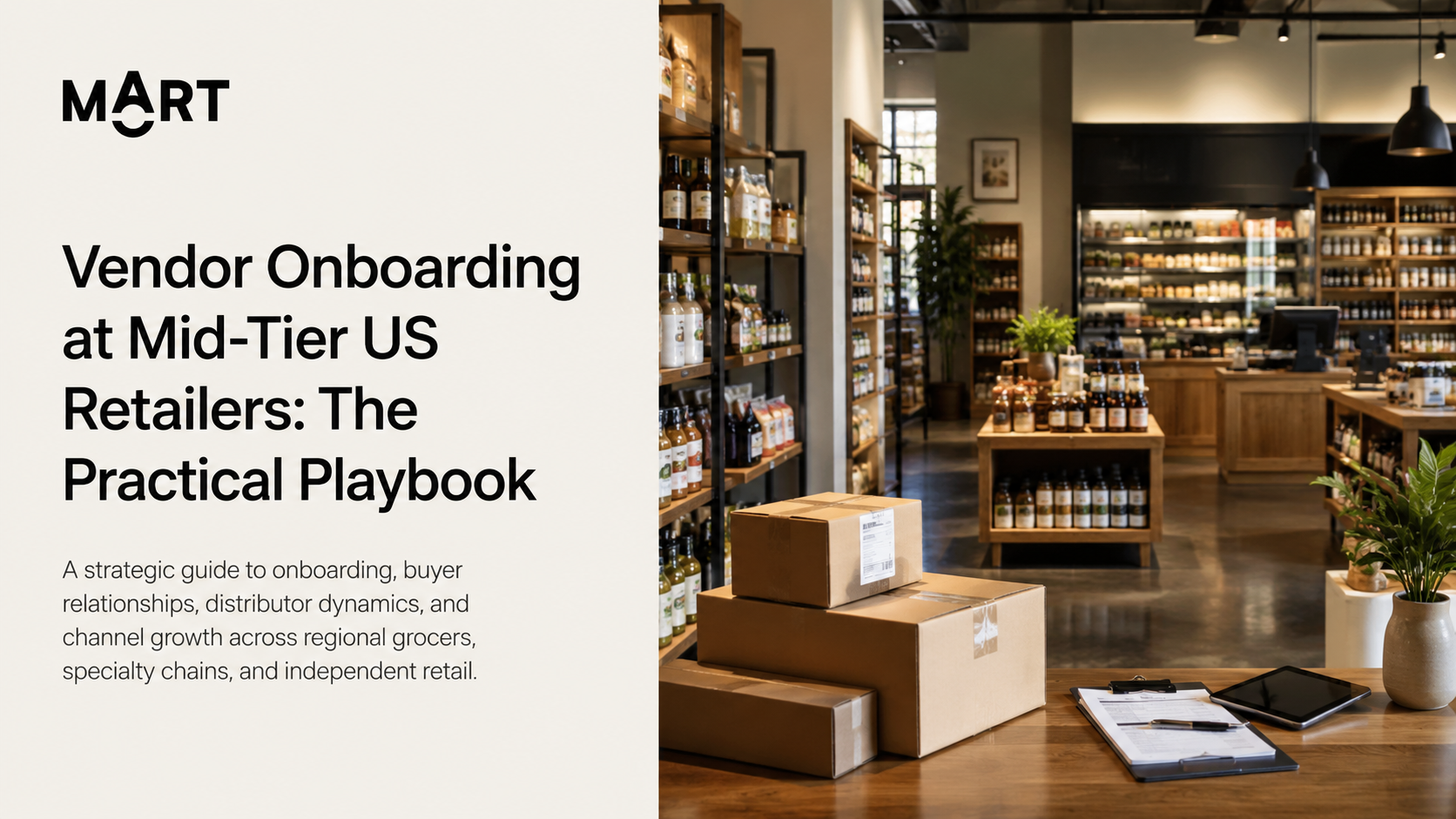
Vendor onboarding at mid tier US retailers (regional grocers, specialty chains, dedicated category retailers below the major mass and grocery scale) is operationally distinct from the major retailer onboarding playbooks discussed in prior MOART briefings. The mid tier retailer environment has different operational requirements, different buyer relationship dynamics, different scale economics, and different brand growth trajectories than the major retailer environment. For brands building US distribution strategies, the mid tier retailer channel often serves as a meaningful growth vector alongside major retailer relationships, with the right operating posture producing materially better outcomes than the major retailer playbook applied unmodified.
The mid tier retailer landscape. The US mid tier retailer landscape includes regional grocery chains (Wegmans, Publix, H-E-B regional banners, Giant Eagle, Hy-Vee, others), specialty chains (Lululemon for athletic apparel, REI for outdoor, Williams Sonoma for premium kitchen, others), dedicated category retailers (specialty natural channels, regional pet specialty, regional drug chains), and the broader independent retailer channel served through distributors. The aggregate scale of this channel landscape is substantial, with many categories generating more revenue through mid tier and below than through the largest national retailers.
Regional grocery chain typical store count50 to 500+ storesSpecialty chain typical store countvaries by category, often under 500 storesIndependent retailer count (US, aggregate)tens of thousands of stores across categoriesDistributor served channel revenuesubstantial in many specialty categoriesTypical mid tier retailer onboarding timelineoften 30 to 60 days, faster than major retailersTypical mid tier retailer EDI requirementoften required but less complex than major retailers
The operational differences from major retailers. Mid tier retailers typically operate with less complex EDI requirements, more flexible operational expectations, and faster decision cycles than major retailers. The buyer relationships are often more direct, with smaller buyer offices and more autonomy for individual buyers. The trade spend expectations are typically lower than major retailers, with the brand selection driven more by product fit and shopper preference than by aggressive trade investment. The combination produces a different operational rhythm that rewards brand teams that can engage more nimbly than the major retailer playbook supports.
The buyer relationship dynamics. Mid tier retailer buyer relationships are typically more personal and less mediated through complex internal processes than major retailer buyer relationships. The buyer often makes the brand selection decision directly, with limited committee oversight, and the relationship continues through direct ongoing engagement. The implications for brand teams are that personal relationship management matters more, that the brand presentation can be less formal but should be substantively compelling, and that the ongoing operational performance is visible to the buyer in ways that the major retailer scale tends to obscure.
The distributor channel dynamics. Many mid tier retailers and the broader independent retailer channel are served through distributor relationships rather than direct brand to retailer relationships. The distributor channel adds operational layers (distributor margin, distributor warehouse operations, distributor sales force engagement) but also provides reach that direct brand engagement cannot easily replicate. For brands considering the mid tier and independent channel, the distributor relationship decision is often the foundational strategic choice.
The category specific opportunity map. Different categories have different mid tier and independent channel dynamics. Specialty food and beverage often relies heavily on distributor served independent channels in addition to mid tier retailers. Specialty beauty and personal care often combines specialty retailer relationships with independent salon and spa channels. Specialty home and lifestyle often involves boutique retailer relationships and the broader gift and specialty channel. Brands should map the channel opportunities specifically for their category rather than applying a generic mid tier strategy.
The brand operating posture. Brands that succeed in mid tier and independent channels typically operate with several distinctive characteristics. Smaller, more responsive sales and operational teams that can engage personally with multiple buyer relationships. Operational capability that supports lower volume per customer with higher relative service expectations. Brand presentation and product positioning that resonates with the specialty channel shopper base. Distributor partnership management that extends the brand's reach without diluting the channel positioning.
The growth trajectory implications. The mid tier and independent channels often serve as the growth foundation that supports brand expansion into major retailer relationships over time. Brands that build durable mid tier and independent channel positions typically develop the operational capability, shopper preference signals, and brand credibility that strengthen major retailer pitches when the brand is ready for that scale. The sequencing of mid tier first and major retailer second works for many brands and categories.
MOART perspective. The mid tier and independent US retailer channel deserves explicit strategic attention for many consumer brands, with the operational requirements and the relationship management distinct from the major retailer playbook. For brands building US distribution strategies in 2026 and beyond, the right approach combines major retailer relationships with strong mid tier and independent channel presence, with the operational capability and the brand positioning designed appropriately for each channel type. The brands that operate this multi tier strategy typically achieve more durable distribution and better category positioning than the brands that focus only on major retailers.