The customs broker is one of the most important early hires for an international brand entering the United States, and the decisions you make at broker selection ripple through your landed cost, your delivery timing, and your compliance posture for years. A good broker is worth meaningfully more than the fees paid. A weak broker can introduce errors that cost the brand multiples of any fees saved.
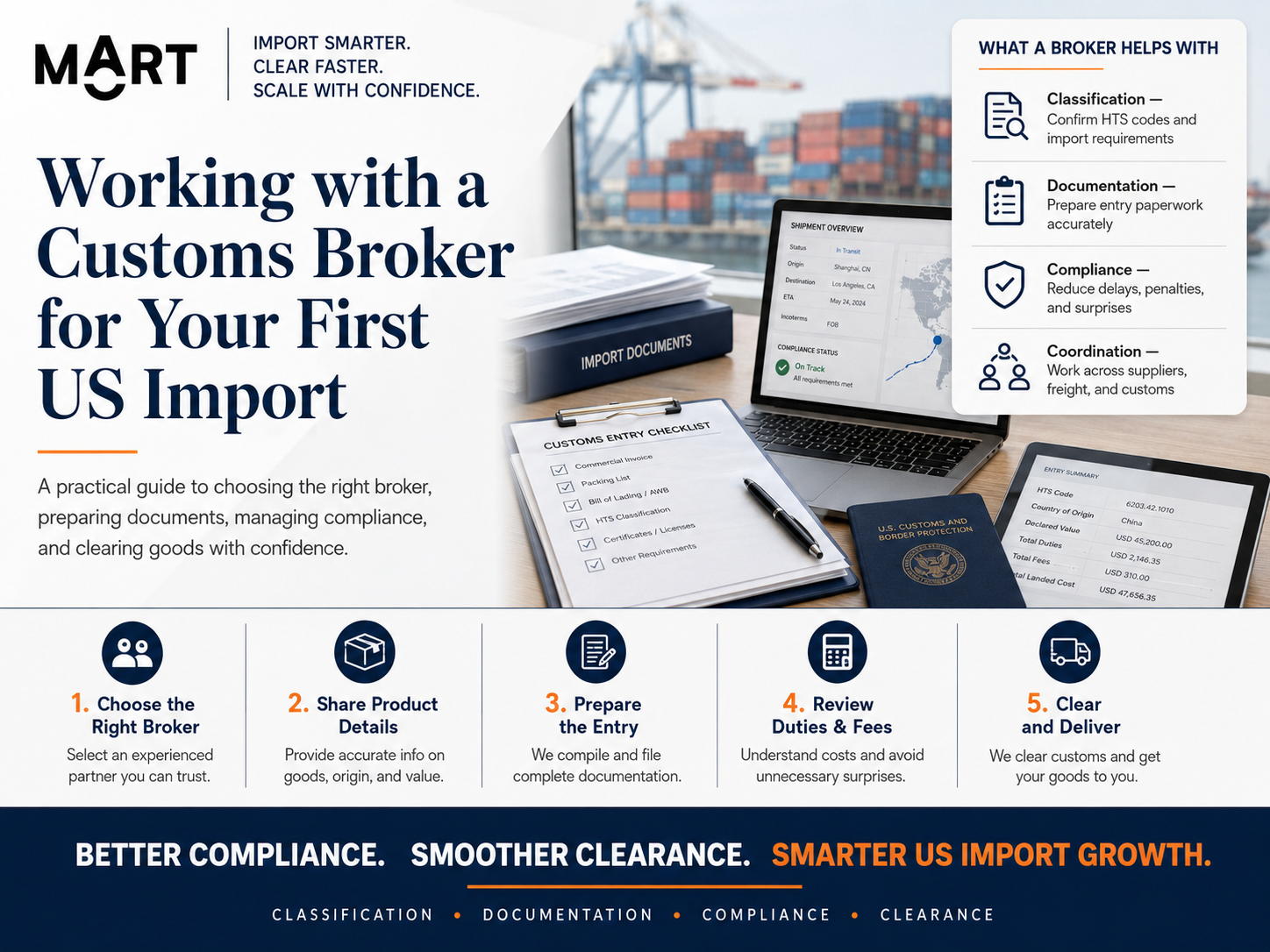
A customs broker manages four primary workstreams on your behalf. The first is customs entry filing. Every shipment that enters the United States must be entered through Customs and Border Protection with the correct classification, value declaration, country of origin, and supporting documentation. Errors at the entry stage can result in delays, penalties, or in extreme cases, seizure of the shipment.
The second is tariff classification. The Harmonized Tariff Schedule classification determines the duty rate applied to your product. Classifications can be ambiguous, and the difference between two plausible classifications can mean a multi percentage point difference in duty rate. A broker who understands your product category can defend favorable classifications and avoid the misclassifications that lead to retroactive duty assessments.
The third is regulatory compliance verification. Many product categories require additional clearances from agencies beyond CBP. FDA for food, drugs, cosmetics, and medical devices. EPA for chemicals and pesticides. FCC for electronics. USDA for certain food products. The broker coordinates these agency clearances and ensures the shipment is not held pending paperwork.
The fourth is post entry support. The broker maintains records, responds to CBP inquiries, manages periodic audits, and supports duty drawback claims for products that are eventually exported or destroyed.
What the brand needs to provide for the relationship to work is straightforward but often overlooked. Complete and accurate commercial invoices, packing lists that match the actual shipment, manufacturer information, raw material composition for products that require it, and full disclosure of any regulatory considerations the broker may not know about. Brands that provide complete documentation up front have shipments clear in hours. Brands that provide incomplete documentation have shipments held for days while questions are resolved.
Choose a broker with experience in your specific product category. Confirm their volume of similar entries. Ask for references from comparable brands. The relationship pays dividends for years, and the wrong choice is expensive to unwind.