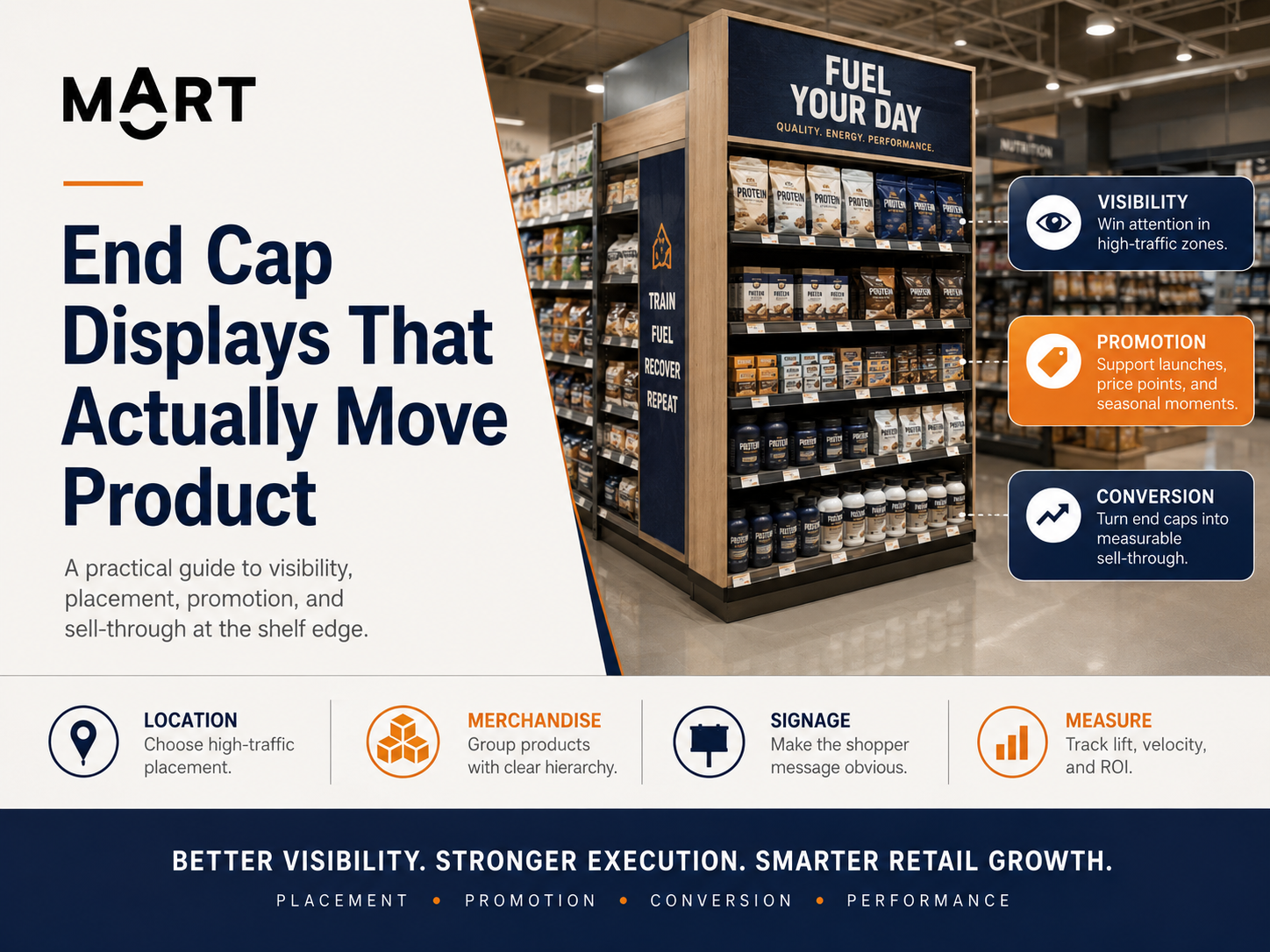
End cap placements are one of the most coveted shelf positions in retail, and they are also one of the most consistently underleveraged. A brand pays for the end cap, the retailer commits the placement, and then the execution falls flat because the visual merchandising, the price positioning, or the product selection does not match what the end cap is actually capable of producing. The good end caps move product. The bad end caps absorb trade spend and produce nothing measurable.
The first factor is product selection. The product that goes on the end cap should be either a known velocity driver or a new launch with strong category fit. Putting a slow moving SKU on an end cap rarely accelerates it. Putting an already strong SKU on an end cap can lift it by thirty to fifty percent during the placement period. The end cap amplifies whatever the product already is, and brands that put their wrong product on the placement are wasting the opportunity.
The second factor is the offer. A strong end cap pairs a featured product with a clear, compelling offer that is different from the everyday price or the everyday positioning. A buy one get one. A bundled price. A loyalty multiplier. A limited time price. Without a differentiated offer, the end cap is just a different shelf location, and shoppers do not respond to location alone with the lift that a real offer can produce.
The third factor is visual merchandising. The end cap is read by the shopper in three to five seconds as they walk by. The signage, the product arrangement, and the hero image all need to communicate the offer instantly. End caps that require shoppers to stop and read fine print to understand the value tend to underperform end caps that communicate the value at glance distance.
The fourth factor is timing. End caps that align with seasonal traffic peaks, category demand spikes, or relevant cultural moments outperform end caps in neutral periods. A grilling product on a Memorial Day end cap. A back to school product in August. A holiday gifting product in the Black Friday window. The retailer's traffic mix changes with the calendar, and the end cap value is highest when the placement aligns with what shoppers are already coming in to buy.
The fifth factor is post placement measurement. Brands that track lift versus baseline, conversion versus other placements in the period, and basket attachment from the end cap can build a real model of which end caps work. Brands that do not measure tend to repeat the same end cap design that did not produce, because nobody has the data to argue for a different approach.