Cross-border brands entering North American retail face a single foundational decision that determines almost every other channel choice: how to balance online and offline sales channels. The answer is not the same for every category, and it is not the same for every stage of brand maturity. This article breaks down the trade-offs and gives operating brand teams a framework for making the call.
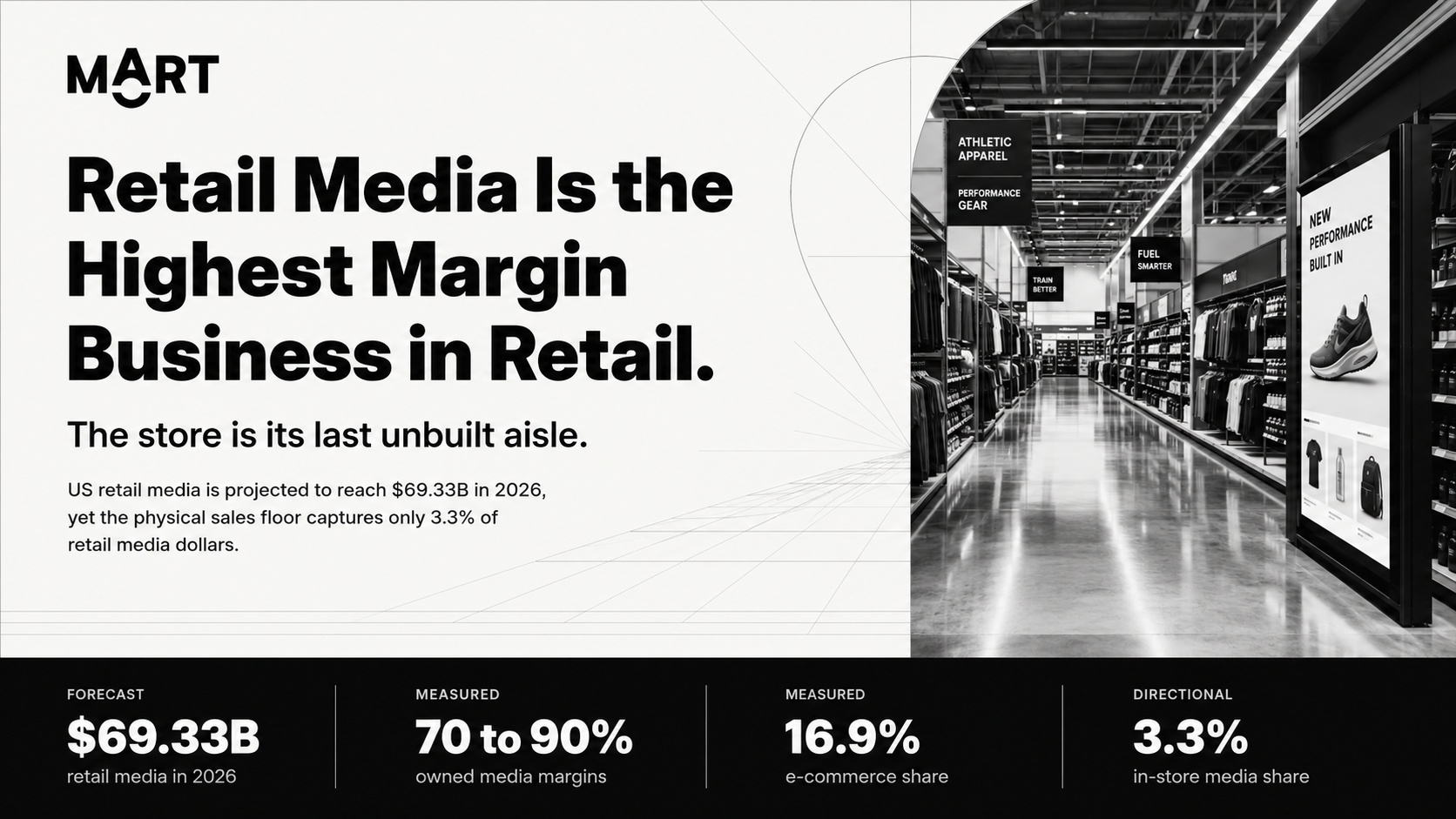
Roughly 24 percent of US retail sales now happen online, which means 76 percent still happen in physical stores. That ratio has been stable for three years and is projected to remain stable through 2028 according to Forrester. Brands that build channel strategies around the online figure alone are designing for a quarter of the market. The offline channel is not a legacy concern, it is where most retail spend still goes.
What has changed is the relationship between the two channels. Pure-DTC brands that built audiences online now use physical retail to scale awareness and trust faster than performance marketing alone can deliver. Pure-retailer brands that built distribution through Walmart, Target, and Costco now use DTC to capture margin and customer data that the retailer relationships do not surface. The hybrid model has won, and the question is not which channel to choose but how to sequence them.
Online-first brand entry into North America works best when the category has these traits: clear consumer demand pre-validated in another market, a product that ships compactly (small parcel, low return rate), a brand identity that translates through digital media, and a customer who is willing to discover and trial through online channels. Beauty, supplements, apparel basics, accessories, and small consumer electronics all fit this profile.
The online-first playbook: launch on Shopify with a focused SKU range, run paid acquisition on Meta and Google to seed first 6 to 12 months of data, build email and SMS lists from day one, layer in Amazon to capture residual search demand, and use the first year of data to negotiate retailer placements with proof in hand. Allbirds, Glossier, and Warby Parker all followed variants of this playbook before opening physical doors.
Offline-first brand entry works best when the category has these traits: high-touch product that requires physical demonstration or fitting, a price point that benefits from in-store trust-building, a competitive set that already dominates DTC channels, or a regulatory environment (cannabis, alcohol, supplements, baby) that limits online sales. Outdoor power equipment, furniture, large appliances, premium spirits, and many CPG categories fit this profile.
The offline-first playbook: prioritize one or two anchor retailer relationships (e.g., Costco roadshow programs, Lowe's Pro), absorb the operational lift of retailer compliance (item setup, packaging, logistics, chargebacks) as the cost of entry, layer DTC as a brand-storytelling and customer-data channel rather than a primary sales channel, and use in-store demonstration and event marketing to build trust the online channel cannot replicate.
Most successful brands in 2026 run both channels simultaneously, with the relative emphasis shifting as the brand matures. Year 1 is usually online-heavy because the operational lift of retailer relationships is high and the brand needs proof-of-demand data to negotiate. Year 2 adds the first major retailer relationship (often Amazon for online-native brands or Costco for offline-native brands). Year 3 builds out the full channel mix with one anchor retailer plus two or three scale retailers plus a DTC channel optimized for margin and data.
The trap to avoid: treating Amazon as the second channel instead of as part of the first. Amazon is online distribution, not offline distribution. Brands that use Amazon as their offline-substitute end up with two online channels and zero physical presence, which limits trust-building in categories where trust matters.
The numbers that brand operators need to internalize: online retail conversion rates run 2 to 3 percent across most categories. Physical store conversion rates run 20 to 30 percent in the same categories. A customer who walks into a store is roughly ten times more likely to buy than a customer who lands on a product page. This is why offline channels still generate the majority of retail revenue despite lower foot traffic than online sessions.
The implication for channel strategy: if the goal is revenue scale, a physical retail presence is structurally efficient even at higher operational cost per channel. The cost-per-customer-acquired math favors online; the cost-per-revenue-dollar math favors offline. Most brands need both for different reasons.
MOART runs the operational scaffolding that makes both online and offline channels work for international brands entering North America. The work includes Amazon Vendor Central and Seller Central operations, Shopify and DTC platform setup, retailer onboarding at Walmart, Target, Costco, Lowe's, Home Depot, Kroger, Sephora, and specialty channels, in-store activation programs including Costco roadshow staffing, USMCA and FDA compliance, customer service and returns operations, and the cross-channel analytics that connect online discovery to offline conversion.
For brands evaluating which channels to enter and in what order, MOART provides the operational read on what is realistic in the current quarter versus what is a year 2 or year 3 build. To discuss your channel strategy, contact MOART at info@moartgrp.com or visit moartgrp.com/contact.