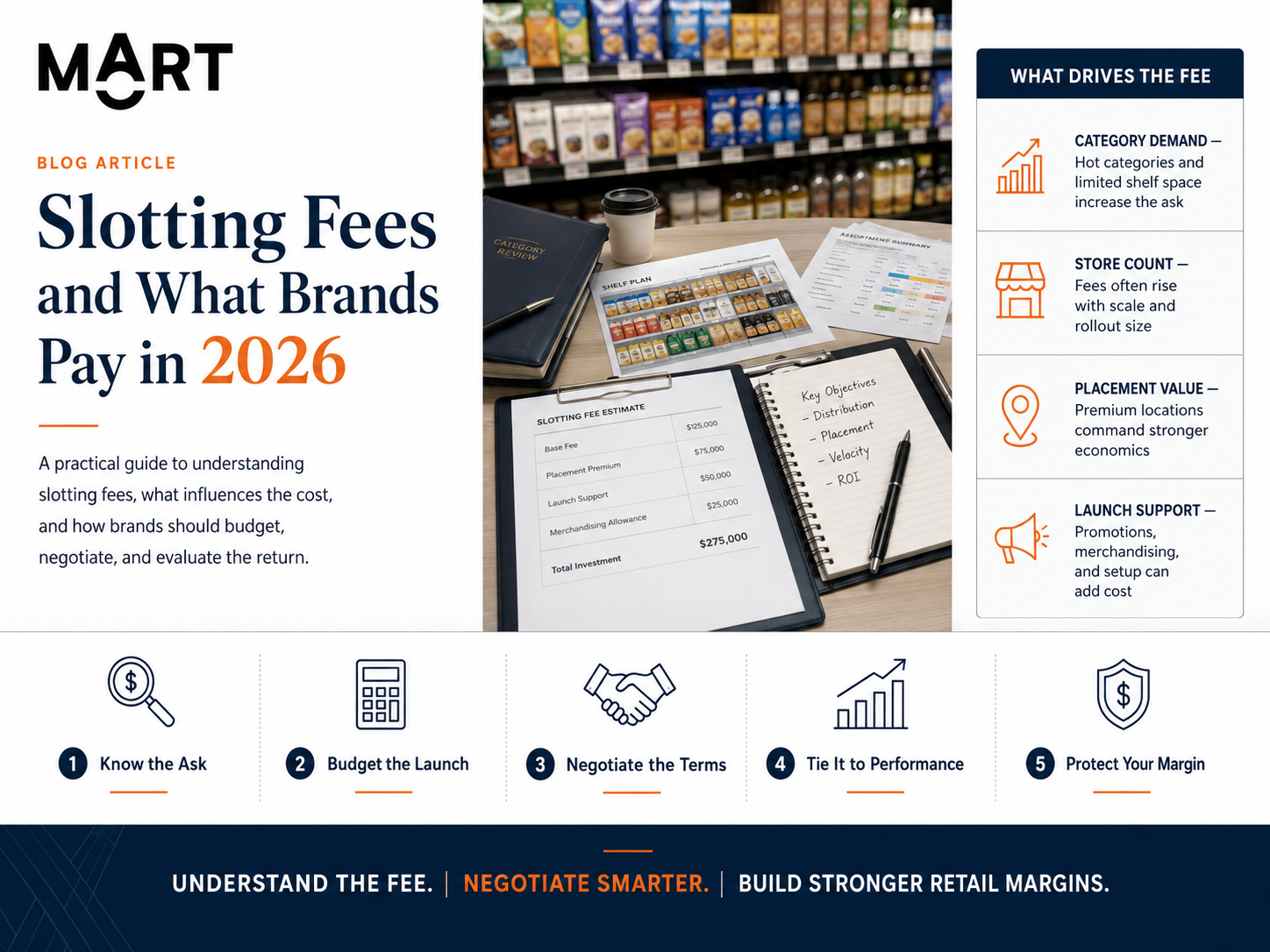
Slotting fees are one of the most opaque costs in US retail, and international brands often arrive with assumptions about slotting that no longer reflect current market practice. The rates have shifted, the formats have shifted, and the categories where slotting applies have shifted in the past three years. A current snapshot helps brands plan landed cost calculations that match the actual market.
In food and beverage at conventional grocery, slotting fees remain standard practice. Rates vary by retailer and category, but a single SKU in a single retailer can carry slotting costs of fifteen to forty thousand dollars for a year of shelf placement in a thousand store chain. National launches in major grocery typically require slotting investments well into six figures across the retailers, before a single dollar of sales is realized.
In mass retail, slotting structures look different. Walmart formally states no slotting fees, but the trade promotional commitments expected of new vendors functionally serve the same purpose. The vendor commits to a defined promotional calendar, a defined trade spend, and defined marketing support in exchange for shelf placement. The cash flow timing is different, but the total cost to launch is often comparable to traditional slotting at grocery.
In club retail, slotting fees are uncommon. Costco, Sam's Club, and BJ's typically do not charge slotting. Their model is to extract value through pricing discipline and member savings rather than upfront fees. The trade off is that club margins are typically lower than grocery margins, and the bundle and pack design requires upfront product development investment.
In specialty and natural retail, slotting fees are smaller but present. A single SKU at a regional natural chain might carry slotting of two to five thousand dollars per store across the chain. National natural channels with five hundred to a thousand stores can still require meaningful upfront investment.
What is negotiable is more than most brands realize. Slotting is often presented as a fixed fee but is in fact a starting point for negotiation. New vendors with limited budget can often negotiate reduced upfront slotting in exchange for higher trade spend commitments, longer payment terms, or sliding scale guarantees tied to sell through. The brands that get this right invest the time to understand each retailer's framework and negotiate based on what the retailer actually values, not just the published fee.