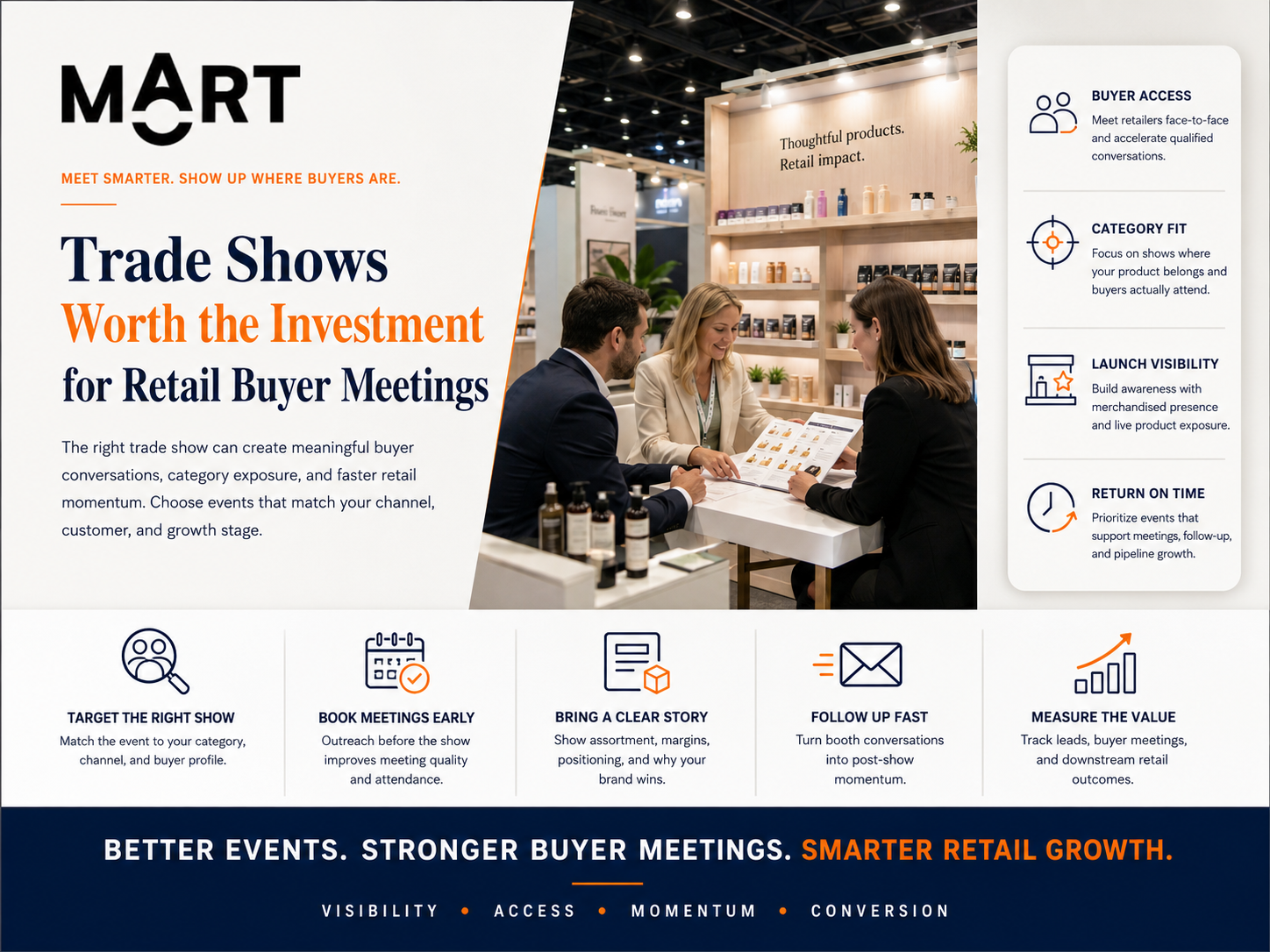
The trade show landscape in the United States is crowded, and the cost of exhibiting at a major show can easily run from forty thousand to one hundred fifty thousand dollars when booth, travel, samples, and team time are fully accounted for. International brands entering the US should be selective, because not every trade show actually surfaces the right buyers, and a trade show that is full of other vendors but few buyers is an expensive way to fill a calendar.
In natural and specialty food, Expo West and Expo East remain the anchor events. Buyers from Whole Foods, Sprouts, regional natural chains, and independent grocery scout these shows actively. The investment is substantial, but the conversion to meetings is the highest in the category. A well prepared brand can secure twenty to forty buyer meetings across a single Expo, which is more than a quarter of normal cold outreach can produce.
In housewares and home goods, the Inspired Home Show in Chicago remains the primary event where mass retail buyers scout new lines. Target, Walmart, Costco, Bed Bath, and the regional chains all send buyer teams. A first time international entrant should plan for two cycles of presence before expecting consistent meeting volume.
In consumer electronics, CES is largely an industry and press event rather than a retail buyer event. The retail buyers who attend tend to do so for media monitoring rather than line scouting. The more productive show for actual retail buyer meetings is the Consumer Electronics Show's adjacent Retail TouchPoints events, or category specific buyer summits run by major retailers.
In beauty and personal care, Cosmoprof North America in Las Vegas surfaces buyers from mass, drug, and specialty retail. The buyer to vendor ratio is reasonable, and the format allows for meaningful conversations. Indie Beauty Expo and CEW events serve narrower segments well.
In retail specifically, ECRM efficient consumer response marketing sessions are highly productive because they are structured as pre-arranged buyer meetings rather than booth traffic. Brands that prepare well can have twenty to thirty private buyer meetings in three days, which is unmatched in any open booth format.
The fix is to research where the buyers in your specific category actually go, talk to other brands in the category about their show return, and invest in two or three shows where the buyer concentration is real, rather than spreading thin across six shows where most attendees are also vendors.