Packaging that performed well in a brand's home market rarely makes it onto a North American retail shelf without modification. The reasons are partly regulatory, partly merchandising, and partly cultural, and the changes required are predictable enough that brands can plan for them at the product development stage rather than discovering them at the retailer compliance review.
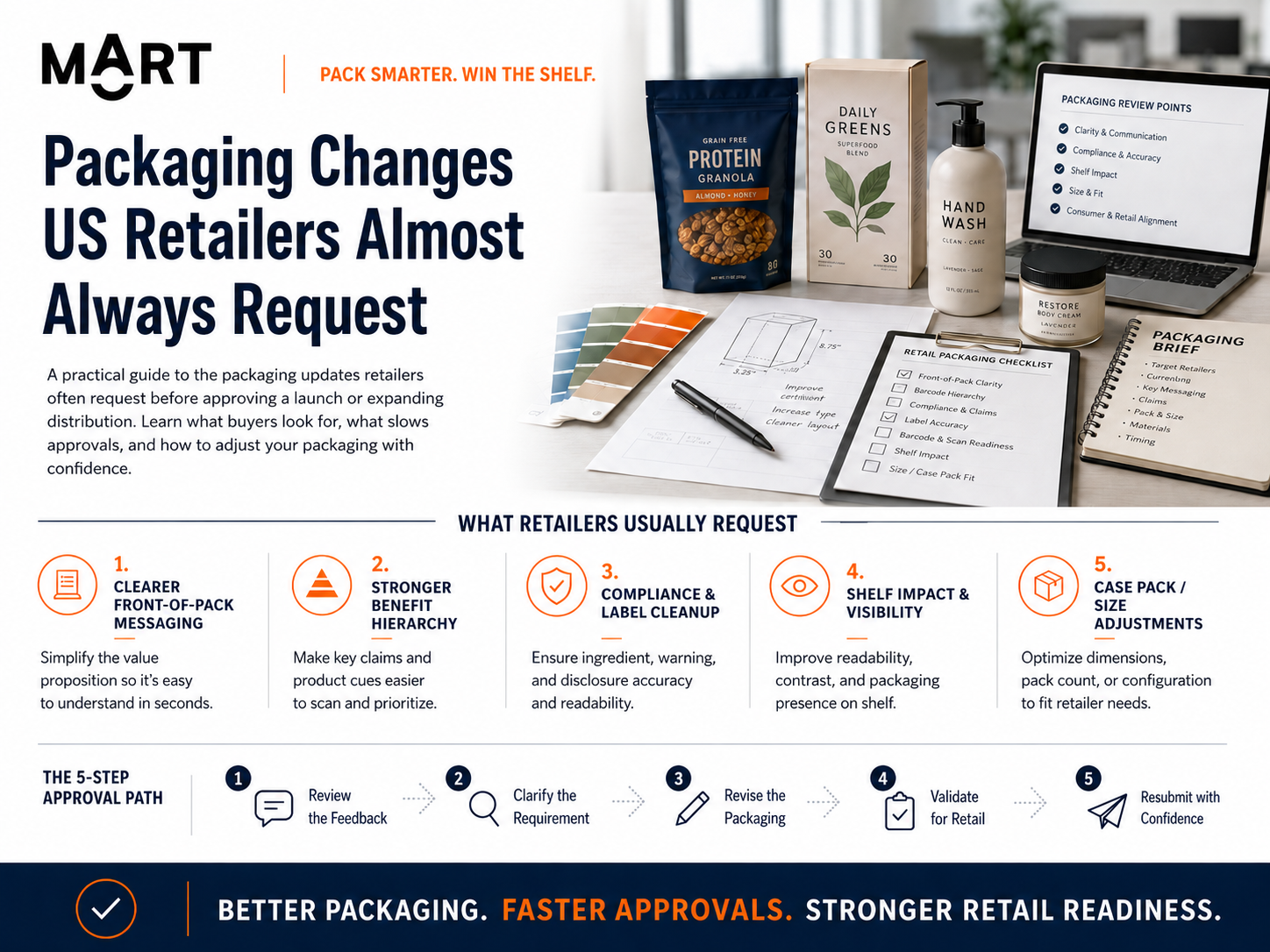
The first change is almost always English language label compliance. US retailers require English as the primary language on all consumer facing copy, with bilingual French labeling required for products shipping to Canada. Country of origin must be clearly stated. Nutritional or product specification panels must follow the US format, which differs from European and Asian conventions on field order, units, and rounding.
The second change is barcode placement and quality. US retailers scan UPC codes at multiple points in the supply chain, and the barcode must be readable on the first pass at every scanner. Placement on a curved surface, on a textured finish, or under a transparent overlay can all cause scan failures that trigger chargebacks. Most retailers require barcode verification reports from a Grade B or better scanner before product can be accepted.
The third change is shipper carton specifications. US retailers have specific requirements for case dimensions, carton labeling, palletization patterns, and case weights. Walmart has its own carton dimension standards. Costco has its own pallet pattern requirements. Target has its own carton labeling specifications. A single product line may need to produce three different shipper formats to serve three different retailers.
The fourth change is shelf merchandising fit. The product needs to physically fit the retailer's planogram, present cleanly on the shelf, and signal its key benefits within three seconds of the shopper's attention. Brands accustomed to specialty retail where shoppers engage with packaging for thirty seconds need to redesign for the mass retail context where the engagement window is three seconds at most.
The fix is to involve a US retail packaging consultant in your product development process before you finalize artwork. Catching these changes at the artwork stage is far less expensive than catching them after the production run is complete and the retailer compliance review has flagged them.