Cross-border retail in North America is not a single discipline. It is a coordinated operational stack that international brands must build before they can sell consistently across the US, Canadian, and Mexican markets. This master guide breaks down every layer of the cross-border retail operating model and links to MOART's deep dives on each component.
The cross-border retail operating model spans six interconnected layers: trade compliance, logistics infrastructure, retailer relationship management, in-store activation, multi-currency financial operations, and reporting that connects retailer performance back to home-country financials. Most brands fail in North American retail not because their products are wrong, but because they treat these layers as independent functions that do not communicate.
Brands that succeed treat the full stack as one integrated operation. MOART has documented this in detail in our Cross-Border Retail Operations: The Full Stack for International Brands read.
Compliance is the gating constraint on cross-border retail. A product that cannot clear US Customs cannot be sold at any US retailer regardless of the retailer relationship. USMCA reinterpretation in 2026 has extended USDA and FDA review timelines to roughly 12 weeks for new product registrations. FCC modular certifications for new wireless devices run 8 to 16 weeks. California Proposition 65 adds 4 to 6 weeks brands frequently discover at the last minute. Start compliance work 6 to 9 months before the planned retail launch, not 6 to 9 weeks.
North American retail requires US or Canadian-resident logistics infrastructure. Drop-shipping from a home-country warehouse is not a sustainable model at any meaningful retail scale. Minimum infrastructure: an Importer of Record relationship, US-based warehousing with retailer-compliant labeling and palletization, a 3PL handling retailer-specific compliance programs (Walmart Routing Guide, Target Vendor Compliance, Costco Vendor Guide), and freight forwarding contracts. The retailers running the strictest logistics compliance: Walmart, Costco, Target, Home Depot, Lowe's. Specialty retailers like Sephora, REI, and Anthropologie are more flexible.
Each major retailer requires a dedicated relationship manager. The buyer at Walmart, Target, and Costco each expect different cadences, formats, and analytics. Brands managing 5 to 10 retailer relationships with one or two people fall behind on chargeback recovery, item setup quality, and joint business planning.
For the operational deep dive on getting and winning headquarter meetings, see Retail Headquarter Sales and Integration Support: The 2026 Playbook.
Each major US retailer requires a different operational playbook:
MOART has published earnings recap reads on most of these retailers including TJX FY2026 Recap, Home Depot FY2026 Recap, and Kroger FY2026 Recap on Private Label.
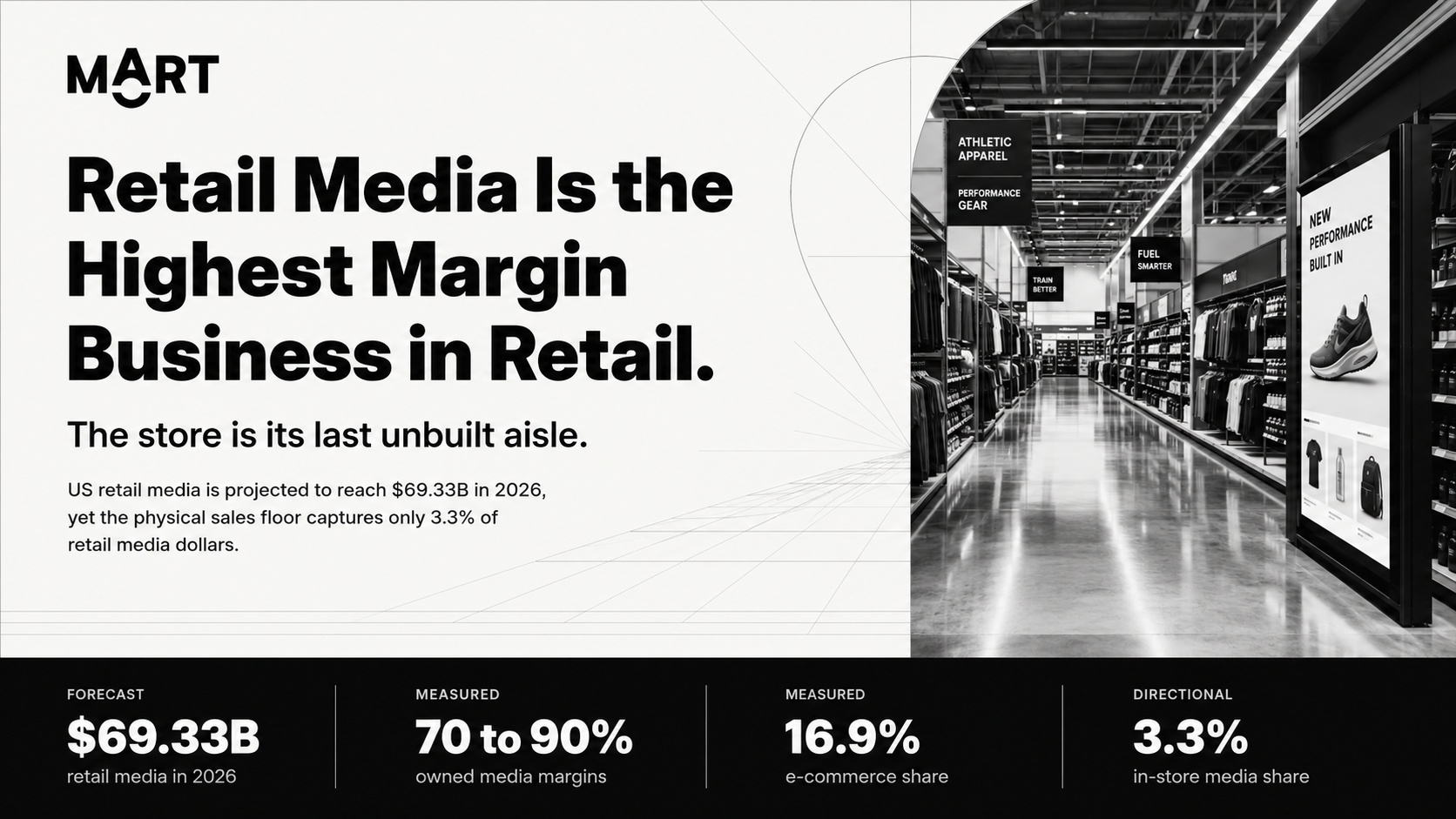
Cross-border retail is not complete when the product is on shelf. Sell-through depends on end cap merchandising, in-store demonstrators (particularly at Costco and Sam's Club), retail media co-op programs (Walmart Connect, Target Roundel), and seasonal merchandising calendars. International brands that do not invest in in-store activation see sell-through 30 to 50 percent below brands that do, even when the product and pricing are identical. Budget benchmark: 8 to 15 percent of expected retail revenue for in-store activation programs. See Costco FY2026 Wrap on Roadshow Programs for current ROI data.
Cross-border brands frequently ask whether to enter through DTC, retail, or both. The data favors omnichannel: Combining online and offline sales boosts conversion 30 to 50 percent and lifts brand trust by 26 points. For deeper analysis: How Ecommerce Brands Build Offline Retail Presence in North America and Online vs Offline Sales Channels for Cross-Border Brands.
Cross-border retail introduces multi-currency exposure (USD, CAD, MXN), multi-tax regimes (state-level US sales tax, Canadian GST/PST, Mexican IVA), retailer-specific payment terms (Walmart net-30, Costco net-15), foreign exchange exposure, and transfer pricing complexity. Brands that get this wrong discover the problem at year-end when consolidated financials do not match retailer-level reporting. Instrument with multi-currency ERP from day one, engage transfer pricing expertise before first shipment, and reconcile retailer-level revenue to consolidated P and L monthly.
MOART publishes the quarterly Vendor Sentiment Index tracking confidence across 18 major North American retailers and 12 categories. Q2 2026 reads 47.3, the first sub-50 print in six quarters, signaling structural pressure on vendor margins, chargeback burden, and retail media ROI.
MOART operates the complete cross-border retail stack for international brands entering North America. Three offices in Montreal, Rye Brook NY, and Guangzhou. Operators who built the systems at Walmart, Costco, Target, Sephora, and Amazon before joining MOART. Trade compliance, logistics, retailer relationship management, chargeback recovery, in-store activation, multi-currency operations, integrated reporting.
To discuss cross-border retail operations for your brand, contact MOART at info@moartgrp.com or visit moartgrp.com/contact.